
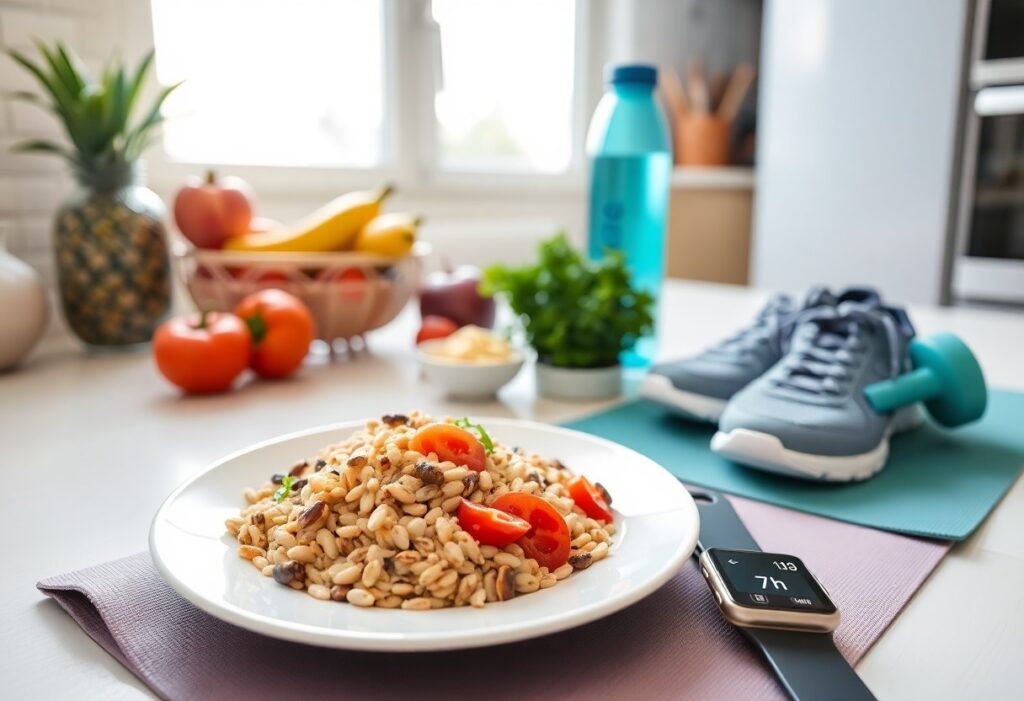

Sensitivity to insulin shapes your energy, appetite, and long-term metabolic risk, and you can improve it with manageable evidence-based steps: prioritize resistance and interval training, optimize sleep and recovery, reduce refined carbohydrates, increase fiber and omega-3 rich foods, and use stress-management techniques to lower cortisol and enhance your insulin response without extreme diets.
Exercise: targeted movement to boost insulin sensitivity
You should combine resistance and aerobic work: aim for 2-3 strength sessions plus 150 minutes of moderate aerobic activity (or 75 minutes vigorous) per week, with 1-3 HIIT sessions for extra benefit. Single workouts improve insulin sensitivity for up to 48 hours, so spreading shorter sessions keeps glucose control steady. Practical templates include three full‑body strength days (30-45 minutes) and brisk walks or cycling on non‑lifting days, or two HIIT sessions replacing one cardio day.
Resistance training – build muscle to increase glucose uptake
Prioritize compound lifts-squats, deadlifts, bench press, rows-to engage large muscle groups; perform 2-4 sets of 6-12 reps, 2-3 times weekly with progressive overload. You’ll see measurable insulin‑sensitivity gains in 6-12 weeks as muscle mass and strength rise. If time is limited, do full‑body circuits (6-8 exercises, 30-40 minutes) to maximize glucose uptake and keep sessions efficient.
Aerobic exercise & HIIT – improve cardiovascular fitness and insulin response
Use steady aerobic work (30 minutes brisk walk 5×/week) to lower fasting and postprandial glucose, and add HIIT 1-3×/week for larger acute insulin responses. Effective HIIT protocols include 4×4 minutes at 85-95% HRmax with 3 minutes active recovery or 10×1 minute hard intervals with 1-2 minute recovery; total session time 20-30 minutes. These sessions improve VO2max and extend improved insulin sensitivity for 24-48 hours.
For practical progression, start with 10-15 minute moderate sessions and increase by 5-10 minutes weekly until you hit 150 minutes, then introduce one HIIT session at low volume (e.g., 4×30-60s hard with equal recovery). Monitor intensity by heart rate or RPE (7-9/10 for sprints, 4-6/10 for steady cardio). Combining post‑meal 10-15 minute walks with twice‑weekly HIIT and thrice‑weekly strength work yields the biggest, evidence‑backed improvements in insulin response over 8-12 weeks.
Sleep and stress management
Your sleep timing and stress load directly influence insulin sensitivity: getting 7-9 hours nightly and keeping wake/bed times within a 30-60 minute window helps stabilize glucose regulation, while chronic stress and nighttime light exposure shift your circadian rhythm and raise fasting insulin. Aim for consistent timing, limit late-night eating, and treat sleep and stress as metabolic interventions rather than luxuries.
Improve sleep quality & timing to reduce insulin resistance
Set a fixed wake time and get 20-30 minutes of bright morning light to anchor your circadian rhythm; dim lights and stop screens 60-90 minutes before bed or use blue-light blockers. Target 7-9 hours, finish your last meal 2-3 hours before sleep, and keep bedroom temperature around 60-67°F (15-19°C) to improve slow-wave sleep that supports insulin sensitivity.
Practical stress-reduction strategies to lower cortisol impact
Use brief, repeatable tools: diaphragmatic breathing for 10 minutes (6 breaths/min) lowers physiological stress responses, 20-30 minute brisk walks reduce cortisol and improve insulin action, and 10-20 minutes of daily mindfulness or an 8-week MBSR course has been shown to reduce cortisol reactivity. Combine these with social support, CBT techniques, and a minimum of 150 minutes/week moderate exercise.
Translate strategies into a routine: start with a 20-minute morning walk for light exposure and mood, schedule a 10-minute paced-breathing break after lunch (6 slow breaths per minute), add a 15-minute evening journaling session to offload worries, and spread 150 minutes of moderate exercise across the week. Use apps (Headspace, Calm) for guided practice or book 6-8 CBT sessions if anxiety persists; tracking symptoms alongside glucose or fasting insulin can show measurable improvement within 6-12 weeks.
Smart, sustainable eating (no extreme diets)
Prioritize whole foods, protein, fiber, and healthy fats
You should build most meals from whole vegetables, legumes, intact grains, lean protein (20-30 g per meal helps satiety), and healthy fats like olive oil, avocado, or 1 oz nuts; aim for 25-35 g fiber daily to blunt glucose spikes and support gut health. Small swaps-Greek yogurt for sugary yogurt, beans for processed sides-deliver measurable insulin benefits without drastic restriction.
- Swap white rice for lentils, barley, or cauliflower rice to add fiber and slow absorption.
- Compose plates with ~50% non-starchy veg, ~25% protein, ~25% whole grains or starchy veg.
- After a week of consistent swaps, you may notice steadier energy and smaller post-meal glucose rises.
Reduce refined carbs & added sugars; simple portion and timing tips
You can cut refined carbs and added sugars by limiting sugary drinks, pastries, and packaged snacks and by sizing carb portions (one fist-sized/½ cup cooked) rather than eliminating them. Spread carbs evenly across meals-about 30-45 g per meal for many people-to avoid large postprandial insulin demands; aim to keep added sugars under ~25 g/day when possible.
Practical approaches include choosing whole-grain bread, using fruit for dessert, and preloading meals with protein or vegetables: studies show pre-meal protein/veg can reduce post-meal glucose excursions by roughly 20-40%. Space meals about 3-4 hours apart to stabilize insulin and avoid late-night carb-heavy eating that worsens overnight insulin resistance.
- Replace sweetened beverages with water, sparkling water, or unsweetened tea to eliminate rapid sugar spikes.
- Measure portions early on-use a cup, plate division, or your hand-to train consistent carb servings.
- After implementing these timing and portion rules for two weeks, monitor your energy and, if available, fasting glucose to fine-tune portions.
Daily activity and body composition
Your muscle mass and where you store fat are major determinants of insulin sensitivity, so prioritize daily movement and body-composition shifts over extreme dieting. Aim for 150 minutes of moderate aerobic activity per week plus resistance training 2-3 times weekly to preserve lean tissue, and target a modest 5-10% body-weight reduction if fat loss is needed-this range consistently improves insulin metrics and reduces harmful visceral fat.
Preserve/gain lean mass and reduce visceral fat with consistent habits
You should use progressive resistance training (2-3 sessions/week with compound lifts) and consume 1.2-1.6 g/kg protein daily to support muscle gain while losing fat. Small, consistent deficits (300-500 kcal/day) with protein and strength work preferentially reduce visceral fat; losing 5-10% body weight often produces measurable drops in visceral fat and improves hepatic and peripheral insulin sensitivity.
Increase NEAT and interrupt long sedentary periods
You can boost insulin sensitivity by raising NEAT-add 2,000-3,000 steps/day (roughly 20-40 minutes) to burn an extra ~100-200 kcal and lower glucose exposure. Break sitting every 30 minutes with 2-3 minutes of standing or light walking; controlled trials show these interruptions reduce postprandial glucose and insulin excursions compared with prolonged sitting.
Practically, schedule micro-sessions: stand and march for 60-90 seconds each half hour, take a 10-15 minute brisk walk after meals, use stairs, and hold walking phone calls. Wearable step targets (e.g., +1,500 steps/day increments) and environmental tweaks-park farther, use a stand desk, set movement alarms-produce sustainable NEAT gains. Several intervention studies reaching +2-3k daily steps over 8-12 weeks report improved fasting glucose and insulin sensitivity, so incremental, repeatable habits matter more than sporadic intense workouts.
Evidence-based adjuncts and monitoring
You can pair lifestyle changes with targeted adjuncts and objective monitoring to accelerate gains in insulin sensitivity: short-course prescription drugs, select supplements with trial data, routine labs (A1c, fasting glucose, fasting insulin) and pattern tools like CGM. Use numbers-A1c 5.7-6.4% signals prediabetes-so you know when to intensify interventions or seek specialty care. Ongoing measurement helps you track progress beyond weight and feel.
Safe supplements and medical options supported by research
Berberine (500 mg two to three times daily) has shown HbA1c reductions similar to metformin in small trials; magnesium 300-400 mg/day improves insulin action when levels are low; alpha‑lipoic acid 600 mg/day shows benefit for insulin sensitivity and neuropathy; vitamin D repletion to >30 ng/mL helps if deficient. Prescription options like metformin (A1c reduction ~1%) or pioglitazone improve insulin sensitivity but require monitoring for side effects.
Key tests and when to consult a healthcare professional
Start with fasting glucose, A1c, fasting insulin and a lipid panel; add OGTT or HOMA‑IR for borderline cases, liver enzymes (ALT) and creatinine before meds, plus urine albumin if diabetic. A1c 5.7-6.4% indicates prediabetes, fasting glucose 100-125 mg/dL is impaired, ≥126 mg/dL or A1c ≥6.5% prompts urgent evaluation and treatment discussion.
Calculate HOMA‑IR as (fasting insulin µU/mL × fasting glucose mg/dL) ÷ 405; for example, insulin 15 × glucose 100 gives HOMA‑IR ≈3.7, often interpreted as insulin resistance (commonly >2-2.5). Request A1c every 3 months if abnormal or after med changes, otherwise 6-12 months. See your clinician promptly for pregnancy planning, persistent fasting glucose ≥126 mg/dL, recurrent postprandial spikes >180 mg/dL, or if you plan to start supplements/medications that affect glucose or interact with other drugs.
To wrap up
With this in mind, you can boost your insulin sensitivity by prioritizing regular physical activity, choosing fiber-rich whole foods with moderate carbohydrates, improving sleep, managing stress, and losing excess weight gradually; these practical steps deliver measurable benefits without extreme dieting and can be tailored with your healthcare provider.