
There’s a set of five proven sleep signals-circadian timing, deep slow-wave sleep, REM cycles, melatonin release, and reduced sympathetic activity-that coordinate cellular repair and hormonal balance; understanding these signals helps you optimize sleep hygiene, support recovery, and regulate appetite, stress, and metabolic hormones so your body can restore tissues and maintain long-term health.
Sleep physiology and circadian context
Your sleep stage distribution, hormone rhythms and core temperature operate together on predictable schedules: sleep cycles run ~90-110 minutes, melatonin begins rising about 1.5-2 hours before sleep, and cortisol is lowest near sleep midpoint then peaks within 30-60 minutes of waking. Growth hormone pulses during the first slow‑wave-rich cycles, while thermoregulatory and autonomic shifts during later REM periods influence cardiovascular repair and metabolic clearance across the night.
Sleep architecture: slow‑wave sleep, REM and timing
Your slow‑wave sleep (N3) dominates the first two to three cycles, featuring delta waves (0.5-4 Hz) and large growth‑hormone secretions within the initial 90 minutes; REM periods lengthen across the night and make up ~20-25% of total sleep in adults, driving synaptic pruning and emotional memory processing. If you truncate early sleep, you lose much of the SWS‑dependent cellular repair, while shortened late sleep reduces REM‑related hormonal and cognitive benefits.
Circadian pacemaker and peripheral clock coordination
Your master clock in the suprachiasmatic nucleus (SCN) synchronizes to light cues-morning bright light advances phase, evening blue light delays it-while peripheral clocks in liver, muscle and adipose follow feeding and activity signals. If your light, meal and sleep timing diverge, molecular misalignment alters glucose and lipid regulation; epidemiology links chronic shift work to up to ~30% higher type‑2 diabetes risk, demonstrating real metabolic consequences for mismatched timing.
At the molecular level you depend on transcription-translation feedback loops (CLOCK‑BMAL1 driving PER/CRY cycles) that set 24‑hour gene expression in tissues. Feeding at the wrong phase rapidly shifts liver clock phase-rodent studies show rest‑phase feeding causes greater adiposity despite equal calories-and short human circadian‑misalignment trials report impaired glucose tolerance and altered insulin responses, so timing of meals and light exposure directly shapes your peripheral metabolic rhythms.
Signal 1 – Slow‑wave activity and growth‑hormone-mediated repair
Slow‑wave sleep (SWS) dominates the early night and is tightly linked to the biggest nocturnal growth‑hormone (GH) pulse, typically within the first 60-90 minutes after sleep onset; higher SWS amplitude predicts larger GH release, which then drives liver IGF‑1 production, muscle mTOR activation, collagen synthesis and net anabolic repair across tissues you rely on for daily function.
Mechanisms: SWS-driven GH release and anabolic signaling
During SWS the hypothalamic GHRH/somatostatin balance shifts toward GHRH, producing a large GH surge that signals the liver to raise IGF‑1 and activates intracellular pathways (mTOR, AKT) in muscle and connective tissue; as a result your amino‑acid uptake increases, proteolysis falls, and protein synthesis and collagen crosslinking accelerate to support recovery and adaptation.
Evidence and health outcomes: tissue repair, metabolism, recovery
Experimental sleep restriction (4-5 hours/night) reduces nocturnal GH pulse amplitude by roughly ≈50% and impairs insulin sensitivity and wound healing in controlled studies; athletes who extend sleep by ~1 hour show faster reaction times and better recovery markers, while reduced SWS is associated with slower muscle repair and worsened metabolic control in both young and older adults.
More specifically, age‑related falls in SWS and GH-GH secretion can decline by ~60-70% from young adulthood to older age-contribute to sarcopenia, increased fat mass and prolonged wound closure; interventions that boost SWS (sleep extension, targeted auditory stimulation in short trials) partially restore GH pulsatility and improve markers of protein synthesis and recovery, illustrating a modifiable pathway you can target for better tissue health.
Signal 2 – Melatonin and circadian entrainment for hormonal balance
Melatonin times your endocrine night, coordinating cortisol nadir, growth hormone pulses, and nocturnal insulin sensitivity; dim-light melatonin onset (DLMO) typically begins ~2 hours before sleep, with peak secretion around 2-4 AM. When amplitude and timing are intact you get consolidated repair windows and predictable hormonal cascades; when melatonin is blunted or delayed by nighttime light, you see displaced cortisol rhythms, impaired glucose handling, and fragmented restorative sleep.
Mechanisms: SCN signaling, melatonin amplitude and timing
Retinal ipRGCs convey blue-light (≈480 nm) input to the SCN, which signals the paraventricular nucleus and sympathetic chain to regulate pineal melatonin synthesis; melatonin amplitude and phase then feedback to peripheral clocks via MT1/MT2 receptors in tissues like pancreas and adipose. Shifts in DLMO or reduced amplitude decouple peripheral oscillators, lowering nocturnal insulin sensitivity and altering cortisol pulse timing, which together impair cellular repair programs.
Practical implications: light exposure, phase timing, metabolic effects
You should use targeted light to shift phase-bright morning light advances your clock, evening light delays it; clinical light therapy commonly uses ~10,000 lux for 20-30 minutes, while even ~100 lux of white/blue-rich light at night can suppress melatonin. Consistent wake/sleep within ~30 minutes and avoiding late light exposure reduce diabetes risk associated with circadian misalignment, which meta-analyses link to ~20-40% higher type 2 diabetes incidence in night-shift cohorts.
For actionable control, get outdoors within 30-60 minutes of waking for 20-30 minutes (direct daylight often provides >10,000 lux), or use a 10,000-lux light box at ~30 cm for 20 minutes if weather prevents it. Block blue light (<480 nm) for 1.5-2 hours before bedtime using software, warm-light bulbs, or orange-tinted glasses; studies show this preserves DLMO and melatonin amplitude. Schedule large meals earlier-finish substantial food at least 2-3 hours before sleep-to avoid nocturnal glucose excursions, and aim for consistent sleep/wake times (±30 min) to stabilize phase. If you have persistent misalignment, measure salivary DLMO (samples every 30-60 minutes across the evening) or try morning light therapy for 1-3 weeks to advance phase by 30-60 minutes per week depending on baseline timing.
Signal 3 – Glymphatic clearance and interstitial waste removal
Mechanisms: CSF flow, clearance peaks during sleep
When you enter deep NREM sleep, cerebrospinal fluid (CSF) pulses into periarterial spaces and drives convective flow through the interstitium, flushing metabolites; in mice the interstitial volume expands ~60% and amyloid-β clearance roughly doubles during sleep (Xie et al., 2013). Astrocytic aquaporin-4 (AQP4) channels on endfeet focus that flow, while cardiac and respiratory pulsatility provide the perivascular pumping that maximizes clearance during slow-wave periods.
Implications: neuroprotection, protein aggregation, disease risk
If your glymphatic function is reduced-due to sleep loss, aging, AQP4 mislocalization, or vascular stiffness-amyloid and tau clearance falls, raising proteopathic burden and long-term neurodegeneration risk; animal models show impaired clearance accelerates plaque deposition, and human studies link chronic sleep disruption with higher dementia incidence and altered CSF biomarkers.
For practical context, lateral sleep position enhances tracer transport in rodent models (lateral > supine > prone), and AQP4 knockout animals display markedly reduced CSF influx and greater amyloid accumulation, indicating specific mechanisms you can target: improving slow-wave sleep, treating apnea, and optimizing vascular health all boost glymphatic efficiency and lower downstream disease risk.
Signal 4 & 5 – Autonomic shift and HPA suppression: vagal tone and cortisol nadir
When you enter stable NREM sleep your autonomic balance shifts toward parasympathetic dominance (higher HF HRV and RMSSD), while the HPA axis suppresses nocturnal cortisol-typically reaching a nadir between about 00:00-04:00 and falling to roughly 20-50% of daytime peaks (often ~2-4 µg/dL). Together these signals lower inflammatory cytokines, permit growth-hormone-mediated repair in the first SWS cycle, and synchronize endocrine rhythms that favor cellular recovery.
Autonomic dominance: parasympathetic/vagal activity and restorative processes
You experience increased vagal tone during SWS measurable as rises in high-frequency HRV and RMSSD-often 20-50% above wake levels-driven by slow breathing and baroreflex activity. That parasympathetic surge activates the cholinergic anti‑inflammatory pathway, reducing IL‑6 and TNF‑α, improving sleep efficiency and promoting tissue repair; HRV biofeedback and paced breathing at ~6 breaths per minute can amplify this effect if you train them regularly.
HPA axis downregulation: nocturnal cortisol nadir and endocrine synchronization
Your nocturnal cortisol decline permits anabolic and restorative hormones to operate unopposed: the cortisol nadir (commonly around 00:00-04:00) aligns with melatonin peak and the early SWS growth hormone pulse, supporting protein synthesis and glycemic stability. Shifted or blunted nadirs-seen in night-shift workers-raise nocturnal cortisol and disrupt metabolic and immune recovery.
More mechanistically, the suprachiasmatic nucleus suppresses hypothalamic CRH release at night, lowering pituitary ACTH and adrenal cortisol output so you hit the nocturnal nadir; melatonin signaling and vagal feedback further reinforce that suppression. Salivary cortisol sampling across the night reliably shows the trough near 2 a.m. in many people, and when that trough is attenuated you see higher nocturnal inflammation, reduced SWS-associated GH pulses, and impaired overnight glucose regulation-effects documented in controlled shift‑work and sleep‑restriction studies.
Optimizing and measuring the five sleep signals
Behavioral and environmental strategies to enhance signals (timing, temperature, sleep architecture)
Set a consistent sleep window within 30-60 minutes nightly and aim for 7-9 hours to consolidate slow‑wave sleep early in the night; cool your bedroom to about 60-67°F (15.5-19.5°C) to speed sleep onset; avoid bright screens 1-2 hours before bed and finish heavy meals or alcohol at least 3 hours prior; schedule vigorous exercise to finish >3 hours before sleep to prevent REM fragmentation and preserve deep NREM early in the night.
Practical strategies
| Signal | Action |
|---|---|
| Timing | Fixed bedtime within 30-60 min; anchor sleep midpoint to circadian preference |
| Temperature | Bedroom 60-67°F (15.5-19.5°C); warm shower 60-90 min before to promote core temperature drop |
| Light | Dim light 1-2 hours pre‑bed; bright light exposure 20-30 min after waking to anchor DLMO |
| Nutrition & Alcohol | Finish heavy meals/alcohol ≥3 hours before bed; prefer light protein snack if needed |
| Exercise | Finish intense workouts >3 hours before bed; moderate daytime activity improves SWS |
| Sleep architecture | Prioritize earlier sleep onset to boost first‑third night SWS; avoid fragmented awakenings |
Biomarkers and wearable proxies: EEG slow‑wave metrics, HRV, dim light melatonin onset
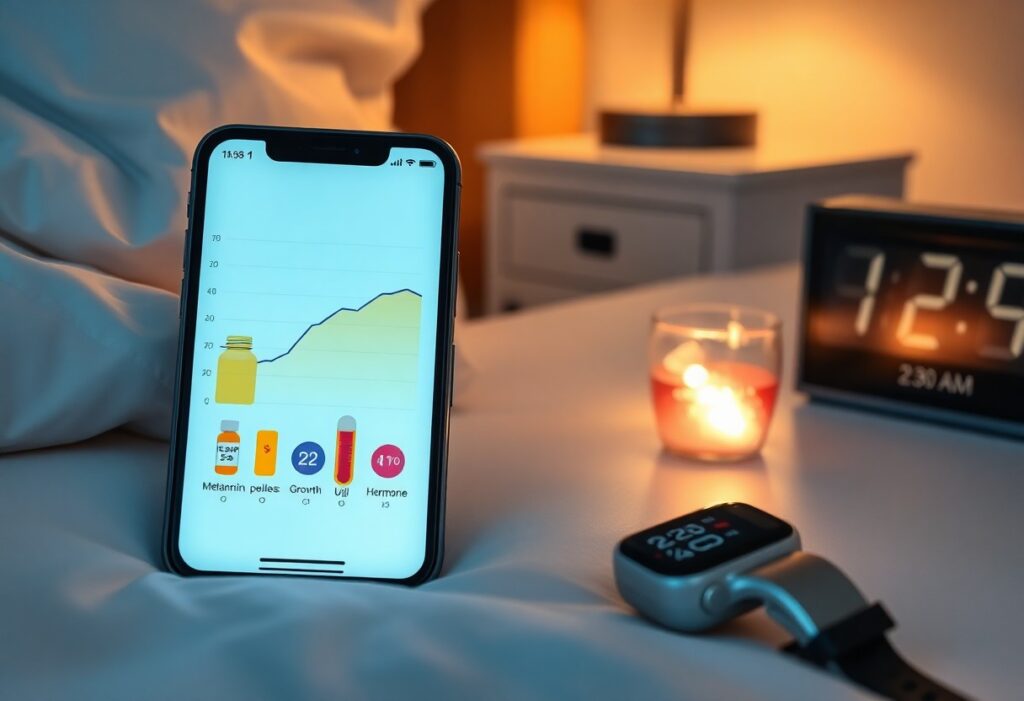
Track EEG delta power (0.5-4 Hz) or slow‑wave activity as a direct SWS proxy, monitor overnight HRV (RMSSD rises during stable NREM) for autonomic recovery, and use dim light melatonin onset (DLMO) – typically ~2 hours before your habitual sleep – to define circadian phase; consumer devices (headbands, rings) can trend these metrics, but validate major shifts with lab or clinical measures when altering interventions.
Wearable EEG headbands (Dreem, Muse) measure delta power and can quantify nightly slow‑wave energy; rings and chest straps provide RMSSD and nocturnal HRV trends-look for consistent increases in overnight RMSSD indicating better parasympathetic dominance. For DLMO, salivary assays in dim light are the gold standard; if you can’t perform assays, infer phase from consistent sleep timing and morning light response, and use light therapy timed to shift DLMO by targeted 30-90 minute increments over days.
Summing up
Drawing together the five proven sleep signals-deep slow-wave sleep, REM cycles, consistent sleep timing, temperature drops, and melatonin onset-you optimize cellular repair and hormonal balance when you prioritize regular, quality sleep. By aligning your schedule and environment to support these signals, you enhance protein synthesis, immune recovery, growth hormone release, and metabolic regulation, so your body repairs efficiently and your endocrine system stays resilient.