
Just by adopting targeted habits you can significantly reduce your daily toxic load without panic: prioritize clean air and water, choose low-toxicity household and personal care products, favor whole foods and safer storage, minimize unnecessary chemical exposures, and manage stress to support detoxification – practical, evidence-based steps that put control in your hands and protect long-term health.
Understanding Your Daily Toxic Load
You encounter a mix of chemicals every day-through air, food, water and skin contact-and many accumulate because their half-lives vary from hours (VOCs) to years (PCBs, PFAS). Your lungs inhale roughly 10-12 m³ of air daily, so indoor pollutants matter; a single product or habit may contribute micrograms to milligrams of contaminants, but the combined, repeated exposure shapes your overall burden and health risk over months and years.
Common environmental stressors at home and work
At home you face VOCs from paint and cleaners, phthalates and fragrances in personal care products, PFAS in stain‑resistant fabrics, and mold or radon in basements; workplaces add solvents, pesticides, welding fumes, diesel exhaust and heavy metals. Indoor air is often 2-5 times more polluted than outdoors, so tasks like painting, dry‑cleaning or using scented products can spike your daily intake.
How toxins affect body systems and wellbeing
Different chemicals hit different systems: endocrine disruptors (BPA, phthalates) alter hormones and metabolism, neurotoxins (lead, mercury) impair cognition and development, and particulates (PM2.5) trigger systemic inflammation that raises cardiovascular risk. You may experience subtle symptoms-fatigue, headaches, mood changes-long before chronic outcomes like asthma, reduced fertility or cognitive decline appear.
Children and pregnant people are especially vulnerable because developing tissues absorb more per body weight; for example, blood lead levels under 5 µg/dL still associate with IQ loss. You can track exposures with targeted tests-blood lead, urinary cotinine for smoke, urinary phthalate metabolites, serum PFAS-and correlate results to symptoms and sources to prioritize reductions.
Strategy 1 – Reduce Indoor Exposures
Safer cleaning, personal-care, and household product swaps
Swap heavily fragranced and antimicrobial products for fragrance-free, EWG-verified, or simple-ingredient options like castile soap, baking soda, and vinegar. Avoid parabens, phthalates, triclosan, quaternary ammonium compounds and unnecessary VOCs. When you replace one personal-care item and one cleaner per month, your cumulative exposures drop while costs stay manageable. Use microfiber cloths and physical scrubbing to cut chemical use and extend product life.
Improve indoor air and water quality affordably
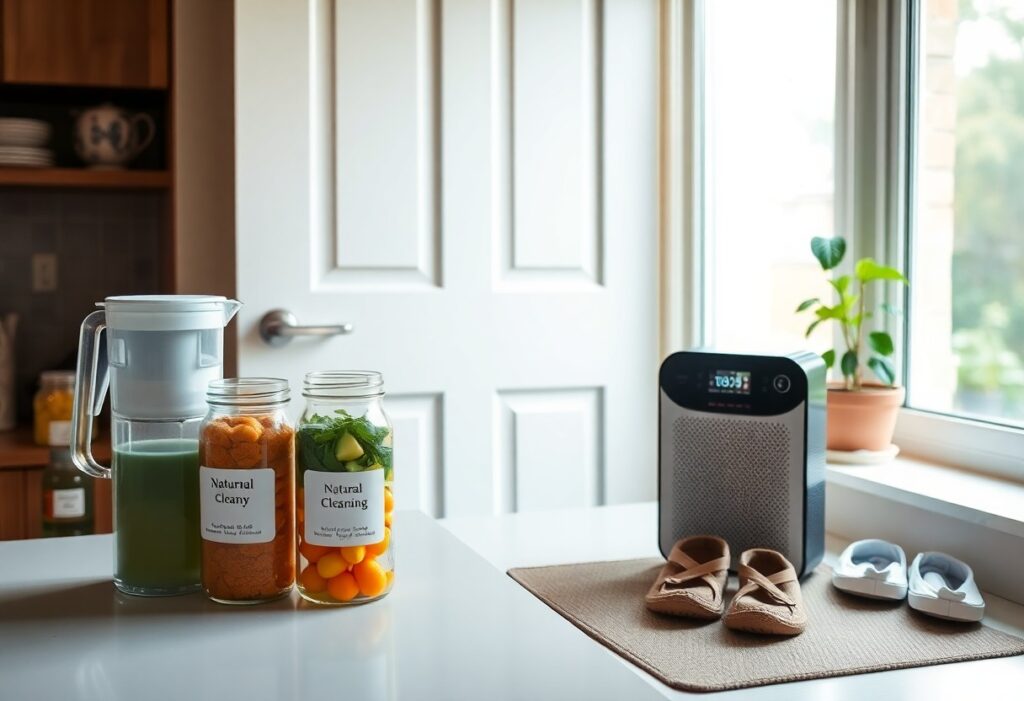
Ventilate and filter before splurging: open windows briefly, run kitchen and bath fans, and use a HEPA air purifier ($100-$300) sized to your room (check CADR). Add activated-carbon filtration for VOCs. For water, review your utility’s consumer confidence report or use a home test kit ($20-$50); pitcher or faucet filters ($20-$100) with NSF/ANSI 53 certification reduce chlorine and lead.
Start with routines: run the range hood for 10-15 minutes during and after cooking to cut PM2.5 by roughly 30-60%, open windows 10 minutes twice daily when outdoor air is good, and vacuum with a HEPA machine. Choose purifiers whose CADR matches room area and swap filters every 3-6 months. Flush taps for 30 seconds after stagnation, test water annually, and install under-sink carbon or RO systems only if tests show contaminants like lead or pesticides.
Strategy 2 – Eat and Store Smarter
Lower-contaminant food choices and preparation
You can cut dietary toxic load by favoring organic for EWG’s “Dirty Dozen” produce (apples, strawberries, spinach) and choosing low-mercury fish like sardines, trout, and canned light tuna-aim for 8-12 oz per week. Wash and peel where appropriate to reduce surface residues, and limit charred or overcooked starchy foods to lower acrylamide formation; grilling at moderate temps and using steam or poaching preserve nutrients while reducing some contaminant formation.
Safe storage, packaging, and handling tips
You should avoid heating food in plastic and transfer acidic or fatty foods from cans into glass because heat and acid increase chemical migration; prefer glass, stainless steel, or certified food-grade silicone for storage. Keep your fridge at or below 40°F (4°C) and the freezer at 0°F (-18°C) to slow microbial growth and chemical breakdown, and discard scratched nonstick pans that can shed coatings when stressed.
- Use glass jars or stainless-steel containers for leftovers and meal prep.
- Remove canned goods into non-reactive bowls before reheating or storing, especially tomatoes and citrus-based sauces.
- Avoid microwaving food in single-use or unclear plastic; check for explicit glass or ceramic labeling.
- The fridge should be set at ≤40°F (4°C) and the freezer at 0°F (-18°C).
You’ll reduce migration of bisphenols and phthalates by minimizing heat and oil contact with plastics; studies show higher leaching into fatty, acidic foods heated in plastic. Rotate perishable items using a first-in, first-out rule and label dates-use most leftovers within 3-4 days. When buying packaged foods, scan labels for “BPA-free” but still prefer glass-lined or unpackaged options when possible to lower overall exposure.
- Label and date leftovers; consume within 3-4 days or freeze for longer storage.
- Portion and freeze in airtight pints to keep quality for ~3 months and reduce waste.
- Avoid storing oily or hot foods in plastic containers to limit chemical transfer.
- The easiest swap is using glass containers and reheating in stainless-steel or ceramic instead of plastic.
Strategy 3 – Choose Low-Toxic Materials
You can cut daily exposures by choosing materials that off-gas less and avoid persistent chemicals: prefer low- or zero-VOC paints (<5 g/L is commonly called “zero”), solid wood over particleboard, and PFAS-free fabrics. Volatile organic compounds can off-gas for weeks to months, so selecting water-based finishes, natural fibers, and certified products (GREENGUARD, FSC, GOTS) reduces long-term indoor concentrations and lowers chronic intake from air, dust, and skin contact.
Selecting furniture, textiles, and building materials
You should pick solid wood or metal frames instead of particleboard and MDF, which often contain urea-formaldehyde adhesives; choose natural textiles like wool, organic cotton, or linen and avoid stain-resistant finishes that often contain PFAS. Opt for low-emission mattresses (organic latex or certified innerspring), water-based finishes, and durable, repairable items so you replace less often and lower cumulative exposure over years.
Label reading, certifications, and red flags
You’ll want to scan for third-party marks: GREENGUARD Gold for low emissions, OEKO‑TEX Standard 100 or GOTS for textiles, FSC for responsibly sourced wood, and CARB/TSCA Title VI compliance for composite wood. Be wary of vague terms like “eco-friendly” or unlabeled pressed wood, persistent chemical odor, and products marketed as “chemical-free” without verifiable certification.
Dig deeper into certificates: check the certifier’s scope, test standard, and expiration date online, and compare numeric limits (many low‑VOC paints are <50 g/L, “zero” <5 g/L). Distinguish third‑party verification from self‑declared claims, prioritize GREENGUARD Gold in schools/healthcare, require CARB/TSCA compliance for cabinetry, and use Declare/Living Building Challenge Red List Free when avoiding specific chemical groups like phthalates or PFAS.
Strategy 4 – Support Your Body and Routine
You reinforce low toxic load by steady daily habits: prioritize 7-9 hours sleep, manage stress with brief practices, move regularly, hydrate, and feed your microbiome. For example, 30 minutes of moderate activity five times weekly raises circulation and promotes elimination, while 25-30 g fiber daily and foods like broccoli (sulforaphane) support liver-phase enzymes. Small, consistent changes yield measurable reductions in internal burden over weeks, not overnight fixes.
Sleep, stress management, movement, and hydration
You should aim for 7-9 hours nightly and a consistent sleep schedule to optimize detox rhythms; reducing evening blue light 1-2 hours before bed helps melatonin. Use 10-minute breathing or progressive muscle relaxation to lower stress reactivity, and meet WHO activity targets of 150 minutes moderate exercise weekly. Drink about 1.5-2.5 liters of water daily (adjust for sweat) to support kidney clearance and gastrointestinal transit.
Practical, low-risk detox-supporting habits
You can reduce exposures with inexpensive, low-risk steps: install an NSF/ANSI 53/58-certified water filter for lead/VOC reduction, use a HEPA vacuum (captures 99.97% of ≥0.3 µm particles), choose fragrance-free personal care, wash produce, and avoid heating food in plastic. Saunas or hot baths 2-3 times weekly for 10-20 minutes enhance sweating pathways; always tailor frequency to your health and local guidance.
For immediate action, start with one change per week: a $50-200 water filter, a $100-400 HEPA vacuum upgrade, a 7-night trial of fragrance-free products, and adding 1 cup cruciferous veggies daily plus one serving fermented food. Track sleep, steps, and fluid intake for two weeks to see objective improvements; small, targeted investments and consistent tracking produce the biggest, measurable impact on your daily toxic load.

Strategy 5 – Practical Home & Community Actions
You can cut daily toxic load by combining simple home upgrades with community-level moves: swap to low-VOC paints (≤50 g/L), install a certified water filter (NSF 53) for lead reduction, test radon (short-term kits ~$15-30) and mitigate above 4 pCi/L, and run a HEPA air purifier (H13 captures ~99.95% at 0.3 μm) in high-use rooms; parallel local outreach multiplies impact by shifting norms and funding pooled interventions.
Small, high-impact swaps and maintenance tasks
Replace nonstick cookware with stainless or cast iron to avoid PFAS, use fragrance-free detergents, change HVAC filters every 1-3 months, vacuum with a HEPA-rated machine, and choose third-party certified cleaning products (Green Seal or EPA Safer Choice); these actions typically cost <$100 each but cut exposure to VOCs, PM2.5, and persistent chemicals immediately.
Advocate, share knowledge, and scale change locally
You can start by organizing a neighborhood meeting, creating a one-page factsheet with local data, and proposing workplace or school fragrance-free and green-cleaning policies; apply for municipal grants, collect signatures for ordinances, and leverage public health partners-radon and indoor air campaigns backed by local monitoring often move policymakers faster than individual petitions alone.
For deeper impact, run a community monitoring project using low-cost PM sensors like PurpleAir (~$200-$300) to map hotspots, offer bulk buys for HEPA units and radon kits to lower per-household costs by 20-40%, draft model policy language for schools or multifamily housing, and pursue state or EPA Environmental Justice and health department grants to fund mitigation and outreach.
Summing up
The simple, practical steps-cleaning indoor air, choosing low-tox products, filtering water, reducing processed foods, and minimizing chemical exposures-help you lower your daily toxic load without panic; by adopting small, consistent changes you gain control over environmental stressors, protect your health, and build sustainable habits that fit your life while avoiding overwhelm.