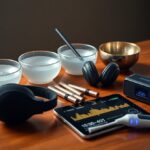


Most of your stress stems from how your nervous system interprets signals; this post outlines five evidence-based strategies to help you regulate your stress response, improve sleep and breathing patterns, use movement and rest to restore balance, and support recovery with nutrition and consistent habits so you can rebuild resilience and sustain peak functioning.
Nervous system vitals
Your nervous system blends fast neural circuits and slower hormonal pathways: sympathetic catecholamines act within seconds to mobilize glucose and raise heart rate, while the HPA axis releases cortisol that peaks around 20-30 minutes after a stressor. The vagus nerve carries roughly 80% afferent signals to the brain, so changes in your gut, lungs, or heart rapidly inform central control. Heart rate variability (HRV) gives you a practical index of that integrated state.
Autonomic balance: sympathetic vs. parasympathetic
You shift between sympathetic drive (fight-or-flight: norepinephrine, pupil dilation, blood glucose elevation, HR often >150 bpm during high-intensity bouts) and parasympathetic restitution (vagal acetylcholine slows HR, promotes digestion and repair). Fitness and sleep tilt the balance: well-trained individuals clear sympathetic activation faster and show stronger vagal rebound after a 60-second all-out sprint, for example.
How stress responses and recovery capacity are regulated
Your brainstem, hypothalamus, and prefrontal cortex form feedback loops that gate autonomic output: baroreflexes adjust beat-to-beat blood pressure, while prefrontal inhibition dampens amygdala-driven responses. Peripheral signals-cytokines, gut peptides, blood glucose-feed back and alter recovery capacity, so chronic inflammation or poor sleep blunt your ability to return to baseline.
You can track and modulate these processes: HRV quantifies vagal influence, and interventions like paced breathing at ~6 breaths/min for 5-10 minutes reliably increase HRV within minutes. Other practical levers-vagal stimulation (cold face or targeted devices), consistent moderate exercise (≈150 min/week), and 7-9 hours of sleep-shift set points and improve how quickly your system recovers after repeated stressors.
Breath and respiratory regulation
You can shift autonomic balance quickly by changing how you breathe: nasal, diaphragmatic inhalations with longer exhales stimulate vagal tone and raise heart-rate variability. Aim for slow, paced breathing around 5-6 breaths per minute to hit your resonance frequency; this reduces sympathetic spikes and improves recovery capacity in minutes, while regular practice over weeks consolidates baseline stress resilience.
Proven techniques to engage the parasympathetic system
You should practice diaphragmatic breathing, extended exhalations (exhale 1.5-2× inhale), resonance-paced breathing (5-6 breaths/min), box breathing (4-4-4-4) and alternate-nostril techniques; nasal breathing enhances CO2 tolerance and vagal input. Use a metronome or app to guide timing, and prioritize gentle, low-effort breaths to avoid hyperventilation and maximize parasympathetic recruitment.
Practical protocols: timing, duration, and cues
You can use short resets (2-3 minutes) after acute stressors, 5-10 minute training sessions twice daily, and 10-20 minutes before sleep for consolidation. Cue sessions to transitions (wake, pre-meal, post-work), sit upright with hand on the belly, and follow a simple ratio: inhale 4-5s, exhale 6-8s. Track perceived calm and heart-rate variability to adjust duration and timing.
Progress methodically: start with 2-3 minute sessions at 6 breaths/min for 5-7 days, then add 1-2 minutes every few days until you reach 10-15 minutes once or twice daily. Monitor using an HRV app or chest strap-expect subjective improvement in 1-2 weeks and measurable HRV shifts within 4-8 weeks; adapt frequency to training load, illness, and sleep quality for optimal recovery gains.
Sleep and circadian alignment
Your circadian timing sets when recovery processes run best: melatonin onset typically begins ~2 hours before habitual bedtime, core body temperature nadirs early in sleep, and cortisol rises about 2-3 hours before wake. When you align sleep with those rhythms and get 7-9 hours nightly, you maximize glymphatic clearance and hormonal renewal. Night shifts or irregular sleep schedules can lower sleep efficiency and degrade recovery capacity within days.
Sleep stages, restorative processes, and hormonal regulation
Deep slow-wave sleep (N3) predominates in the first third of the night and drives growth-hormone release plus glymphatic waste clearance; N2 spindles support motor-memory consolidation; REM, concentrated in the latter half, enables emotional processing and autonomic recalibration. If you fragment deep sleep, protein synthesis and clearance fall; if you fragment REM, emotional resilience and autonomic balance suffer. Aim for consolidated architecture to preserve restoration.
Habits to optimize sleep quality and circadian timing
Fix your wake time within 15-30 minutes daily, seek 20-30 minutes of bright morning light (ideally >5,000 lux) within an hour of rising, dim lights an hour before bed and avoid screens or use blue‑light filters, stop caffeine by 14:00, keep bedroom temperature around 16-19°C, and aim for 7-9 hours nightly. Consistent timing shifts circadian phase faster than trying to catch up on weekends.
Put this into a simple routine: anchor wake at the same clock time (for example 07:00), get outside for 20 minutes of sunlight within 30 minutes of waking, finish vigorous exercise ≥3 hours before bed, avoid heavy meals 2-3 hours pre-sleep, limit evening alcohol since it fragments REM, and use brief naps (≤20 minutes before 15:00) to boost alertness without shifting your clock.
Movement, vagal tone, and heart-rate variability
Exercise types that improve recovery and HRV
Incorporate steady-state aerobic work (30-60 minutes at ~60-75% HRmax), low-volume HIIT (2 × 10-20 minute efforts, 1-2×/week), and heavy resistance sessions (3-5 sets of 3-6 reps, 2-3×/week) to target autonomic flexibility; add daily 5-10 minute diaphragmatic breathing and mobility to raise parasympathetic drive. Studies show mixed aerobic/resistance programs produce measurable HRV gains within 6-12 weeks. Thou prioritize progressive loading and consistent practice to protect your recovery capacity.
- Aerobic steady-state: 30-60 min, raises baseline HRV over weeks
- Low-volume HIIT: 10-20 min work blocks, improves resilience despite short-term HRV dips
- Resistance training: heavy, low-rep sets 2-3×/week to support hormonal recovery
- Mobility and light activity: daily 10-20 min to maintain parasympathetic tone
- Thou should include daily 5-10 min breathwork to directly stimulate vagal input
| Aerobic steady-state (walking, cycling) | Gradual HRV increase; improves mitochondrial and cardiovascular efficiency |
| HIIT (short intervals) | Short-term HRV suppression with long-term autonomic robustness gains |
| Resistance training (heavy) | Enhances recovery hormones, supports structural resilience |
| Mobility/low-intensity movement | Immediate parasympathetic activation; reduces stiffness and sympathetic tone |
| Breathwork/slow-paced activity | Direct vagal stimulation; rapid, measurable HRV elevations |
How to dose and schedule movement for stress regulation
Aim for 150-300 minutes of moderate aerobic work weekly, two strength sessions, and daily low-intensity movement; place high-intensity sessions on nonconsecutive days (max 2-3/week) and reserve breathing or mobility blocks (5-15 minutes) after intense sessions to accelerate vagal rebound. If you track HRV, reduce load after 2-3 consecutive low readings or elevated resting heart rate to avoid compounding stress.
For a practical week: a sample for a busy adult could be 3 × 40-minute aerobic sessions (Mon/Wed/Fri), 2 × 45-minute strength sessions (Tue/Thu), and daily 10-minute morning breathwork plus evening mobility. If you’re shift-work or high-stress, compress intensity to 2 quality sessions and increase low-intensity movement and breathing; athletes can periodize with 1-2 recovery microcycles per month. Use RPE, resting HR, and multi-day HRV trends (not single points) to guide acute down-regulation and ensure progressive overload without chronically elevating sympathetic tone.
Nutrition, hydration, and metabolic support
You’ll support recovery by stabilizing blood sugar, lowering low‑grade inflammation, and correcting common deficiencies: aim for 30-35 mL/kg/day of fluids (≈2-3 L for most adults), keep vitamin D around 30-50 ng/mL and supplement 1,000-2,000 IU if low, and consider magnesium 200-400 mg nightly to reduce sympathetic arousal. Consistent protein and fiber intake help blunt cortisol spikes and speed neural repair.
Nutrients and meal patterns that modulate stress pathways
You should prioritize 20-30 g protein per meal and 25-35 g fiber daily to moderate postprandial glucose and cortisol responses; include omega‑3s (1-2 g EPA+DHA or two servings of fatty fish weekly) and B vitamins from legumes, eggs, and leafy greens to support neurotransmitter synthesis. Eating every 3-4 hours with low‑GI carbs reduces cortisol variability seen in controlled trials.
Practical guidance for inflammation, blood sugar, and fluids
You should cut refined sugars and processed seed oils and favor olive oil, nuts, and whole foods; target postprandial glucose under 140 mg/dL by pairing carbs with protein/fat, and drink 250-500 mL of water before and between meals to maintain volume. For inflammation, aim for 25-30 g total fiber with 5-10 g soluble fiber for gut health, and choose evening meals that support sleep to lower nocturnal cortisol.
You can use specific meal examples: breakfast of 2 eggs, 30 g oats, and berries stabilizes glucose; lunch of 100-150 g salmon, mixed greens, and quinoa supplies omega‑3 and protein; snacks like 170 g Greek yogurt with walnuts provide 10-15 g protein. Swap white rice for lentils or barley, add turmeric with black pepper for anti‑inflammatory effect, and monitor urine color plus small daily weight changes to gauge hydration rather than strict volumes.

Behavioral and psychological interventions
You can shift nervous-system balance by changing behaviors and thought patterns: targeted practices, clear social rules, and deliberate environmental tweaks. Clinical trials show behavioral programs-when combined with lifestyle changes-improve recovery metrics and lower allostatic load markers; integrating measurable habits (daily 10-20 minute practices, weekly check-ins, and a 24-hour digital Sabbath) lets you track progress and maintain gains over months.
Mindfulness, cognitive strategies, and biofeedback
You’ll get fast returns from structured programs: 8-week MBSR courses often reduce perceived stress by roughly 20-35% in trials, while CBT-based cognitive reappraisal cuts rumination and anxiety symptoms substantially. Pair that with HRV biofeedback-desktop or app-guided sessions that can raise short-term HRV by ~10-20%-and you create both top-down control and bottom-up physiological regulation; aim for 10-20 minutes daily plus weekly coaching for best retention.
Social support, boundaries, and environmental design
You should treat social ties and context as active interventions: strong social connections correlate with about a 50% greater likelihood of long-term survival in meta-analyses, and practical boundaries (email curfews, 30-minute end-of-day rituals) reduce evening arousal. Environmental fixes-decluttering, increasing daytime daylight exposure to 300-500 lux, lowering blue light after sunset, and adding plants-produce measurable drops in perceived stress and improve sleep quality.
To operationalize this, map three reliable contacts you can call during high stress, schedule a weekly 30-minute check-in, and use a scripted boundary: “I don’t answer work messages after 7pm; I’ll respond by 9am.” Implement a 24-hour weekly digital Sabbath once a month or a nightly 7-8pm phone-off window. In offices, trial “no-meeting Fridays” or an email-delay policy for 3 months and track burnout scores weekly; small pilots often report 15-25% improvement in subjective recovery metrics when these changes are consistently applied.
Conclusion
Considering all points, you can use the five proven methods-controlled breathing, prioritized sleep, regular movement, restorative social connection, and graded stress exposure-to regulate your nervous system, reduce stress responses, and restore recovery capacity, improving resilience, cognitive clarity, and long-term health.