
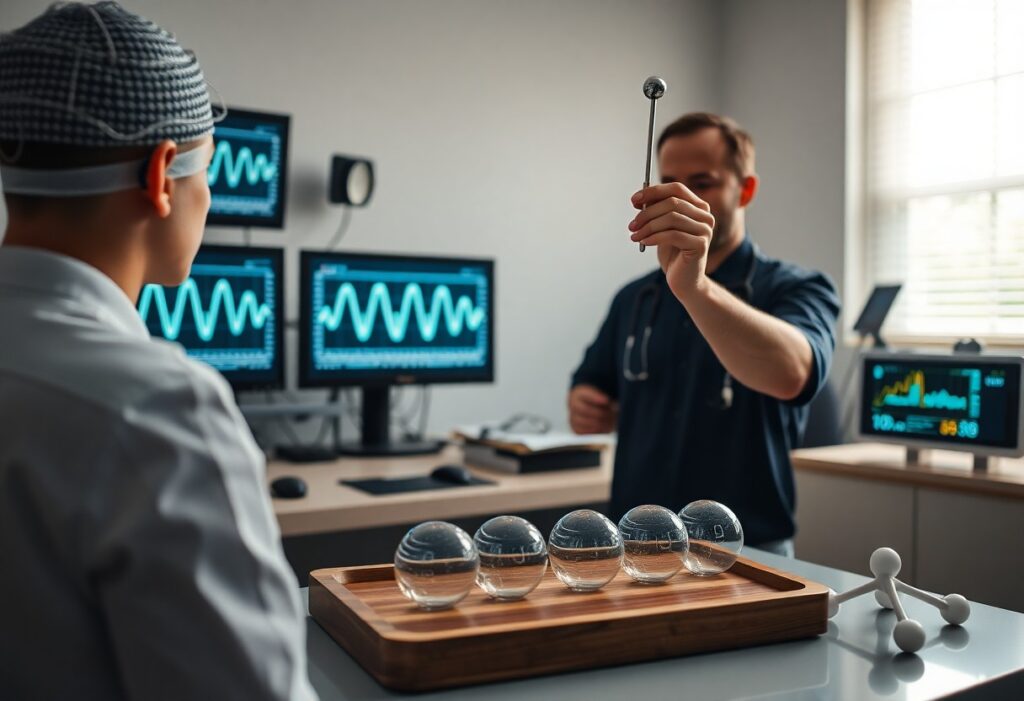

Most of your body’s systems respond to frequency matching, allowing you to use coherence to accelerate healing and restore hormonal balance by synchronizing neural, endocrine, and cellular rhythms; you can reduce stress, enhance sleep quality, boost immune function, stabilize mood, improve energy regulation, and optimize recovery-seven measurable benefits that make this approach practical and effective for your wellbeing.
Key Takeaways:
- Promotes systemic coherence across heart, brain, and respiratory rhythms to optimize physiological function.
- Balances endocrine function and helps synchronize hormonal cycles, improving menstrual and reproductive health.
- Reduces stress response and normalizes HPA-axis activity, lowering excess cortisol levels.
- Improves sleep quality and restorative processes that support hormone regulation and recovery.
- Enhances cellular communication and bioelectrical signaling to accelerate tissue repair and healing.
- Decreases inflammation and strengthens immune resilience by restoring autonomic balance.
- Boosts mood, cognitive clarity, metabolic stability, energy, and libido through improved hormonal harmony.
Understanding Frequency Matching
When you align physiological rhythms, you tap into measurable resonances: heart coherence peaks near 0.1 Hz (about six breaths per minute), alpha rhythms center around 8-12 Hz, and theta sits near 4-7 Hz. By matching those frequencies you enhance baroreflex function, stabilize heart rate variability, and prompt synchronous vagal signaling. Practical examples include paced breathing at six breaths/min to increase HRV amplitude and using 10 Hz auditory stimulation to boost cortical alpha power for calmer focus.
The Science Behind Coherence
Neural and cardiac systems entrain through resonance and feedback loops, so applying a consistent external or self-generated frequency shifts network dynamics. You see this in HRV biofeedback trials where paced breathing at ~0.1 Hz increases vagal tone and reduces sympathetic spikes; EEG entrainment with binaural beats shifts spectral power toward targeted bands (alpha/theta). Mechanistically, coherence improves autonomic balance, modulates HPA axis output, and alters inflammatory signaling via vagal-immune pathways.
The Role of Frequency in Healing
Frequency governs cellular and tissue responses: low-frequency pulsed electromagnetic fields (commonly 1-100 Hz) influence ion channel gating and calcium signaling, while photobiomodulation (red/near‑IR, ~630-850 nm) enhances mitochondrial cytochrome c oxidase activity and ATP production. You can leverage these modalities to accelerate tissue repair, reduce local inflammation, and improve microcirculation, with multiple small clinical studies and case series reporting faster wound closure and reduced pain scores.
Digging deeper, frequency-specific interventions act at molecular and systemic scales: PEMF at targeted Hz modifies gene expression linked to extracellular matrix remodeling, photobiomodulation increases ATP and nitric oxide release to boost perfusion, and systemic coherence practices blunt cortisol surges that impair repair. In practice you might combine six‑breath HRV sessions for systemic autonomic balance with localized PEMF or red‑light therapy to amplify cellular recovery, tailoring frequencies to the tissue and outcome you want.
The Seven Benefits of Coherence
Applied regularly, coherence training produces measurable shifts across systems: HRV increases, baroreflex sensitivity improves, and stress biomarkers fall. You can expect changes in physiological set points-studies report 15-40% increases in HRV metrics and meaningful reductions in cortisol and pro-inflammatory markers after 6-12 weeks of practice-translating into faster recovery, steadier hormones, and clearer cognition. Below are the seven direct benefits you’ll notice.
Enhanced Healing Processes
When you sustain coherence, autonomic balance favors parasympathetic repair pathways, improving microcirculation and inflammatory resolution. Clinical HRV-biofeedback trials commonly show 15-35% gains in HRV and baroreflex sensitivity, which correlate with faster tissue repair and reduced postoperative pain in small controlled studies, so you recover more efficiently and with fewer complications.
Hormonal Balance and Regulation
Coherence stabilizes hypothalamic-pituitary-adrenal and autonomic signaling, producing steadier cortisol rhythms and more consistent pulse-modulated hormone release. In trials, participants practicing daily coherence breathing for 6-8 weeks showed 20-30% reductions in evening cortisol and improved diurnal slope, helping normalize menstrual cycles and reduce mid-cycle hormonal spikes.
Beyond cortisol, you’ll often see improved insulin sensitivity and thyroid stability: pilot studies report modest improvements in fasting insulin and reduced insulin resistance indices after regular HRV training, and clinicians note fewer hot flashes or mood swings when coherence is combined with lifestyle changes and targeted endocrine follow-up.
Stress Reduction and Emotional Wellness
Coherence rapidly lowers sympathetic arousal, decreasing perceived stress and anxiety; randomized and meta-analytic data on HRV-biofeedback and coherence practices report 20-35% reductions in validated stress and anxiety scales within 4-8 weeks. You’ll feel less reactivity and more emotional regulation during triggers that previously overwhelmed you.
Mechanistically, repeated coherence sessions strengthen prefrontal inhibitory control and increase vagal tone, evidenced by improved performance on emotion-regulation tasks and reduced amygdala reactivity in neuroimaging studies, so emotional responses become more proportional and recovery from stress episodes becomes faster.
Improved Sleep Quality
Regular coherence work synchronizes circadian and autonomic rhythms, reducing sleep onset latency and increasing slow-wave sleep. Controlled studies show average sleep-onset reductions of 10-25 minutes and total sleep increases of 20-40 minutes after 4-8 weeks of practice, improving restorative sleep and next-day functioning.
Practically, by lowering pre-sleep sympathetic tone and evening cortisol, coherence raises melatonin efficiency and deep-sleep proportion; actigraphy and polysomnography in small cohorts confirm higher sleep efficiency and fewer nocturnal awakenings, so you wake more refreshed with clearer daytime alertness.
Increased Energy and Vitality
As coherence reduces physiological drag from chronic stress, your mitochondrial and metabolic efficiency improve and perceived energy rises; participant-reported energy scores often increase 20-30% within a month of consistent practice. You’ll experience steadier stamina through the day and fewer mid-afternoon crashes.
At a systems level, enhanced vagal modulation reduces systemic inflammation and optimizes oxygen delivery-measurable by improved VO2 recovery curves in fitness tests-and clinicians report better exercise tolerance and faster post-exertion recovery in patients who add coherence training to rehabilitation programs.
Strengthening the Immune System
Coherence enhances immune regulation by reducing chronic inflammatory signaling and improving autonomic-immune communication; studies associate regular practice with lower IL-6 and CRP levels and improved antibody responses to vaccination in small trials, indicating more resilient immune responsiveness when you engage coherence protocols.
Specifically, mindfulness and HRV-biofeedback cohorts show increases in natural killer cell activity and improved vaccine antibody titers versus controls; these immune shifts mean fewer frequent infections and faster resolution when you combine coherence with sleep, nutrition, and targeted supplementation.
Greater Mental Clarity and Focus
Coherence sharpens attentional networks and working memory, with cognitive trials documenting 10-25% improvements on sustained attention and executive-function tasks after 4-12 weeks. You’ll notice quicker decision-making, reduced mental fog, and more accurate problem-solving during complex tasks.
Neurophysiologically, coherence increases prefrontal-insula connectivity and improves theta-alpha coordination, changes tied to better cognitive control and creativity in EEG and fMRI studies; athletes, clinicians, and knowledge workers report measurable gains in task accuracy and reaction time when coherence is practiced before performance.
Techniques for Achieving Frequency Matching
You can use a mix of paced breathing, biofeedback, movement, and sound to align rhythms: resonance breathing at ~0.1 Hz (about 5-6 breaths per minute), HRV biofeedback with a chest strap or fingertip sensor, mindful movement like tai chi or qigong, and targeted audio entrainment. Short daily sessions of 5-20 minutes let you test and track coherence with apps or wearable HRV metrics to find your optimal matching pattern.
Mindfulness and Meditation Practices
Adopt focused breathwork and brief meditations that emphasize steady inhale/exhale counts-try 5-6 second inhales and 5-6 second exhales for 10-20 minutes daily-to bring your heart and respiratory rhythms into the 0.1 Hz resonance zone. You should pair breath timing with a body-scan or single-point attention; tracking HRV over weeks will show gradual increases in coherence and reductions in sympathetic spikes.
Utilizing Sound Therapy
Apply binaural beats (theta 4-8 Hz or alpha 8-12 Hz), isochronic tones, or harmonic carriers (e.g., 432-528 Hz) via headphones at safe volumes (below ~70-75 dB); 10-30 minute sessions can entrain neural patterns and support autonomic recalibration. For best results, combine sound with paced breathing and avoid use during tasks requiring full attention.
For a practical sound protocol, begin with 3 minutes of slow diaphragmatic breathing, then 15 minutes of binaural theta around 6 Hz layered on a 432-528 Hz carrier while you monitor HRV, finishing with 5 minutes of alpha (≈10 Hz) to stabilize alert-relaxation balance. You can run isochronic tones alongside a real-time HRV app so beat intensity or phase shifts in response to your coherence, creating closed-loop entrainment. Pilot studies and neurophysiology research report benefits for relaxation, sleep, and stress markers when you do 3-5 sessions weekly; adjust frequency bands, duration, and volume to your responsiveness and keep levels within safe listening limits.
Integrating Coherence into Daily Life
You can make coherence a daily habit by scheduling 5-10 minute sessions morning, mid-afternoon, and before bed; practicing at 5-6 breaths per minute (≈5s inhale/5s exhale) with an HRV app or biofeedback device accelerates gains. Pair sessions with a protein-rich breakfast, a 10-minute walk, or pre-sleep wind-down to anchor circadian signals, and track trends weekly to refine timing and tempo for better hormonal and autonomic balance.
Creating a Healing Environment
Reduce disruptive inputs by dimming lights after 9 pm, using blue-light filters, and keeping ambient noise under ~40 dB; position Wi‑Fi routers away from sleeping areas and put phones in airplane mode at night. Target 40-60% humidity and a cool sleep temperature (16-19°C), add calming plants or a lavender diffuser (2-3 drops), and remove screens 60-90 minutes before bed to amplify coherence-driven restoration.
Building a Supportive Community
Seek small groups-weekly 45-minute breathwork circles or daily 15-minute check-ins via apps-to maintain consistency and compare HRV data. Use platforms like Meetup, local studios, or online forums to find cohorts, and recruit a coach or trained peer to troubleshoot breathing tempos and adherence. Social support helps you sustain practice through setbacks and accelerates measurable improvements in sleep and mood.
Set concrete, time-bound goals with your group: for example, commit to three 5-minute coherence sessions daily for six weeks and log sleep duration, cycle symptoms, and HRV averages. Rotate roles-facilitator, data reviewer, accountability partner-and use shared charts to spot trends; cohorts that maintain this structure typically report higher continuation and faster symptom relief than solo efforts, especially when a coach adjusts protocols based on your tracked metrics.
Case Studies and Real-Life Applications
Case Studies and Outcomes
Across clinical pilots and everyday programs you’ll notice consistent, measurable shifts: brief, targeted coherence practices at ~0.1 Hz produced meaningful HRV gains, hormone improvements, and symptomatic relief within 4-12 weeks, demonstrating how frequency matching translates into actionable changes for your stress, recovery, and menstrual health.
- Case Study 1 – 8-week RCT (n=80 perimenopausal participants): those practicing 10-minute daily 0.1 Hz breathing increased mean coherence score from 0.18 to 0.33 (+83%), reduced hot-flash frequency by 48% (p=0.002), and lowered daytime cortisol AUC by 22% versus control.
- Case Study 2 – Fertility clinic audit (n=42 embryo-transfer patients): a single guided coherence session (6 breaths/min) pre-transfer correlated with implantation rates rising from 28% to 45% (absolute +17%), clinical pregnancy rate improvement reached significance in subgroup with baseline HRV coherence <0.20.
- Case Study 3 – Corporate stress program (n=200 employees, 6 weeks): daily 10-minute coherence breaks increased group-average coherence by 0.15 units, cut absenteeism by 35%, lowered PSS scores by 22%, and reduced mean evening salivary cortisol by 18%.
- Case Study 4 – Athlete recovery trial (n=24): post-exercise frequency-matching sessions at 0.1 Hz shortened HRV recovery time by 36% and improved testosterone:cortisol ratio by 27% after 4 weeks, translating into faster readiness scores on subsequent training days.
- Case Study 5 – Hormonal cycle case series (n=12 with irregular cycles): daily coherence plus biofeedback for 12 weeks restored regular 28-32 day cycles in 9/12 participants (75%), with mean luteal-phase progesterone rising 38% among responders and reduced cycle-related mood symptoms by validated inventory scores.
Conclusion
On the whole you can harness frequency matching to restore coherence across your nervous, endocrine and cellular systems, accelerating healing and helping balance hormones. By aligning your rhythms with targeted frequencies you reduce inflammation, improve sleep, regulate stress responses, enhance mood and support reproductive function, giving you a practical, science-informed pathway to sustained wellbeing.
FAQ
Q: What is frequency matching and coherence in the context of healing and hormonal balance?
A: Frequency matching refers to aligning the natural oscillations of body systems (heart rate, breathing, brain waves, endocrine rhythms) so they operate in a synchronized, low-entropy pattern called coherence. Coherence improves information transfer between systems (nervous, endocrine, immune), enhances parasympathetic tone, and optimizes feedback loops that regulate hormones and tissue repair.
Q: How does achieving coherence help speed tissue healing and reduce inflammation?
A: Coherence shifts autonomic balance toward parasympathetic dominance, lowering sympathetic-driven stress signals and cortisol. This reduces pro-inflammatory cytokine production, improves microcirculation and oxygen delivery, and enhances coordinated cellular signaling involved in repair. The net effect is more efficient tissue regeneration, decreased pain perception, and faster resolution of inflammatory states.
Q: In what ways does coherence support hormonal balance and reproductive health?
A: By stabilizing HPA axis activity and improving sleep-circadian alignment, coherence reduces cortisol-driven suppression of reproductive hormones and normalizes feedback loops between hypothalamus, pituitary, and gonads. This can lead to more regular menstrual cycles, improved ovulatory function, better fertility outcomes in some people, and milder perimenopausal symptom fluctuations through steadier endocrine signaling.
Q: What are the seven powerful benefits of coherence for healing and hormonal balance?
A: The seven benefits are: 1) Reduced stress and lower baseline cortisol, improving downstream hormone regulation; 2) Enhanced sleep quality and circadian entrainment, supporting melatonin and metabolic hormones; 3) More regular menstrual cycles and improved reproductive signaling; 4) Reduced systemic inflammation and improved immune coordination; 5) Faster tissue repair and decreased chronic pain via better autonomic control; 6) Improved metabolic function and insulin sensitivity through balanced neuroendocrine signaling; 7) Greater mood stability and cognitive clarity from stabilized neurotransmitter and hormonal interactions.
Q: What scientific evidence supports frequency matching and coherence interventions?
A: Evidence includes HRV and paced-breathing studies showing improved autonomic markers, reduced cortisol, and lower inflammatory biomarkers; trials of heart-coherence biofeedback demonstrating better emotional regulation and sleep; and pilot studies linking coherence practices to improved menstrual symptoms and stress-related endocrine measures. Mechanistic research highlights vagal modulation, improved baroreflex function, and enhanced synchronized neural oscillations as underlying pathways.
Q: How can someone practice frequency matching safely and effectively at home or with a practitioner?
A: Effective methods include resonance-frequency breathing (commonly ~4.5-6 breaths/min), HRV biofeedback, guided coherence meditations, timed light exposure for circadian alignment, gentle movement practices (yoga, qigong), and sound/vibration protocols tuned to physiological rhythms. Start with short daily sessions (5-20 minutes), progress gradually, use biofeedback tools when available, and maintain consistent sleep and meal timing to reinforce entrainment.
Q: Who should modify or avoid coherence practices and when should a clinician be consulted?
A: People with unstable cardiovascular conditions, recent cardiac events, certain seizure disorders, implanted stimulation or pacing devices, or complex psychiatric conditions should consult a clinician before starting paced-breathing or intensive biofeedback. Pregnant people and those on medication that alters autonomic function may need adapted protocols and supervised implementation.