
Stress triggers specific brain-wave patterns, and you can learn the seven distinct states that move your body from fight-or-flight into repair. This guide explains each state, how to recognize its signature rhythms, and practical techniques you can use to prompt neural transitions that reduce inflammation, restore sleep architecture, balance autonomic tone, and accelerate cellular recovery.
Brainwaves reveal seven critical states that steer your nervous system from fight-or-flight into repair and regeneration; this post breaks down each state, shows how you can identify the signs in your body and behavior, and presents evidence-backed strategies to shift brainwave patterns so you recover faster and strengthen long-term resilience.
Key Takeaways:
- Different brain-wave states form a cascade from high-arousal beta to restorative delta, allowing the nervous system to shift from stress responses to repair processes.
- Alpha promotes relaxed wakefulness, lowers cortisol, and facilitates parasympathetic activation for recovery.
- Theta supports deep relaxation, emotional processing and memory consolidation that help recalibrate threat circuits.
- Delta dominates deep sleep and drives growth-hormone release, immune function and cellular repair.
- Balanced gamma activity integrates information and strengthens top-down control that stabilizes recovery.
- Sensorimotor rhythm (SMR) and stable low-beta patterns reduce hyperarousal and ease transitions into sleep and repair states.
- Paced breathing, meditation, HRV biofeedback, sleep hygiene and neurofeedback can intentionally shift brain waves to accelerate recovery and repair.
Key Takeaways:
- Brain activity is organized into distinct frequency bands-gamma, beta, SMR, alpha, theta, delta-each supporting different functions from high-focus cognition to deep repair.
- High-beta/gamma dominance corresponds with sympathetic activation and stress responses; prolonged dominance impairs recovery processes.
- SMR and low-beta patterns support calm, focused states that help downregulate arousal and improve behavioral control.
- Alpha rhythms mark relaxed wakefulness and act as a gateway for shifting from alert stress to restorative modes.
- Theta promotes deep relaxation, emotional processing, and memory consolidation-key for transitioning toward repair.
- Delta predominates in deep sleep when growth hormone release, immune restoration, and tissue repair occur.
- Interventions that modulate brain waves (breathwork, neurofeedback, meditation, sleep optimization) can accelerate the switch from stress-driven states to physiological repair.
Understanding Brain Waves
The Science of Brain Waves
Your brain produces measurable electrical oscillations when populations of neurons fire in synchrony; electroencephalography (EEG) records these rhythms in Hertz (Hz), where frequency and amplitude map to functional states. Neurotransmitters like acetylcholine and norepinephrine shift network excitability, so a tilt in chemistry or input (sleep, stress, meditation) changes dominant bands. You can influence power and coherence with sleep, breathwork, stimulation, or targeted training to bias networks toward repair or alertness.
Types of Brain Waves and Their Functions
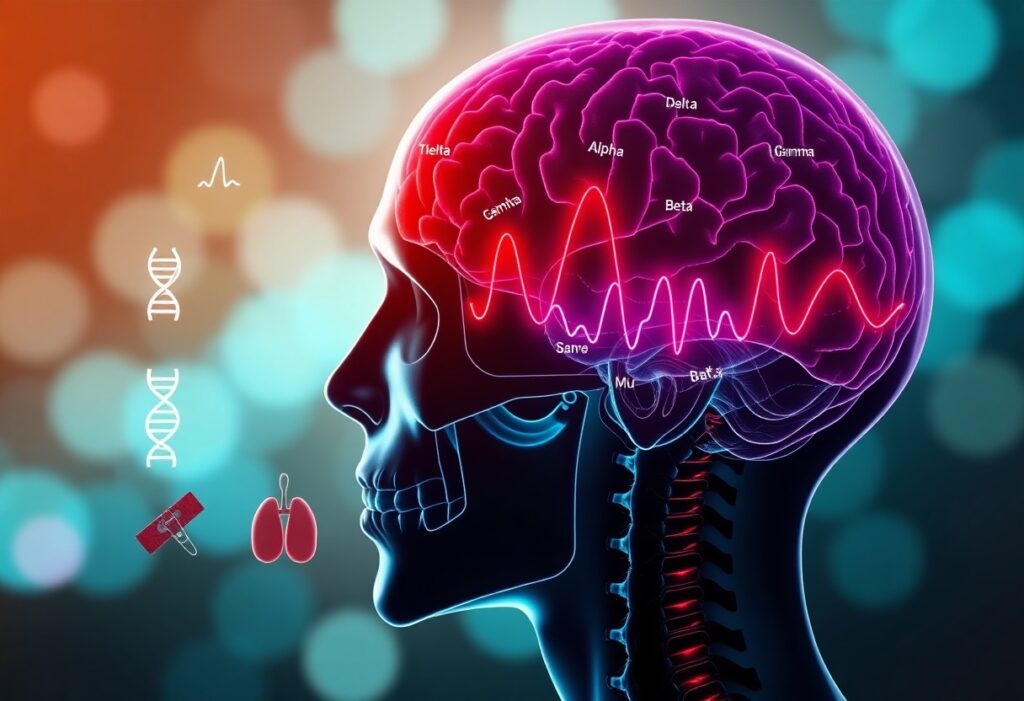
Delta (0.5-4 Hz) dominates deep N3 sleep and supports tissue repair and growth-hormone-linked recovery; Theta (4-8 Hz) appears in drowsiness, creative insight, and hippocampal memory consolidation; Alpha (8-12 Hz) marks relaxed wakefulness and inhibitory gating during eyes-closed rest; Beta (12-30 Hz) underpins active problem-solving and anxious rumination; Gamma (30-100 Hz) coordinates fast information binding for attention and perception.
- Delta increases during slow-wave sleep, facilitating endocrine recovery and synaptic downscaling.
- Theta spikes during naps and creative tasks, often seen in the hippocampus during memory replay.
- Alpha rises after 8-12 minutes of relaxed meditation in some studies, aiding inhibitory control.
- Beta surges with focused tasks or chronic stress, raising heart rate and cortisol in prolonged states.
- Knowing how to use naps, 20 minutes of mindfulness, or targeted stimulation lets you shift between these bands to favor repair over stress.
| Delta | 0.5-4 Hz – deep N3 sleep; tissue repair, growth-hormone release, metabolic clearance |
| Theta | 4-8 Hz – drowsiness, memory consolidation, creative insight, hippocampal replay |
| Alpha | 8-12 Hz – relaxed alertness, inhibitory control, eyes-closed rest; increased in meditation |
| Beta | 12-30 Hz – active cognition, focused attention, and worry-driven rumination |
| Gamma | 30-100 Hz – high-frequency binding for attention, perception, and working memory |
You can use concrete protocols to bias specific bands: 20-30 minute naps boost theta and early delta for memory consolidation; nightly 90-120 minute sleep cycles maximize N3 delta for hormonal repair; 10-20 minute alpha-promoting meditations reduce sympathetic tone; targeted cognitive tasks or caffeine elevate beta for performance; short gamma bursts appear during high-demand attention tasks. Track with consumer EEG or polysomnography to confirm shifts and personalize timing and dose.
- Use a 90-minute sleep opportunity to capture full NREM cycles and increase delta-driven repair.
- Apply 10-20 minutes of breath-focused meditation to elevate alpha and reduce sympathetic arousal.
- Leverage brief focused work blocks (25-50 minutes) to raise beta for task performance while scheduling recovery after.
- Consider binaural-beat or neurofeedback protocols designed for specific Hz bands when clinically appropriate.
- Knowing which protocol targets which band lets you design routines that shift your brain from stress-dominant beta to repair-oriented delta and alpha states.
| Protocol | Target Band & Expected Effect |
| 90-minute sleep cycle | Delta – maximizes N3 for hormonal repair and metabolic clearance |
| 20-minute nap | Theta/early Delta – boosts memory consolidation and reduces sleep pressure |
| 10-20 min mindfulness | Alpha – increases relaxed alertness and inhibitory control |
| Pomodoro work blocks | Beta – enhances sustained focus; pair with breaks to prevent chronic stress |
| Neurofeedback/binaural beats | Targeted Hz – can train increased power/coherence in chosen band with practice |
Understanding Brain Waves
When you record EEG you see rhythmic activity spanning roughly 0.5 Hz to over 40 Hz, and those rhythms map to functional states: delta (0.5-4 Hz) dominates deep sleep, theta (4-7 Hz) shows in drowsiness and memory consolidation, alpha (8-12 Hz) signals relaxed wakefulness, SMR (12-15 Hz) supports sensorimotor gating, beta (13-30 Hz) reflects active thinking or stress, and gamma (>30 Hz) links to focused attention and feature binding.
The Science of Brain Waves
At the neuronal level you’re observing synchronous firing driven by cortical and thalamic circuits; oscillations arise from excitatory-inhibitory loops and ionic currents. For example, 40 Hz gamma coordinates local assemblies during working memory, while thalamocortical slow oscillations (<1 Hz) organize sleep-dependent consolidation. Clinical work-Sterman's SMR neurofeedback (12-15 Hz)-demonstrated seizure reduction, illustrating how trained modulation of band power changes outcomes.
The Role of Brain Waves in Health
Shifts among bands act as biomarkers and levers for health: heightened beta (13-30 Hz) often accompanies sympathetic arousal and anxiety, whereas increases in alpha and theta associate with parasympathetic engagement and reduced cortisol. Deep delta activity during slow-wave sleep drives growth hormone release and tissue repair, so preserving delta is central to recovery after illness or intense training.
Practically, you can influence these states: HRV biofeedback at ~0.1 Hz (six breaths/min) boosts parasympathetic tone and promotes alpha/theta dominance during rest; SMR training improves attention and seizure control; and chronic loss of slow-wave delta correlates with elevated inflammatory markers (e.g., CRP), impaired glucose regulation, and delayed healing-so interventions that restore appropriate band balance measurably improve resilience and repair.
The Stress Response
When stress hits, your sympathetic nervous system fires within seconds-adrenaline raises heart rate by 20-30 beats and redirects blood flow to muscles while the HPA axis releases cortisol over minutes. You gain short‑term alertness, but repeated activation shifts metabolism toward glucose production, suppresses immune defenses within hours, and slows tissue repair. For example, a 2‑minute sprint is adaptive, whereas ongoing work pressure keeps you in a catabolic state that undermines recovery and increases wear on organs.
Cortisol and Its Effects on the Body
Cortisol peaks as part of the cortisol awakening response, rising for 20-30 minutes after waking and with a plasma half‑life around 60-90 minutes. You experience increased gluconeogenesis and higher blood glucose, reduced lymphocyte activity and slower wound healing; chronic elevation promotes visceral fat accumulation, raises blood pressure, and impairs hippocampal‑dependent memory. Studies of shift workers and family caregivers often show a flattened diurnal curve and persistent evening cortisol, indicating maladaptive HPA regulation.
Identifying Signs of Chronic Stress
You may see persistent insomnia, daytime fatigue, irritability, frequent infections, digestive upset, unexplained weight change, and trouble concentrating; when these symptoms persist beyond six weeks they suggest chronic stress. Caregivers commonly report disrupted sleep and repeat colds, while office workers often have recurrent headaches and neck tension. Track clusters and duration to distinguish normal stress spikes from a sustained state that requires intervention.
Objective markers clarify the picture: your resting heart rate rising 5-10 bpm, blood pressure nudging into the 130s/80s, or sleep efficiency dropping below 85% are measurable red flags. You can confirm HPA dysregulation with two salivary cortisol samples (morning and evening) to detect a flattened diurnal slope, and check fasting glucose and lipids for early metabolic drift. Keep a symptom diary for 2-4 weeks to link patterns to triggers and guide targeted changes.
The Seven Critical States
Delta Waves: Deep Sleep and Healing
Delta waves (0.5-4 Hz) dominate N3 deep sleep and drive physical restoration: growth hormone release, tissue repair, and immune consolidation. If you suffer from chronic sleep loss, you lose a large portion of delta-driven recovery-adults typically get 10-25% N3 sleep. Prioritizing uninterrupted sleep cycles helps you rebuild muscle, clear metabolic waste, and stabilize daytime energy.
Theta Waves: Accessing Creativity and Intuition
Theta waves (4-8 Hz) appear during light sleep, meditation, and hypnagogic moments, opening associative thinking and insight. When you tap theta-during relaxed daydreaming or brief meditative sessions-you often access novel solutions, emotional processing, and implicit memory linking that surface as sudden ideas or intuitive hits.
To access theta reliably, try 10-12 minutes of eyes-closed imagery work or a 10-20 minute nap; binaural beat protocols around 5-7 Hz can entrain theta for some people. Artists and problem-solvers often schedule short, low-stimulation intervals to catch theta-fueled connections, turning scattered fragments into actionable insights without forcing linear thinking.
Alpha Waves: Rest and Relaxation
Alpha waves (8-12 Hz) mark relaxed wakefulness and sensory gating-your brain reduces external input so internal processing can occur. You’ll see alpha when you close your eyes, practice gentle breathing, or pause after a task; increased alpha correlates with lower arousal and improved creative incubation.
Boost alpha with 5-15 minutes of paced breathing (about 6-8 breaths per minute), progressive muscle relaxation, or brief eyes-closed breaks. In EEG training, 10 Hz entrainment enhances alpha power and can speed recovery between cognitive tasks, improving mood and lowering distraction for up to an hour afterward.
Beta Waves: Focus and Problem Solving
Beta waves (13-30 Hz) support active attention, logical reasoning, and task-oriented problem solving. When you enter a beta-dominant state, your prefrontal networks engage to manage working memory, plan steps, and inhibit distractions-ideal for concentrated work, analytic tasks, and decision-making.
Use techniques like Pomodoro intervals (25 minutes focused, 5 minutes rest) to sustain productive beta without burnout. Short periods of intense beta improve task throughput, but you should alternate with alpha-inducing breaks to prevent performance decline and maintain accuracy over long sessions.
Gamma Waves: Peak Performance and Cognition
Gamma activity (≈30-100 Hz) correlates with information binding, working memory, and peak cognitive moments where disparate inputs cohere into insight. You’ll notice gamma bursts during intense learning, fast problem integration, or moments of flow when perception and action sync.
To cultivate gamma, engage in high-challenge cognitive tasks, complex pattern recognition, or focused mindfulness sessions; expert meditators and performers often show elevated gamma during sustained, skilled performance. Short, targeted training blocks that progressively increase difficulty can raise gamma responsiveness tied to improved episodic memory and rapid decision-making.
High Beta Waves: Stress Response
High beta (roughly 20-40 Hz) signals heightened arousal-vigilance, anxious rumination, and SNS activation. You experience high beta during deadlines, conflict, or threat, which sharpens quick reactions but, if prolonged, elevates cortisol and impairs working memory and sleep onset.
Downregulate high beta with vagal-activating practices: slow diaphragmatic breathing (about 6 breaths per minute) for 2-5 minutes, HRV biofeedback, or brief cold exposure. These interventions lower sympathetic tone, reduce high-beta dominance, and restore your capacity for clear decision-making and restorative sleep.
Transitioning Through States
Transitions between wave states are dynamic and often predictable: you move from beta to alpha with a pause, from alpha to theta with deeper inward attention, and into delta with full sleep cycles. Timing matters-short, structured breaks shift you back into task-ready beta faster than unfocused downtime.
To guide transitions, apply concrete protocols: box or paced breathing (4-6 seconds per phase) to drop from high beta to alpha in 1-3 minutes; 8-12 minutes of visualization or a 10-20 minute nap to reach theta; and consistent sleep hygiene plus a 90-minute cycle to access delta. Combining light exposure, scheduled rests, and brief entrainment tools helps you move between repair and performance reliably.
Transitioning to Repair
As you move out of activation, rapid, repeatable cues help the autonomic balance flip toward repair: slower breathing, safe social contact, and reduced sensory input. Within minutes you can detect heart rate decline and rising heart rate variability (HRV) as vagal tone increases; across sleep cycles, delta (0.5-4 Hz) dominance in N3 drives protein synthesis and immune consolidation. Use short, practical interventions between tasks to accelerate that physiological transition.
The Role of Relaxation and Recovery
Relaxation and recovery increase parasympathetic output so energy shifts from threat management to digestion, tissue repair, and memory consolidation. You’ll get improved sleep architecture-more N2/N3 and clearer delta activity-when you practice paced breathing, active rest, or consistent evening routines; even 10-20 minutes daily of structured recovery is associated with better sleep continuity and lower subjective stress in controlled studies.
Techniques to Encourage the Shift
Practical techniques you can use include diaphragmatic breathing at 4-6 breaths per minute, box breathing (4-4-4-4), 10-20 minute HRV biofeedback sessions, progressive muscle relaxation for 10-15 minutes, 20-30 minute restorative naps, and dimming bright/blue light 60-90 minutes before bed to support melatonin onset. Apply these within 5-30 minutes after a stressor to speed parasympathetic engagement.
For diaphragmatic breathing, sit tall, inhale 4-5 seconds through the nose into the belly, exhale 5-6 seconds through the mouth, repeat for 5-10 minutes while monitoring heart rate or HRV with a chest strap or wrist sensor. For progressive muscle relaxation, tense each muscle group 5-10 seconds then release, moving head-to-toe in 10-15 minutes. Apps and HRV trainers (for example HRV-guided pacers) make dose and timing easy to track and refine.
Critical States of Brain Activation
These activation states – from gamma to delta – organize how your nervous system responds and repairs: alpha (8-12 Hz) gates sensory input, theta (4-8 Hz) links to memory and insight, beta (13-30 Hz) drives focused action, and delta (0.5-4 Hz) supports deep restoration. You can observe shifts in seconds to minutes during breathing exercises or naps, and targeted practices or neurofeedback can bias your brain toward the state that best supports recovery or performance.
Theta Waves: Deep Relaxation and Creativity
Theta (4-8 Hz) emerges when you slip into drowsiness, light sleep, or deep meditation and often accompanies hippocampal activity that supports memory consolidation and associative thinking. Musicians and improvisers show elevated frontal-midline theta during creative flow, and nap-induced theta bursts have been linked to improved problem solving on tests of insight. You can boost theta with 10-20 minute breathwork or guided imagery to access richer associative processing.
Alpha Waves: The State of Calm Awareness
Alpha (8-12 Hz), often peaking near 10 Hz, appears when you close your eyes or quiet sensory input, creating a background of relaxed vigilance that supports top‑down control and reduced distractibility. Increased posterior alpha correlates with improved task focus after brief mindfulness sessions, and neurofeedback protocols commonly target alpha to lower subjective stress while preserving alertness.
Mechanistically, alpha reflects thalamo‑cortical resonance that gates incoming sensory streams so your cortex can prioritize internal processing; posterior dominant alpha is most prominent when you rest with eyes closed. In clinical and training settings, sustained alpha enhancement across weeks-measured by EEG power in the 8-12 Hz band-aligns with better attention scores and lower self‑reported anxiety, making it a practical target when you want calm without sleepiness.
The Impact of Stress on the Body
Beyond the immediate fight-or-flight surge, stress forces your body into prolonged activation of adrenal hormones and sympathetic tone. That sustained cortisol and adrenaline exposure elevates blood glucose, raises blood pressure, shifts metabolism toward visceral fat, and alters immune signaling within hours to days. Over time these shifts compound, making recovery slower and blunting parasympathetic repair processes that the later brain-wave states help restore.
Physiological Effects of Chronic Stress
Over months to years, chronic stress remodels organs and systems: suppressed lymphocyte function raises infection susceptibility, chronic low-grade inflammation (elevated IL-6/CRP) accelerates atherosclerosis, and altered insulin sensitivity promotes metabolic syndrome. For example, meta-analyses link persistent psychosocial stress to roughly a 30-40% increased risk of coronary heart disease. You may notice frequent colds, digestive flare-ups, sleep fragmentation, or unexplained shifts in weight as early warning signs.
Psychological Implications
Your mental state shifts alongside the body: prolonged stress increases anxiety and depressive symptoms while impairing attention, working memory, and cognitive flexibility. Neuroimaging documents reduced prefrontal regulatory control and hippocampal volume reductions (commonly 5-15% in chronic cases), which undermines learning and emotional resilience. Sleep disruption and rumination compound these effects, making mood recovery slower even after the stressor ends.
Cortisol and inflammatory cytokines also disrupt neurotransmitter systems-lowering serotonin and dopamine availability-and weaken top-down control, so you react more emotionally and struggle with decision-making. Longitudinal studies of high-burden caregivers show elevated stress biomarkers predict steeper declines in executive function and higher rates of clinical depression over 2-5 years, demonstrating how psychological wear translates into measurable cognitive and affective impairment.
Neuroplasticity and Healing
Changes in synaptic strength and network topology underpin recovery after stress, so you benefit when targeted experiences reshape circuits: targeted motor practice can double dendritic spine turnover in weeks, while chronic aerobic training raises circulating BDNF by roughly 20-40%, supporting synaptogenesis. You harness neuroplasticity most effectively by aligning behavioral cues (sleep, movement, learning) with periods of heightened slow-wave and theta activity to convert transient excitability into lasting structural repair.
How Brain Waves Influence Healing
Delta (0.5-4 Hz) and sleep spindle (12-15 Hz) activity during N3 and N2 orchestrate glymphatic clearance and memory consolidation, respectively; for example, enhanced slow waves correlate with improved interstitial metabolite removal and immune signaling. Theta (4-8 Hz) bursts during focused learning promote long-term potentiation and synaptic tagging, so you should view specific oscillatory states as windows when molecular repair, protein synthesis, and circuit remodeling are most likely to succeed.
Strategies for Enhancing Neuroplasticity
Combine 30-40 minutes of moderate aerobic exercise (60-75% HRmax) three to five times weekly with 20-30 minutes of focused skill practice using spaced repetition to produce measurable gray-matter gains within 6-8 weeks. Add sleep hygiene to boost slow-wave sleep, a diet rich in DHA and protein to supply synaptic building blocks, and consider adjuncts like closed-loop auditory slow-wave stimulation or clinician-guided tACS (e.g., theta 4-7 Hz, 15-20 minutes) to entrain beneficial oscillations.
In practice, you can schedule a daily regimen: brisk aerobic session in the morning, a midday 20-minute concentrated practice block with immediate feedback, and a pre-sleep routine that promotes N3 (cool dark room, 7-9 hours). Trials of closed-loop auditory stimulation during N3 have increased slow-wave amplitude and overnight memory retention, while small controlled studies of 6 Hz tACS show short-term working memory gains-both warrant professional oversight before use.
Mechanisms of Transition from Stress to Repair
You switch from sympathetic dominance to parasympathetic repair through coordinated shifts in neural oscillations, autonomic output and neuroendocrine feedback. Rapid cues-paced breathing (~6 breaths/min), safe social contact, or HRV biofeedback-can double respiratory sinus arrhythmia and pull autonomic balance toward vagal tone within minutes; slower processes like sleep-dependent delta upregulation and synaptic renormalization then consolidate tissue repair over hours to days.
Neuroplasticity and Brain Wave Modulation
When you shape oscillations, you alter plasticity rules: theta (4-8 Hz) gating promotes synaptic potentiation during learning, while gamma (30-80 Hz) coordinates local firing to strengthen assemblies. Sleep spindles (12-15 Hz) and delta activity during N3 downscale synaptic weights, reducing metabolic load and supporting growth hormone release. Studies using timed slow-wave stimulation report memory consolidation gains in the order of 10-30%.
Techniques for Enhancing Brain Wave States
You can use noninvasive and behavioral tools to nudge oscillations: HRV and EEG neurofeedback, binaural beats, tACS/tDCS at low amplitudes, resonance breathing, and sleep-timed auditory stimulation. Each method targets different bands-alpha/theta for relaxation, theta-gamma for memory, delta for deep repair-and their efficacy often depends on dose: typical neurofeedback requires 20-40 sessions, while brief respiratory training shows measurable HRV change within a single 10-minute session.
For practical application, you might start with 10-minute daily resonance-breathing (≈6 breaths/min) to raise HRV, add 20-30 minutes of alpha-theta neurofeedback 2-3 times weekly to promote downregulation, and consider night-time 0.5-1 Hz auditory stimulation to enhance slow-wave amplitude; clinical protocols often use 1-2 mA tACS for 10-20 minutes but should be supervised. Track objective metrics-HRV, sleep staging, or cognitive tests-to verify effects over 4-8 weeks.
To wrap up
From above, you can see how the seven brain-wave states orchestrate the shift from stress to repair, guiding respiration, heart rate, and neurochemical balance; by tuning into and cultivating specific rhythms you accelerate your recovery, optimize your sleep, and strengthen your resilience, giving you practical pathways to move deliberately from arousal into restoration.
FAQ
Q: What is High Beta brain-wave activity and how does it relate to stress?
A: High Beta (roughly 20-40 Hz) is associated with acute alertness, anxious thinking, and the fight-or-flight response. When dominant it raises heart rate, cortisol, and muscle tension, keeping the body in stress mode and blocking repair processes like digestion and deep sleep. To reduce High Beta: practice paced breathing (4-6 breaths per minute), brief progressive muscle relaxation, step away from perceived threats, and use short mindfulness resets. Reducing High Beta creates the neural conditions needed to shift toward restorative states.
Q: What role does Beta activity play in switching from stress to repair?
A: Beta (12-30 Hz) supports focused attention, problem-solving, and active thinking. Moderate Beta is adaptive for task completion, but excessive Beta sustains arousal and prevents downshifting. To move from stressful Beta to restorative patterns, schedule transitions (micro-breaks), lower sensory input, use grounding techniques (feet on floor, 5 senses check), and prioritize short physical movement to discharge tension. Balanced Beta can scaffold deliberate transition into calmer states.
Q: How does Alpha brain-wave activity help the body begin repair?
A: Alpha (8-12 Hz) signals relaxed wakefulness and reduced sensory processing. Alpha fosters parasympathetic activation-slower heart rate, improved digestion, and lowered cortisol-creating a bridge from vigilance to recovery. Promote Alpha with gentle eye-closing, soft-focus gazing, slow diaphragmatic breathing, light rhythmic movement (walking), and listening to calming music. Alpha-rich moments increase the likelihood of deeper restorative waves emerging.
Q: What is SMR (sensorimotor rhythm) and why is it important for calming the body?
A: SMR (around 12-15 Hz) appears over sensorimotor cortex and supports a calm, alert state with less motor agitation. Higher SMR correlates with steadier muscle tone, improved sleep onset, and reduced impulsive reactivity-conditions favorable for repair. Enhance SMR through structured movement routines, consistent sleep schedules, neurofeedback if available, and slow coordination exercises (tai chi, balance training). Strengthening SMR helps stabilize arousal so restorative waves can take hold.
Q: How does Theta activity assist in shifting from stress toward repair?
A: Theta (4-8 Hz) emerges during deep relaxation, meditation, and the hypnagogic transition. Theta promotes memory consolidation, emotional processing, and vagal activation, lowering sympathetic drive and enabling physiological repair pathways. Encourage Theta with longer meditative practices, rhythmic breathwork, binaural beats or isochronic tones tuned to Theta ranges, and keeping a low-stimulation environment before sleep. Theta fosters the internal processing that precedes bodily restoration.
Q: What is the role of Delta waves in bodily repair and recovery?
A: Delta (0.5-4 Hz) dominates deep non-REM sleep and coordinates growth hormone release, immune regulation, and cellular repair. Sufficient Delta sleep is imperative for physical healing, metabolic reset, and clearing metabolic waste from the brain. Support Delta by maintaining regular sleep timing, optimizing sleep environment (dark, cool, quiet), avoiding late caffeine and screens, and treating pain or sleep apnea if present. Strong Delta activity signals active biological repair.
Q: How does Gamma activity factor into healing and integration?
A: Gamma (30-100+ Hz) links distributed brain networks and supports perception, learning, and neuroplasticity. In recovery contexts, Gamma can reflect the integration of new patterns and adaptive changes that consolidate repair-emotional recalibration and skill relearning. Enhance beneficial Gamma through focused learning, compassionate social interactions, mindfulness practices that include open awareness, and exposure to enriching, novel experiences. Balanced Gamma activity helps embed restorative changes into lasting neural circuitry.
Practical Applications
Use targeted daily routines to steer your brain waves: get 20-30 minutes of bright morning light, practice paced breathing (coherence ~5 breaths/min) for 10 minutes twice daily, aim for 150 minutes of moderate exercise weekly, and prioritize 7-9 hours of sleep while avoiding screens 90 minutes before bed; these specific actions help move you from high-beta arousal toward restorative alpha and theta patterns.
Lifestyle Adjustments for Optimal Brain Wave Activity
Maintain a consistent sleep-wake schedule (7-9 hours), limit caffeine after 2 pm, keep naps under 20 minutes, and schedule 20-30 minutes of moderate aerobic activity 3-5 times weekly; add 10-30 minutes of morning natural light to entrain circadian rhythms and reduce evening blue light exposure to favor alpha/theta dominance and improved autonomic balance.
Mindfulness and Meditation Techniques
Start with 10-20 minutes of focused-attention practice, use coherence breathing (~5 breaths/min) or box breathing for immediate downregulation, and consider an 8-week MBSR program or guided-app protocols; clinical trials show these approaches yield small-to-moderate reductions in perceived stress and measurable increases in alpha/theta activity.
Practically, begin with 10 minutes daily of breath-focused meditation and increase to 20-30 minutes over two weeks, then add open-monitoring or loving-kindness sessions; for rapid shifts try 4-7-8 breathing (inhale 4s, hold 7s, exhale 8s) or 5s/5s coherence breathing for 10 minutes to boost HRV and promote theta/alpha states. If you want objective tracking, use HRV-biofeedback or 10-20 neurofeedback sessions-many people report less rumination and better sleep after consistent practice over 6-8 weeks.
To wrap up
Following this, you can appreciate how the seven brain-wave states guide your nervous system from stress toward repair: shifting EEG activity from fast beta to slower alpha, theta and delta supports autonomic balance, restorative sleep and tissue recovery. By using breathing, mindfulness, movement and sleep hygiene, you actively steer your brain physiology to enhance healing, resilience and long-term wellbeing.