
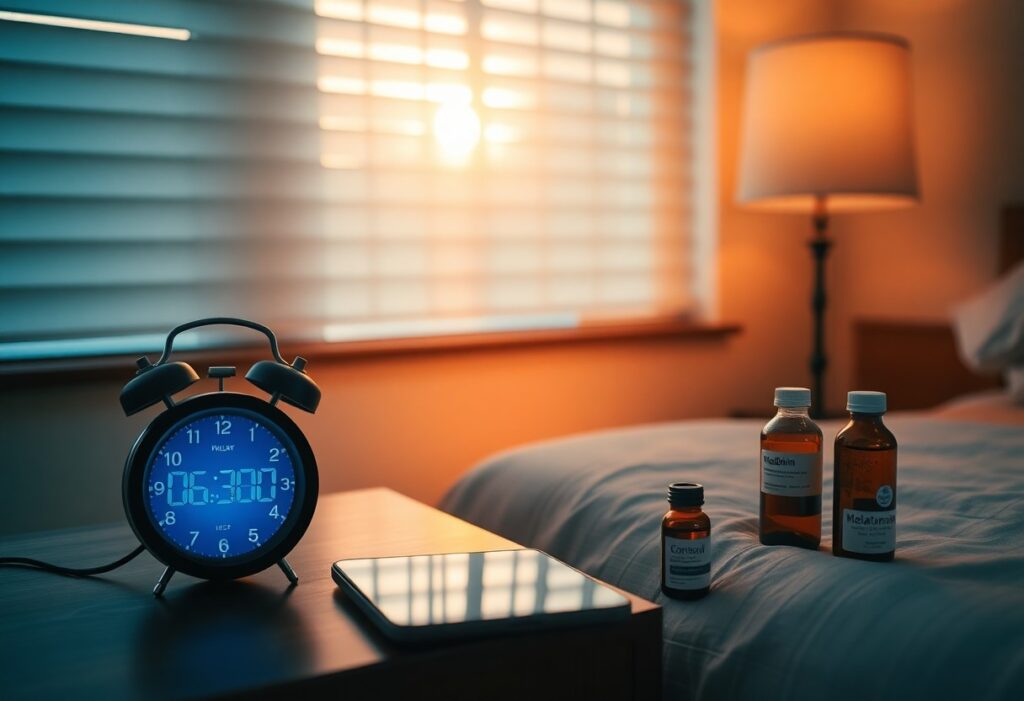

Many aspects of light exposure – intensity, timing, and wavelength – directly alter your hormones, mood, and sleep quality; understanding these seven surprising mechanisms helps you harness daylight and artificial light to optimize alertness, emotional balance, and restorative sleep. You will learn how light resets circadian rhythms, suppresses melatonin, influences cortisol and serotonin, and impacts energy and mental clarity so you can make practical changes to your environment and daily routine.
Key Takeaways:
- Light resets the circadian clock through melanopsin-containing retinal cells, timing melatonin release and the sleep-wake cycle.
- Bright morning light (natural sunlight or a bright light box) advances circadian phase, boosting daytime alertness and improving sleep onset that night.
- Evening and nighttime light-especially blue wavelengths from screens-suppresses melatonin, delays sleep, and lowers sleep quality.
- Intensity and spectrum matter: high-intensity, blue-rich light produces the strongest hormonal and phase-shifting effects; warm, dim light has much less impact.
- Irregular or nocturnal light exposure can elevate evening cortisol and dysregulate hormones tied to metabolism and mood.
- Timed bright-light therapy reliably improves seasonal affective disorder and can lift mood and daytime functioning in other depressive conditions.
- Practical strategy: maximize bright daytime light, minimize evening/bedroom light and screen exposure, and use dim, warm lighting or blue-light filters before bed.
The Science of Light and Hormones
At the cellular level, intrinsically photosensitive retinal ganglion cells (ipRGCs) with melanopsin (peak ≈480 nm) send signals to the suprachiasmatic nucleus, linking light to pineal melatonin suppression and HPA-axis timing; blue-enriched light at night can delay your dim-light melatonin onset by about 1-2 hours, whereas morning exposure of 2,500-10,000 lux can advance your phase and strengthen daytime alertness.
How Light Affects Melatonin Production
Your pineal gland rapidly lowers melatonin when retinal ipRGCs detect light, shifting the dim-light melatonin onset (DLMO) that normally occurs ~2 hours before sleep; evening blue-rich light-even modest levels from screens (~30 lux)-can blunt melatonin rise and push your sleep window later, reducing total sleep opportunity.
The Role of Light in Cortisol Regulation
Morning light helps shape your cortisol awakening response (CAR), speeding cortisol’s rise over the first 30-45 minutes after waking to boost alertness, while light at night can raise evening cortisol, fragment sleep, and impair recovery; shift workers often exhibit blunted CAR and misaligned cortisol rhythms as a real-world example.
Mechanistically, the SCN projects to the paraventricular nucleus to regulate ACTH and downstream cortisol, so timed light directly alters your HPA output: trials using 30 minutes of bright morning light (2,500-10,000 lux) show phase shifts and increased morning cortisol, whereas nocturnal blue pulses elevate nighttime cortisol, reduce slow-wave sleep, and exacerbate daytime fatigue.
Light Exposure and Mood Disorders
Light exposure significantly shifts your risk and symptom profile for mood disorders. If you get consistent morning light you stabilize circadian timing and reduce depressive symptoms; insufficient daylight correlates with higher depression rates, with Seasonal Affective Disorder affecting roughly 1-5% of people and rising in higher latitudes. Clinically, timed bright-light interventions and sleep-phase adjustments are often paired to restore mood.
Seasonal Affective Disorder (SAD)
During winter you may develop SAD-marked by low mood, hypersomnia, weight gain, and carbohydrate cravings. Standard treatment is a 10,000‑lux light box used 20-30 minutes each morning; randomized trials show 60-80% response rates, especially when started early. For persistent cases, clinicians commonly combine light therapy with cognitive‑behavioral therapy or SSRIs to boost outcomes.
The Impact of Light on Serotonin Levels
Bright light rapidly influences serotonin: morning exposure increases serotonergic firing and extracellular serotonin linked to improved mood and impulse control. PET and seasonal studies report shifts in serotonin transporter availability across seasons, tying reduced daylight to lower serotonergic signaling and greater SAD vulnerability. To leverage this, you should prioritize blue‑enriched morning light and consistent wake times.
Mechanistically, melanopsin-containing retinal ganglion cells relay light to the suprachiasmatic nucleus and onward to the dorsal raphe nucleus where most serotonin neurons originate; that circuit modulates firing rates, tryptophan hydroxylase activity, and transporter expression. Blue wavelengths (~460-490 nm) produce the strongest effect, so you should use 10,000‑lux white light or blue‑enriched lamps in the first 1-2 hours after waking to maximally boost your daytime serotonin availability. Clinical and lab data show daytime bright light can improve mood within days to weeks and interacts with sleep timing-if you expose yourself to blue light at night it can blunt daytime serotonergic benefits and worsen mood.
Circadian Rhythms and Sleep Quality
Your circadian rhythm runs on roughly 24 hours and is tightly tied to light exposure: bright morning light advances your phase while evening light delays it. Melatonin typically rises 2-3 hours before sleep, and nocturnal exposure above a few hundred lux can blunt that rise. Clinical trials show morning bright-light therapy (10,000 lux for 20-30 minutes) improves sleep efficiency by up to ~20% in older adults and speeds phase advancement in delayed-sleep cases.
The Influence of Light on Sleep Cycles
Intrinsically photosensitive retinal ganglion cells (ipRGCs) respond strongly to blue light (~460-480 nm), so evening screen use can delay melatonin onset by 30-60+ minutes; controlled studies report melatonin suppression around 20-50% with typical tablet exposure. Conversely, 20-30 minutes of morning bright light can advance sleep timing by up to 60-90 minutes. You can therefore manipulate timing and spectrum to shift your sleep phase predictably.
Strategies for Optimizing Light Exposure
Get 20-30 minutes of outdoor light within an hour of waking or use a 10,000 lux light box at ~30 cm; avoid blue-rich screens 1-2 hours before bed or wear blue-blocking glasses; switch evening lamps to warm 2,700 K and dim to <50% after sunset; keep bedroom darkness under ~1 lux with blackout curtains and minimize overnight light spikes. If you work nights, use timed bright light to adapt your phase and block morning light during daytime sleep.
Practical implementation: take a 20-minute sunrise walk (outdoor illuminance often ≥10,000 lux), use a 10,000 lux device if outdoor light is unavailable, enable night mode on devices or don amber lenses after 8-9 pm, replace bedside bulbs with 2,700 K LEDs, and ensure bedroom illuminance <0.3-1 lux with blackout curtains-indoor ambient levels of 100-300 lux won't substitute for morning outdoor exposure when you need a reliable phase shift.
Artificial Light and Its Effects
Indoor LEDs and fluorescent fixtures flood your evenings with blue‑rich light, shifting circadian timing and suppressing melatonin. LEDs peak around 450-470 nm and emit far more short‑wavelength energy than traditional incandescents, so typical modern home or street lighting – often tens to hundreds of lux – is enough to delay your sleep onset and blunt nighttime melatonin rise, with downstream effects on mood and daytime alertness.
Blue Light Emission from Screens
Screens concentrate blue wavelengths near 460 nm; your phone or tablet at arm’s length can deliver tens of lux directly to the eye and strongly stimulate melanopsin-containing retinal cells. In one trial, two hours of tablet use before bed suppressed melatonin by about 22% and delayed sleep onset roughly 30 minutes, illustrating how evening screen habits shift sleep timing and reduce restorative sleep opportunity.
Strategies to Combat Artificial Light Disruption
You can blunt artificial light’s effects with simple, evidence‑based steps: stop screens 60-90 minutes before bed, enable night modes or apps like f.lux/Night Shift, set evening bulbs to 2,200-3,000 K and dim to under ~30 lux, and wear amber blue‑blocking glasses that filter roughly 80-90% of short wavelengths.
Practical implementation increases adherence: program smart bulbs (e.g., Philips Hue “Relax”) to shift color temperature automatically at sunset, use blackout curtains to cut streetlight, and verify room illuminance with a light‑meter app aiming for <10-30 lux an hour before sleep. For shift workers combine timed daytime bright light with amber glasses at night; randomized trials report improved sleep timing and subjective sleep quality using these targeted interventions.
Natural Light and Health Benefits
Exposure to daylight delivers a potent multisystem boost: outdoor light can reach 10,000-100,000 lux compared with indoor 100-500 lux, strongly reinforcing circadian timing, increasing daytime alertness, improving sleep consolidation, and lowering daytime blood pressure. In multiple trials, 20-30 minutes of morning outdoor light improved sleep onset and reduced night wakings; your regular daylight dose also associates with better metabolic markers and a lower incidence of mood disturbances.
The Role of Sunlight in Vitamin D Production
UVB wavelengths (about 290-315 nm) in sunlight convert 7‑dehydrocholesterol in your skin to previtamin D3, typically requiring 10-30 minutes of midday exposure for fair skin and longer for darker skin or higher latitudes. Season, time of day, cloud cover and sunscreen substantially reduce UVB availability, so if you live in winter latitudes or avoid sun, consider dietary sources or measured supplementation to prevent insufficiency that impairs bone and immune health.
Mental Health Benefits of Natural Light
Natural light rapidly influences neurotransmitters and mood: morning exposure boosts serotonin activity and entrains the suprachiasmatic nucleus via melanopsin‑containing retinal cells, helping reduce depressive symptoms and daytime sleepiness. Clinical light‑therapy protocols using ~10,000 lux for ~30 minutes daily improve seasonal affective disorder in 1-2 weeks, and you can get measurable benefits from a 20-30 minute outdoor morning walk.
Mechanistically, bright daytime light increases circadian amplitude, stabilizing your cortisol rhythm and enhancing sleep quality-both key for preventing mood relapse. Randomized and observational studies link higher daytime light exposure to lower insomnia, anxiety and depression scores; practical steps include prioritizing east‑facing windows, taking outdoor breaks, or using certified bright‑light devices when natural sun is scarce.
Practical Tips for Managing Light Exposure
You can use targeted adjustments to shift hormones and sleep without major lifestyle overhaul: aim for bright, morning exposure (natural if possible) and progressively dim artificial light after sunset; clinical light therapy uses 10,000 lux for 20-30 minutes to treat circadian delay, while indoor daytime lighting of 300-500 lux supports alertness. Prioritize timing and spectrum over brightness alone.
- Increase morning outdoor light: 20-30 minutes near a south- or east-facing window or a 10-minute walk before 9 AM.
- Use dimmers or smart bulbs to cut evening illumination to under 50 lux in the two hours before bed.
- Prefer warm 2200-2700K lighting after sunset and 5000-6500K during the day for cortisol and melatonin alignment.
- Place task lighting (300-500 lux) where you need it instead of lighting the whole room brightly.
- Any changes you make, introduce them gradually and track sleep, mood, and daytime alertness for 1-2 weeks.
Creating a Light-Friendly Environment
You can retrofit rooms to support circadian needs: install blackout curtains to drop bedroom light below 5-10 lux overnight, position your desk within 1-2 meters of a bright window for daytime work, and use adjustable task lamps (300-500 lux) to avoid overhead glare. Swap 4000-6500K office bulbs for tunable fixtures that shift to 2200-2700K in the evening, and add reflective surfaces to increase daylight distribution without raising brightness.
Tools and Technologies for Better Light Management
You should evaluate products by spectrum and control: smart tunable-white bulbs (Philips Hue, LIFX) let you schedule 2200-6500K shifts, wearable light therapy (Re-Timer) delivers targeted ~10,000 lux-equivalent pulses for morning phase advance, and affordable lux meters or smartphone apps measure room illuminance in lux so you hit therapeutic targets consistently.
Practical setup example: program bulbs to 6000K at 500-1,000 lux from wake to midafternoon, then ramp to 2700K below 50 lux two hours before sleep; use a 10,000-lux light box for 20-30 minutes if you can’t get outdoor morning light. Expect smart bulbs to cost $15-50 each, light boxes $50-200, and apps or cheap meters under $30-combine tools to match your schedule and budget.
Conclusion
On the whole, understanding how light exposure shapes your hormones, mood, and sleep quality lets you adjust timing, intensity, and spectrum to improve daytime alertness, stabilize circadian rhythms, reduce stress, and promote restorative sleep; by using bright morning light, limiting evening blue light, and targeted light therapy you can optimize hormonal balance and mental well-being.
FAQ
Q: How does light exposure suppress melatonin and change sleep onset?
A: Evening exposure to bright or blue-enriched light activates intrinsically photosensitive retinal ganglion cells (ipRGCs), signals the suprachiasmatic nucleus (SCN), and inhibits the pineal gland’s melatonin production. This suppression delays the biological night, increases sleep latency, reduces total sleep time and can fragment REM sleep. Even relatively brief exposure (30-60 minutes) to high-intensity or blue-rich light in the two hours before bedtime can shift melatonin onset by tens of minutes to hours depending on intensity and timing.
Q: Why does morning light improve alertness and shift circadian timing?
A: Bright morning light triggers SCN-driven phase advances, reinforcing the day phase of the circadian cycle and strengthening the cortisol awakening response. This produces faster wakefulness, increased daytime alertness and earlier melatonin onset that night. Typical therapeutic exposures are bright light (several thousand lux) for 20-60 minutes shortly after waking to advance the clock and improve daytime performance.
Q: In what ways does light influence mood-regulating neurotransmitters?
A: Daylight increases serotonin synthesis and release via pathways linking ipRGCs and SCN to midbrain and limbic nuclei (including the dorsal raphe). Adequate daytime light raises serotonin availability and can modulate dopamine pathways tied to motivation and reward. Conversely, reduced daylight or mistimed light exposure can lower monoamine activity and increase risk of depressive symptoms.
Q: What specific effects does blue light from screens have on hormones and sleep quality?
A: Blue wavelengths (~460-480 nm) are most effective at suppressing melatonin and elevating cortical arousal. Nighttime screen use can delay melatonin onset, shorten total sleep time, reduce REM proportion, and increase next-day sleepiness despite perceived alertness. The hormonal impact is dose-dependent: longer, closer, and brighter exposure produces larger shifts; evening blue light also elevates sympathetic activity and can transiently raise heart rate and cortisol.
Q: How do intensity, duration and timing of light exposure change hormonal responses?
A: Hormonal effects follow a dose-response and phase-response curve. Higher lux and longer duration produce stronger melatonin suppression and larger circadian shifts. Timing determines direction: light in the early biological night delays the clock, while light in the late night/early morning advances it. Short pulses can produce measurable phase shifts; repeated daily timing builds cumulative advances or delays.
Q: Can nighttime light exposure affect metabolism and appetite hormones?
A: Yes. Nighttime light and resulting melatonin suppression disrupt metabolic signaling-altering insulin sensitivity and shifting leptin and ghrelin rhythms-which can increase appetite, impair glucose regulation and promote weight gain over time. Shift workers and people with chronic evening light exposure show higher rates of metabolic syndrome and type 2 diabetes, linked in part to this hormonal dysregulation.
Q: What is seasonal affective disorder (SAD) and how does light therapy correct hormonal imbalances?
A: SAD is a seasonal mood disorder often triggered by reduced daylight in winter; mechanisms include lower daytime serotonin, delayed circadian phase and prolonged melatonin secretion. Bright light therapy (typically ~10,000 lux for 20-30 minutes each morning) advances circadian timing, suppresses excessive melatonin during the day, and increases serotoninergic activity, producing rapid mood improvements for many patients. Side effects are uncommon but can include eye strain or mild agitation, and timing/dose should be individualized.