
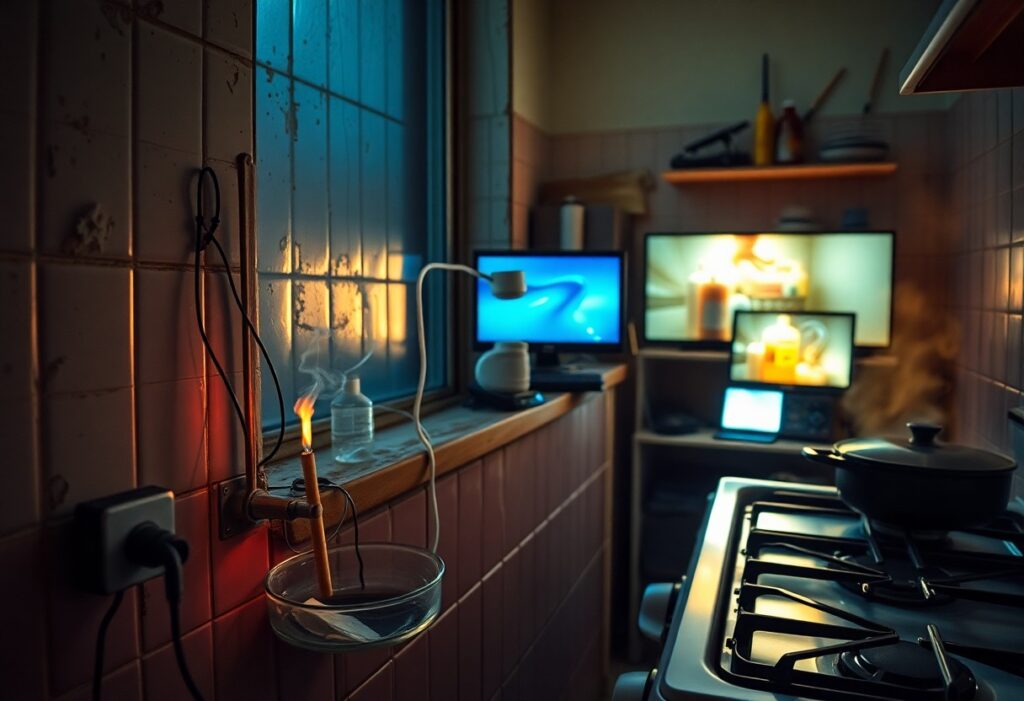

Cellular functions in your body can be quietly undermined by everyday household exposures; this post reveals nine shocking sources of cellular stress inside a “normal” home and explains how you can identify and reduce them.
Indoor air pollutants
Indoor air often contains a cocktail of contaminants that drive cellular stress: particulate matter, combustion byproducts, volatile organic compounds and off-gassing chemicals. You can experience levels 2-5× higher than outdoors for specific VOCs and see PM2.5 spikes from common activities. Short-term peaks and chronic low-level exposure both induce oxidative stress, inflammation and DNA adducts, raising risks for asthma, cardiovascular strain and long-term disease even in homes that seem “normal.”
Particulate matter, combustion products and fine dust
Fine particles (PM2.5) and combustion products from cooking, candles, smoking, wood stoves and fireplaces penetrate deep into your lungs and bloodstream. Frying or high-heat cooking can spike PM2.5 into the hundreds of µg/m3 for minutes to hours, far above WHO 24-hour guideline of 15 µg/m3. You also resuspend settled dust by vacuuming or walking, increasing exposure to embedded pollutants, metals and allergenic components that amplify cellular oxidative stress.
Volatile organic compounds (VOCs), formaldehyde and off-gassing
VOCs such as benzene, toluene and formaldehyde off-gas from paints, flooring, furniture, adhesives and cleaning products; indoor concentrations of some VOCs can be 2-5 times outdoor levels. You may notice irritation, headaches or subtle metabolic effects at low concentrations, while chronic exposure links to endocrine disruption and cancer risk. New renovations and products deliver the highest emissions, especially when warm or humid.
Formaldehyde is classified as a human carcinogen and often dominates off-gassing from particleboard and pressed-wood furniture; emission rates peak in the first weeks to months but can continue at lower levels for years. You can reduce exposures by airing out new items, keeping indoor temperatures lower, selecting CARB- or GREENGUARD-certified materials, and using activated-carbon filtration-plants and air ionizers offer limited VOC removal compared with source control and proper ventilation.
Household chemicals & personal care products
You regularly expose your cells to volatile organic compounds, preservatives and synthetic fragrances from lotions, deodorants and air fresheners; the U.S. TSCA inventory lists over 40,000 chemical substances used in commerce, many incorporated into personal care formulas. Fragrance mixes often contain phthalates and synthetic musks linked to endocrine disruption at low doses, while nanoparticles (titanium dioxide, zinc oxide) in sunscreens and triclosan in older soaps can alter microbial communities and oxidative stress pathways.
Cleaning agents, disinfectants and solvent exposure
When you aerosolize bleach (3-6% sodium hypochlorite), ammonia, or alcohol-based disinfectants (60-70% ethanol/isopropanol), VOCs and reactive gases spike indoors; mixing bleach with ammonia creates chloramines and with acids produces chlorine gas, both causing immediate respiratory inflammation. Quaternary ammonium compounds (quats) used at parts-per-million concentrations associate with asthma and dermatitis, and solvents like turpentine or paint thinners raise indoor VOCs well above WHO guidelines if ventilation is poor.
Pesticides, rodenticides and stored chemical residues
Indoor sprays (pyrethroids like permethrin), foggers, and anticoagulant rodenticides (brodifacoum) persist in dust and on surfaces: the EPA registers thousands of pesticide products, and household storage in basements or garages concentrates residues that can volatilize or bind to fabrics. You can get low-level chronic exposure through dermal contact, inhalation of resuspended dust, or hand-to-mouth transfer, particularly risky for toddlers who have higher dust ingestion rates.
Children can ingest an estimated 50-100 mg of household dust per day, so residues measured at microgram-per-gram levels translate to meaningful internal doses; biomonitoring studies detect pyrethroid metabolites in children’s urine after indoor application. Anticoagulant rodenticides like brodifacoum resist degradation for months to years, creating secondary-poisoning risks for pets. Poison control centers receive thousands of residential pesticide exposure calls every year, highlighting how stored, forgotten containers remain an active exposure source.
Electromagnetic fields & wireless radiation
EMFs inside homes range from 50/60 Hz magnetic fields from wiring and appliances to GHz‑range radiofrequency from routers and phones, and you encounter both continuously. Typical household magnetic fields span roughly 0.02-0.5 µT while wireless devices operate at 0.9-5 GHz, often with device powers up to ~100-200 mW. You should assess exposure by considering source type, proximity, duty cycle and time spent near hotspots.
Low-frequency EMFs from wiring and appliances
You get low-frequency (50/60 Hz) magnetic fields from wiring, breaker boxes, refrigerators, induction cooktops and electric blankets. Typical background levels are about 0.02-0.2 µT (0.2-2 mG), but close to motors or panels you can measure several µT (tens of mG). Epidemiological reviews report residential associations with childhood leukemia at exposures above ~0.3-0.4 µT, so check sleeping and play areas for high local fields.
Radiofrequency (Wi‑Fi, cordless phones, smart devices)
Wi‑Fi routers, cordless bases and smart devices operate on bands like 900 MHz, 1.9 GHz (DECT), 2.4 GHz and 5 GHz; many consumer routers and phones transmit up to ~100 mW (20 dBm) EIRP. Because RF intensity falls off rapidly with distance, a router on your nightstand or a phone charging at your bedside raises your local exposure far more than devices across the room.
Near-field versus far-field matters: handsets create localized SAR (W/kg) hotspots while routers produce broad power‑density fields. Phones use adaptive power control-transmit power falls as signal improves-so call peaks matter more than idle signals. Applying the inverse‑square rule, moving a router from 0.5 m to 2.5 m reduces exposure by roughly (0.5/2.5)² ≈ 4% of the original, a practical mitigation you can implement immediately.
Thermal, humidity & microbial stressors
Heat, cold and rapid temperature/humidity swings
You’ll encounter cellular stress from extremes: sustained heat above ~40-45°C begins to denature proteins and destabilize membranes, while prolonged cold below ~10°C slows enzymatic reactions and mitochondrial activity. Rapid swings-more than 10°C within hours or humidity shifts crossing 30-60%-trigger heat-shock protein expression, oxidative stress and increased membrane permeability. In practical terms, HVAC cycling, uninsulated surfaces and overnight window condensation amplify these effects, increasing material off-gassing and transient immune activation in occupants.
Thermal & Humidity Effects – Quick Reference
| Trigger | Cellular / Household impact |
|---|---|
| Heat (>40-45°C) | Protein denaturation, HSP upregulation, increased VOC emissions from plastics and adhesives |
| Cold (<10°C) | Slowed enzymatic reactions, reduced immune cell motility, condensation on cold surfaces |
| Rapid temp/humidity swings (>10°C; RH crossing 30-60%) | Membrane stress, oxidative bursts, transient increases in airborne particulates from desiccated/resuspended dust |
| High humidity (>60% RH) | Supports microbial growth; mold can colonize porous materials within 24-48 hours |
| Low humidity (<30% RH) | Mucosal dryness, increased static, higher aerosolized particle persistence |
Dampness, mold, bioaerosols and microbial toxins
You’ll see dampness drive mold colonization-visible staining or musty odors often means growth has started and spores, fragments and microbial volatile organic compounds (MVOCs) are airborne. Species like Aspergillus, Penicillium and Stachybotrys can produce mycotoxins and inflammatory particles; mold can become established on drywall, carpet padding or insulation within 24-48 hours of moisture exposure, increasing respiratory and immune stress for occupants.
Hidden leaks behind cabinets, under flooring or inside wall cavities commonly sustain wet substrates long enough for mixed-species biofilms to develop; studies and WHO reviews link indoor dampness to higher rates of asthma symptoms and respiratory infections. You should measure indoor RH (target 30-50%), dry wet materials within 24-48 hours, remove and replace water-damaged porous materials, and use HEPA filtration and dehumidifiers where needed. Routine inspections after storms, vigilant HVAC maintenance and sealing of condensation-prone surfaces reduce ongoing exposure to spores, MVOCs and microbial toxins.
Food, water and storage-related contaminants
Your pantry and tap silently introduce cellular stressors: plasticizers, mycotoxins from damp grains, heavy metals from corroded pipes, and disinfection byproducts. CDC biomonitoring finds bisphenols in over 90% of people, while the FDA action level for aflatoxin in human food is 20 ppb. If you rely on private wells (about 43 million U.S. residents) or older plumbing, you face elevated risks because those sources are less regulated and more prone to contamination that drives oxidative and inflammatory cellular responses.
Plastics (BPA, phthalates), packaging migration and mycotoxins
Heat, fat and time increase migration of BPA and phthalates from cans, rigid plastics and PVC into food-microwaving or storing oily foods in plastic spikes leaching. Studies link these chemicals to altered hormone levels, reduced sperm quality and higher asthma rates in children. You also contend with mycotoxins like aflatoxin from moldy peanuts and corn; regulatory limits (FDA 20 ppb) exist, yet storage failures and humid pantries still allow contaminated lots to reach consumers, stressing hepatocytes and detox pathways.
Heavy metals, chlorine byproducts and microbial contamination in water
Lead, arsenic and cadmium accumulate from old pipes, well geology and cookware; EPA action levels sit at 15 ppb for lead and 10 ppb for arsenic. Disinfection creates trihalomethanes (total THMs limit 80 ppb) that induce oxidative damage, while microbial threats-E. coli, Giardia, Legionella (grows 25-50°C)-cause inflammatory and cytotoxic hits. If you use a private well or live in an older home, regular testing is vital because these stressors act additively on cellular systems.
Test your water annually and after plumbing changes; simple kits miss many contaminants, so use certified labs. Point-of-use RO systems remove roughly 95-99% of lead and arsenic, while NSF-certified filters reduce lead at the tap. Boiling kills microbes but does not remove metals or THMs; chlorination prevents pathogens yet forms THMs with organic matter, whereas UV disinfection inactivates microbes without producing THMs. Municipal corrosion control (orthophosphate) prevents lead leaching-Flint demonstrated how failure of that control sharply increased household lead exposure.
Light, circadian disruption & sleep environment
Evening light shifts your circadian clock by suppressing melatonin-short-wavelength (around 460 nm) blue light is most potent-so exposure in the two hours before bed can delay sleep onset by roughly 30-60 minutes. You’ll notice this with smartphones, LED bulbs and streetlight leaking through curtains; dimming ambient light to <10-30 lux, using warm bulbs (<3000 K) and blocking window light with blackout curtains measurably improves sleep timing and depth.
Blue light exposure and nocturnal lighting
Smartphone and tablet screens peak near 460 nm and can suppress melatonin production; studies show evening tablet use can delay melatonin onset by up to ~50 minutes and reduce early-night REM. You should lower screen brightness, enable true night-mode filters (shift to <3000 K), use amber-blocking glasses for two hours pre-bed, or swap to low-CCT bedside lights to preserve melatonin and quicker sleep initiation.
Bedroom pollutants, bed dust and disrupted recovery
Household dust in pillows and mattresses carries dust-mite allergens (Der p1), endotoxins, flame retardant chemicals and microplastic fibers that drive airway inflammation and fragmented sleep; allergen exposure is associated with increased arousals and reduced slow-wave sleep, so controlling mattress and bedding contaminants directly improves nightly recovery.
New mattresses and foam can off-gas VOCs and formaldehyde for weeks to months, while PBDEs and other semi-volatile compounds accumulate in dust and correlate with altered thyroid and metabolic markers in some studies. You can cut exposure by encasing mattresses (allergen barrier reduces allergen load by >90%), washing bedding at ≥60°C to kill mites, running a HEPA air cleaner (reduces particles ~50-80% depending on CADR) and airing or vacuuming with a HEPA-equipped vacuum regularly.
Conclusion
On the whole, your everyday home harbors unexpected environmental stressors-like indoor pollutants, EMFs, mold, excess humidity, poor ventilation, toxic cleaners, plasticizers, persistent noise, and temperature swings-that can strain cellular function; you can minimize impact by improving ventilation, choosing safer products, reducing dampness, and monitoring air quality to protect your cells and support long-term health.