
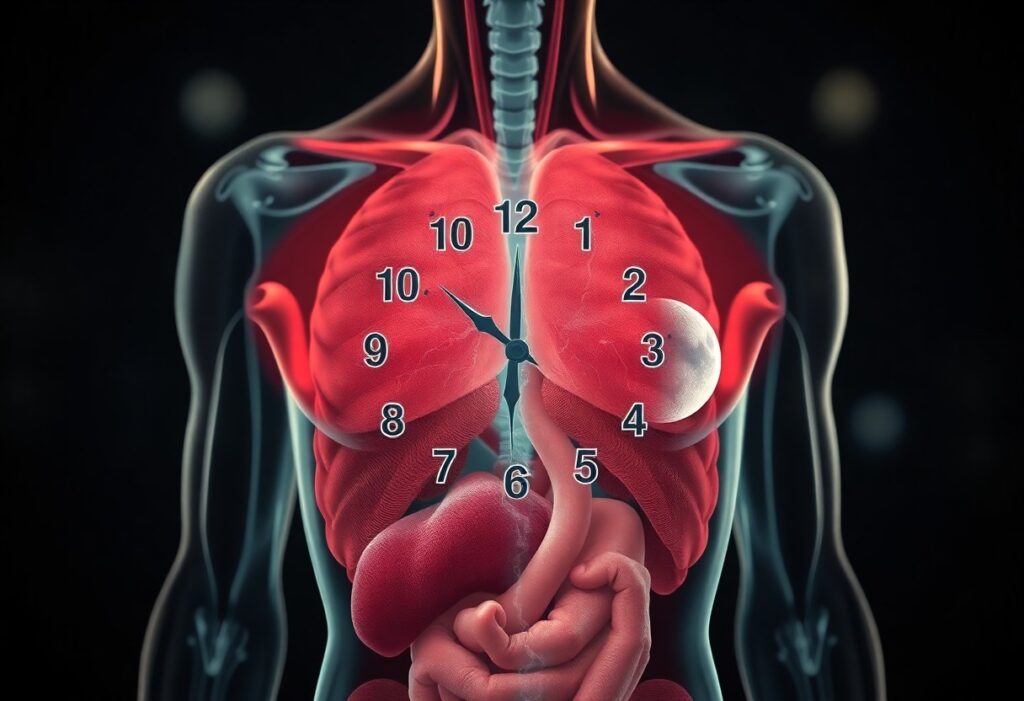

Just as your internal clock sets sleep-wake timing, it times hormone surges, directs energy use, coordinates metabolism, and schedules cellular repair so you perform optimally and recover efficiently; this post explains seven specific mechanisms by which your circadian rhythm governs hormonal balance, energy management, immune function, and tissue restoration.
Key Takeaways:
- Synchronizes hormone release – cortisol rises in the morning to boost alertness while melatonin increases at night to promote sleep.
- Regulates energy metabolism – circadian timing affects insulin sensitivity, glucose tolerance, appetite signals, and weight regulation.
- Drives sleep architecture and daytime performance – the central clock (SCN) times sleep-wake cycles and influences REM/NREM distribution and cognitive function.
- Controls cellular repair and growth – deep-sleep-linked hormones (e.g., growth hormone) and circadian-regulated processes enhance tissue repair and protein synthesis.
- Coordinates immune function and inflammation – immune cell trafficking and cytokine production vary across the day, affecting infection response and vaccine efficacy.
- Modulates body temperature and cardiovascular rhythms – core temperature, blood pressure, and heart rate follow daily patterns that influence metabolic rate and cardiovascular risk.
- Times gene expression and drug response – clock genes regulate thousands of downstream genes, changing drug efficacy and optimal timing for treatments (chronotherapy).
Understanding Circadian Rhythm
When you align sleep, light exposure, and meals to your roughly 24-hour internal clock-the suprachiasmatic nucleus (SCN) in the hypothalamus-your cortisol, melatonin, body temperature, and cellular repair fall into predictable patterns. Light detected by retinal ganglion cells resets the SCN, cortisol typically peaks 30-45 minutes after waking, and melatonin levels rise roughly 2 hours before your habitual sleep time.
Definition and Importance
In practice, your circadian rhythm is the endogenous timing system that schedules physiology and behavior across each 24-hour day: it times hormone pulses, sleep propensity, and metabolic fluxes. Disruptions from shift work, jet lag, or late-night light exposure impair glucose regulation and immune function, and work involving chronic circadian disruption was classified by IARC as a probable carcinogen in 2007.
Historical Context
You can trace modern circadian science from Jean-Jacques d’Ortous de Mairan’s 1729 observation of leaf movement persisting in darkness to 20th-century lesion and transplant studies that pinpointed the SCN as the mammalian master clock; molecular genetics then revealed conserved clock genes across species.
You’ll note key milestones: Mairan demonstrated endogenous rhythms in plants, Konopka and Benzer (1971) identified the period gene in Drosophila, lesion/transplant work in the 1970s localized the SCN’s pacemaker role, and the 2017 Nobel Prize honored discoveries of the molecular feedback loops (PER/TIM and related factors) that generate ~24-hour oscillations.
Hormonal Regulation
Your body clock times hormone release to match daily demands: cortisol surges about 30-45 minutes after waking to boost alertness and glucose, melatonin rises roughly 2 hours before habitual bedtime to promote sleep, and growth hormone pulses during early deep sleep to drive tissue repair. Disrupting those patterns-night shifts, late meals, or fragmented sleep-shifts hormone timing and amplitude, which undermines energy balance, immune function, and long-term repair processes.
Key Hormones Affected
Circadian control extends to cortisol, melatonin, insulin, leptin, ghrelin, growth hormone, and sex hormones. For example, cortisol peaks in the morning to mobilize glucose, while insulin sensitivity is ~20-30% higher in the morning versus evening. Shift workers show elevated fasting insulin and a roughly 20-30% greater risk of type 2 diabetes in cohort studies, linking misaligned rhythms to metabolic disease.
Impact on Metabolism
Circadian misalignment can reduce insulin sensitivity by about 20-25% in laboratory protocols, raise fasting glucose, and alter appetite signals-ghrelin increases while leptin falls-driving greater caloric intake. Time-restricted eating windows (8-10 hours) and earlier dinner timing consistently improve glucose tolerance and lower postprandial spikes in clinical trials.
At the molecular level, clock genes in liver and adipose tissue regulate gluconeogenesis, lipogenesis, and mitochondrial efficiency, so eating or exercising at biologically inappropriate times amplifies glucose and lipid excursions. Controlled studies show eating at 10:00 PM versus 6:00 PM increases postprandial glucose area under the curve by roughly 15-25%, illustrating why front-loading carbs and avoiding late-night meals improves metabolic outcomes.
Energy Levels Throughout the Day
Biological Energy Peaks
Your energy follows predictable rhythms: cortisol spikes about 30-45 minutes after waking to lift alertness, you typically feel a mid-morning high between 9-11 AM, then a post-lunch dip around 2-4 PM, and a late-afternoon peak in core body temperature near 4-6 PM that aligns with maximal strength and reaction time. Ultradian 90-120 minute cycles also create shorter surges and drops, so timing tasks to these windows can boost performance.
Strategies for Energy Optimization
Use targeted interventions: get bright light within 30 minutes of waking to consolidate morning alertness, time caffeine to arrive 20-60 minutes before peak tasks, favour protein-rich breakfasts and balanced lunches to blunt the afternoon slump, take a 10-20 minute nap for rapid restoration, and schedule high-focus work during your mid-morning or late-afternoon physiological peaks.
Practical schedule example: wake at 7:00, 5-10 minutes of bright light by 7:10, caffeine at 7:20 with a protein breakfast, reserve deep-focus tasks for 9:00-11:00, eat a mixed meal at noon and a 20-minute nap at 13:30 if needed, then plan strength training or complex problem-solving around 16:00-18:00; avoid caffeine after 14:00 to preserve nighttime sleep.
Sleep and Repair Mechanisms
Sleep Stages and Their Benefits
N1, N2, N3 and REM cycle every 90-110 minutes, giving you 4-6 cycles per night. Deep N3, concentrated in the first third, drives growth hormone pulses-about 60-70% of nightly GH-supporting tissue repair and immune recovery. N2 stabilizes sleep and consolidates procedural memory, while REM, increasing toward morning, consolidates emotional memory and creative problem-solving. Fragmentation or shortened sleep selectively reduces N3 and REM, impairing both physical repair and cognitive consolidation.
The Role of Circadian Rhythm in Recovery
Your circadian clock times cellular repair by regulating CLOCK/BMAL1-driven gene expression so DNA repair, autophagy and mitochondrial turnover peak at night, roughly around the melatonin maximum (typically 02:00-04:00). With cortisol at its nocturnal low, anabolic processes-growth hormone release and protein synthesis-proceed more effectively. Misalignment of sleep and circadian phase reduces repair markers and elevates inflammatory signals, slowing recovery from exercise and injury.
Practical implications follow: keep a consistent sleep onset within about a one-hour window to maximize N3/REM balance, avoid bright evening light and screens that blunt melatonin, and reinforce daytime light exposure to strengthen circadian amplitude. For athletes, aligning training and sleep with your chronotype and getting 7-9 hours of consolidated sleep increases muscle protein synthesis and lowers injury risk versus fragmented or shifted sleep schedules.
Behavioral Implications
Your daily choices – when you sleep, eat, move, and socialize – are steered by the circadian clock and that affects hormones, metabolism, and recovery. Core body temperature fluctuates about 0.5-1.0°C across the day, cortisol peaks within an hour of waking, and melatonin typically rises ~2 hours before bedtime. Shift workers provide a clear example: night-shift schedules are associated with higher rates of metabolic syndrome and type 2 diabetes, showing how behavior misaligned with your clock raises measurable health risks.
Eating Patterns and Timing
Aligning meals with your circadian rhythm improves glucose control and energy: eating within an 8-10 hour window (time-restricted eating) often lowers fasting glucose and reduces late-night postprandial spikes compared with dispersed feeding. You’ll get better insulin sensitivity by front-loading calories earlier in the day, and studies show identical meals eaten late at night produce higher glucose and triglyceride responses than those at breakfast.
Exercise and Circadian Sync
You can time workouts to target specific adaptations: endurance and low-intensity cardio often feel easier in the morning, while strength, power, and sprint performance typically peak in the late afternoon (around 16:00-19:00), with 4-10% higher output reported in many studies. Be aware that vigorous exercise within 60-90 minutes of bedtime can delay sleep onset by suppressing melatonin and elevating core temperature and arousal.
To optimize training, schedule heavy resistance sessions between about 15:00-18:00 when body temperature and neuromuscular function are highest, and keep consistent timing – training at the same time of day for 2-4 weeks can shift your peak performance window. If fat loss or glycemic control is the goal, consider brisk morning cardio and avoid large late-night meals; tailoring timing to your objective gives you measurable advantages.
Disruptions to the Body Clock
When your daily timing unravels-through irregular sleep, travel, or late-night light-hormone pulses, energy peaks, and cellular repair fall out of step. Within days you may see fragmented sleep and daytime tiredness; over months you face shifting appetite hormones, impaired glucose tolerance and reduced mitochondrial efficiency that raise long-term disease risk.
Modern Lifestyle Factors
Everyday choices nudge your clock off course:
- Night and rotating shift schedules that repeatedly shift sleep timing
- Evening exposure to blue‑rich LEDs from phones, tablets, and indoor lighting
- Irregular meal timing and frequent late‑night eating
- Frequent east‑west travel that resets phase repeatedly
Perceiving these as minor will let small phase shifts accumulate, degrading your sleep, metabolic control and mood within weeks.
Health Consequences
Epidemiology and lab studies link chronic circadian disruption to higher disease risk: long‑term night shift work is associated with roughly 20-30% higher cardiovascular risk and about 9-23% increased type 2 diabetes risk, while the IARC labeled circadian‑disrupting shift work “probably carcinogenic” in 2007. Short sleep protocols also alter appetite hormones-research shows leptin can fall ~18% and ghrelin rise ~28%-driving hunger and weight gain.
Mechanistically, you develop misaligned melatonin rhythms, elevated inflammatory markers (CRP, IL‑6), and impaired glucose tolerance when sleep and light cues conflict with internal timing. Controlled studies where participants slept 4-5 hours per night for several nights demonstrated reductions in insulin sensitivity comparable to early metabolic disease; similarly, rotating shifts predict higher waist circumference and dyslipidemia in cohort studies. Practical reversals you can use include fixed sleep schedules, morning bright‑light exposure (10,000 lux for 20-30 minutes to advance phase), restricting meals to daytime windows, and short‑term melatonin for phase shifts-each intervention can restore alignment and lower downstream cardiometabolic and cognitive harms.
FAQ
Q: What is the circadian rhythm and how does it coordinate hormone timing?
A: The circadian rhythm is a ~24-hour internal clock centered in the suprachiasmatic nucleus (SCN) of the hypothalamus that synchronizes physiology to environmental light-dark cycles. The SCN sends timing signals to peripheral clocks in tissues and to endocrine glands, producing predictable daily peaks and troughs in hormones such as cortisol (morning peak), melatonin (night rise), growth hormone (early night pulses), and downstream sex and metabolic hormones. This temporal organization optimizes when hormones should act – for wakefulness, sleep initiation, glucose handling, and tissue repair – so cellular processes occur at the most effective times.
Q: How does the circadian system control cortisol and the stress response?
A: The SCN entrains the hypothalamic-pituitary-adrenal (HPA) axis so cortisol rises in the early morning before awakening and declines across the day to its lowest levels at night. This rhythm primes alertness and energy mobilization on awakening and reduces catabolic signaling during sleep to favor repair. Misaligned timing or chronic phase shifts elevate baseline cortisol, blunt the morning surge, impair sleep, and promote insulin resistance, central fat accumulation, and mood disturbance.
Q: In what ways does the body clock drive sleep-associated repair processes?
A: Nighttime circadian signals and sleep itself coordinate pulses of growth hormone, activation of DNA repair pathways, increased protein synthesis, and enhanced autophagy and glymphatic clearance of metabolites. These processes peak during deep sleep and depend on proper timing of melatonin and reduced sympathetic activity. When sleep is short or occurs at the wrong circadian phase, repair signaling is reduced, increasing accumulation of cellular damage and slowing recovery from injury and inflammation.
Q: How does circadian timing influence energy metabolism, appetite, and glucose control?
A: Circadian clocks modulate insulin sensitivity, mitochondrial efficiency, and the release of appetite hormones (leptin, ghrelin) across the day. Insulin sensitivity and mitochondrial oxidative capacity are highest during the biological daytime, improving post-meal glucose handling; in contrast, late-night eating meets reduced metabolic capacity, promoting higher postprandial glucose and fat storage. Proper alignment of meals, activity, and sleep with the internal clock therefore optimizes energy use and weight regulation.
Q: What role does light exposure and melatonin play in hormonal cascades?
A: Light is the primary zeitgeber (time cue) that the retina conveys to the SCN to suppress melatonin secretion by the pineal gland during daytime and allow melatonin rise at night. Melatonin onset signals biological night and gates downstream rhythms in reproductive hormones, immune function, and sleep-promoting systems. Inappropriate light at night suppresses melatonin, shifts phase relationships, and can attenuate nocturnal repair and immune modulation.
Q: What are the endocrine and metabolic consequences of circadian disruption (shift work, jet lag)?
A: Circadian misalignment and chronic shift work commonly produce flattened hormonal rhythms, elevated evening cortisol, impaired glucose tolerance, reduced nocturnal growth hormone secretion, and altered leptin/ghrelin balance. These changes increase risk for type 2 diabetes, obesity, cardiovascular disease, mood disorders, and slower tissue healing. Repeated phase shifts also raise systemic inflammation and can disrupt reproductive hormone cycles.
Q: What evidence-based strategies reset the body clock to improve hormones, energy, and repair?
A: Use consistent sleep-wake times anchored by bright morning light exposure to advance and stabilize the SCN; avoid bright and blue-enriched light in the evening to permit melatonin onset; concentrate caloric intake earlier in the day and avoid late-night meals; time moderate exercise to daytime or early evening (not right before sleep); prioritize sufficient nightly sleep and deep-sleep-promoting habits; and use targeted light therapy or short, supervised melatonin dosing for phase shifts under clinician guidance. For shift workers, strategic light-dark exposure, timed meals, and planned naps can reduce misalignment.