
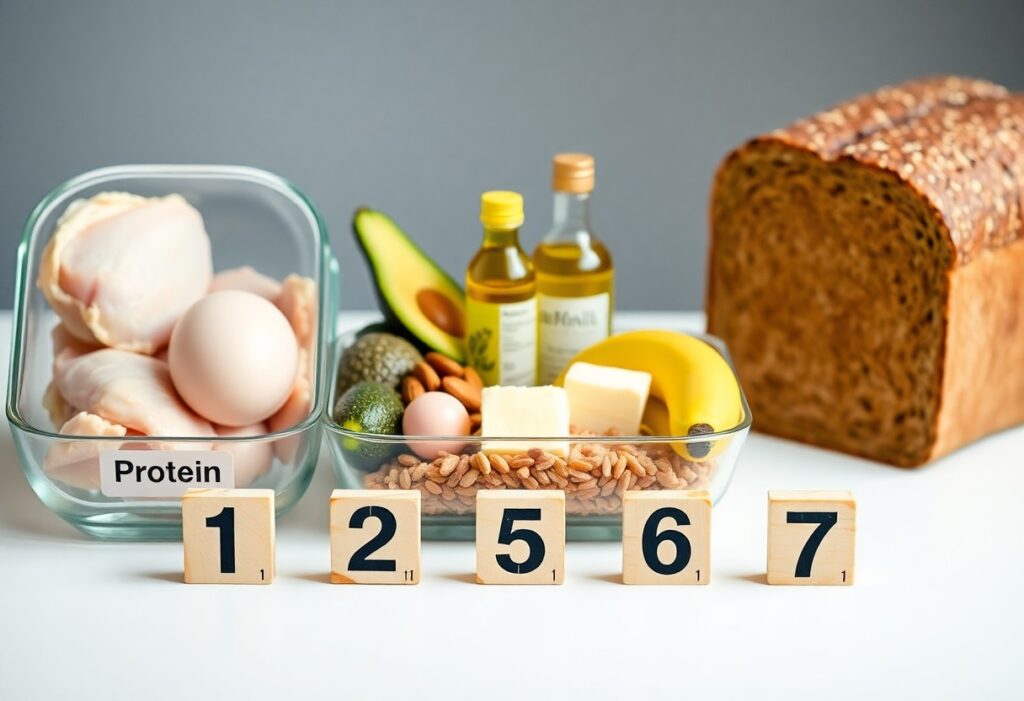

Just as fuel calibrates an engine’s performance, understanding how protein, fat, and carbohydrates power your cells lets you optimize metabolism, recovery, and cognition. This post distills seven critical truths about macronutrient roles, timing, and balance, explaining how amino acids, fatty acids, and glucose support ATP production, hormonal signaling, and tissue repair so you can make practical choices for energy, body composition, and long-term cellular health.
Key Takeaways:
- Protein primarily builds and repairs tissue and enzymes; amino acids can fuel cells via deamination and gluconeogenesis but are not the body’s preferred energy source in the fed state.
- Fat is the most energy-dense macronutrient (9 kcal/g), stored efficiently as triglycerides, and is the dominant fuel for low-to-moderate intensity and prolonged activity via beta-oxidation and ketone production.
- Carbohydrate provides the fastest route to ATP through glycolysis and is the preferred fuel for high-intensity exercise, the brain, and red blood cells; glycogen stores are limited and determine short-term performance.
- Hormones (insulin, glucagon, epinephrine, cortisol) regulate substrate uptake, storage, and mobilization, shifting cells between carbohydrate and fat oxidation depending on energy status and stress.
- Cellular energy pathways converge on the TCA cycle and oxidative phosphorylation: carbohydrates via glycolysis → pyruvate, fats via beta-oxidation → acetyl-CoA, proteins via deamination → TCA intermediates; oxygen availability impacts ATP yield.
- Metabolic flexibility-the ability to switch between carbs and fats-is a marker of metabolic health and is influenced by diet composition, activity level, and training.
- Practical application: tailor macronutrient ratios to goals (performance, weight loss, metabolic health), prioritize adequate protein for maintenance, use carbs for high-intensity demands, and leverage fats for satiety and endurance; total energy balance and micronutrient cofactors matter.
Understanding Macronutrients
You handle fuel as three classes-carbohydrates, fats, and proteins-each with distinct energy density and storage patterns: fat provides ~9 kcal/g and can store tens of thousands of kilocalories (e.g., 10 kg adipose ≈90,000 kcal), while glycogen holds roughly 400-500 g (≈1,600-2,000 kcal) across liver and muscle; protein offers ~4 kcal/g but primarily supports structure and enzymes, contributing energy mainly via deamination during prolonged demand.
Definition and Importance
You should see macronutrients as gram‑level dietary components that supply both energy and substrates for growth and maintenance: carbohydrates, fats, and proteins. Guidelines (AMDR) place carbs at 45-65% kcal, fats 20-35%, proteins 10-35%; practical needs vary-sedentary adults ~0.8 g/kg protein, athletes 1.2-2.0 g/kg-impacting hormone signaling (insulin, glucagon), satiety, and pathways like mTOR and AMPK.
Role in Cellular Energy
You depend on carbohydrates for rapid ATP generation-one glucose yields ~30-32 ATP through glycolysis, the TCA cycle, and oxidative phosphorylation (RQ ≈1.0). Fats enter via beta‑oxidation to acetyl‑CoA and yield more ATP per carbon (palmitate ≈106 ATP; RQ ≈0.7). Proteins are deaminated and their carbon skeletons feed gluconeogenesis or the TCA cycle when needed, with insulin and catecholamines governing substrate flux.
During activity you shift substrate use: high‑intensity exercise (>70% VO2max) relies on carbs and can exhaust muscle glycogen in ~90-120 minutes, whereas low‑intensity favors fat oxidation. Metabolic flexibility determines how smoothly you switch fuels; impaired flexibility (e.g., insulin resistance) reduces glucose uptake, increasing reliance on lipids. Adapting to a high‑fat, low‑carb state for maximal fat oxidation typically requires 2-4 weeks of metabolic adjustment.
The Role of Protein
Protein supplies the amino acids your cells need for structure, enzymes, and signaling; 20 standard amino acids exist, nine of which are crucial and must come from food. You rely on branched-chain amino acids like leucine to activate mTOR and stimulate muscle protein synthesis. Dietary guidelines set a basic RDA at 0.8 g/kg body weight, while metabolic demands, recovery, or dieting often push your needs higher.
Sources of Protein
High-quality sources span animal and plant foods: 100 g cooked chicken breast delivers ~31 g protein, a large egg ~6 g, 100 g Greek yogurt ~10 g, cooked lentils ~9 g, and firm tofu ~8 g. You can combine incomplete plant proteins-rice with beans, for example-to achieve a complete amino acid profile, and whey or casein offer fast and slow digestion options for post-workout and overnight recovery.
Protein’s Impact on Muscle and Energy
For muscle growth and repair, 20-40 g of high-quality protein per meal typically maximizes muscle protein synthesis, driven by about 2-3 g of leucine. You get 4 kcal per gram of protein, but your body prefers carbs and fat for immediate ATP; protein becomes a significant energy source mostly during prolonged fasting or very low-carb conditions through gluconeogenesis.
Evidence indicates resistance-trained individuals often benefit from intakes near 1.6 g/kg/day for optimal hypertrophy, with limited gains beyond ~2.2 g/kg. Spreading 20-40 g of protein across every 3-4 hours and taking 20-40 g within 1-2 hours of resistance exercise improves net protein balance, while pre-sleep casein (30-40 g) reduces overnight catabolism and supports morning recovery.
The Importance of Fats
You get 9 kcal per gram from fats-more than double the energy density of carbs or protein-so fats are your primary long-term energy reserve and membrane-building substrate; about 60% of the brain’s dry weight is lipid, crucial fatty acids (omega‑3 and omega‑6) must come from diet, and during fasting or prolonged exercise fatty acids supply most ATP via beta‑oxidation, making how you choose and time fats a direct lever on cellular energy and signalling.
Types of Dietary Fats
You should distinguish saturated, monounsaturated, polyunsaturated (omega‑3/6), trans, and medium‑chain triglycerides (MCTs): each differs in chain length, double bonds, food sources, and metabolic fate, so your food choices (olive oil, fatty fish, butter, processed foods, coconut oil) change lipid panels, inflammation markers, and fuel availability within hours to days.
- Saturated fats (butter, palm oil) – stable in cooking but can raise LDL when excessive.
- Monounsaturated fats (olive oil, avocados) – improve HDL/LDL ratio and support membrane fluidity.
- Polyunsaturated fats (salmon, walnuts) – include EPA/DHA; 250-500 mg/day EPA+DHA reduces CV risk markers.
- Trans fats (industrial partially hydrogenated oils) – increase LDL and CVD risk; keep intake near 0% of calories.
- After you prioritize unsaturated and omega‑3 sources, limit saturated fat to ~10% of energy and avoid trans fats entirely.
| Saturated | Sources: butter, red meat; effect: can raise LDL if >10% energy |
| Monounsaturated | Sources: olive oil, avocados; effect: improves lipid profile, stable for cooking |
| Polyunsaturated (omega‑3/6) | Sources: fatty fish, flax; effect: omega‑3 (250-500 mg EPA+DHA/day) lowers inflammation |
| Trans | Sources: industrial fried/baked goods; effect: raises LDL, raises CVD risk-avoid |
| MCTs | Sources: coconut oil, MCT oil; effect: rapidly oxidized, useful in ketogenic contexts |
Fats and Energy Metabolism
You derive ATP from fats via beta‑oxidation: a C16 palmitate yields ~106 ATP after activation, making fatty acids highly efficient for sustained energy; during low insulin states your adipose releases NEFAs, liver converts excess acetyl‑CoA to ketones (acetoacetate, β‑hydroxybutyrate) which can supply up to ~60% of brain energy in prolonged fasting.
Enzymatic control matters: the carnitine shuttle (CPT1) governs mitochondrial entry of long‑chain fatty acids, and peroxisomes shorten very‑long chains first; hormones shift flux rapidly-insulin suppresses lipolysis, epinephrine and glucagon activate it-so timing meals, exercise, and carbohydrate intake lets you modulate substrate preference and cellular ATP yield on a practical timescale.
Carbohydrates Uncovered
Carbohydrates supply 4 kcal per gram and typically make up 45-65% of your total calories; they’re stored as ~100 g in the liver and roughly 300-500 g in muscle as glycogen depending on body size. You’ll use carb-derived glucose for short bursts and steady-state efforts, and dietary fiber (25-38 g/day recommended) modulates absorption and gut health, so source and timing matter for energy stability and metabolic outcomes.
Simple vs. Complex Carbs
Simple carbs like glucose, fructose and sucrose absorb rapidly and can spike blood glucose within 15-30 minutes after ingestion; examples include fruit, milk and table sugar. Complex carbs-starches and resistant fibers in whole grains, legumes and tubers-digest gradually, sustaining blood glucose over 2-4 hours and lowering glycemic load. You should pair simple carbs with protein or fiber when you need steady energy and avoid rapid crashes.
Carbs as a Primary Energy Source
Your brain consumes about 120 g of glucose daily and red blood cells depend entirely on glycolysis. During high-intensity exercise you rely on carbohydrate because anaerobic glycolysis yields 2 ATP per glucose rapidly, while aerobic oxidation produces ~30-32 ATP more slowly; that difference lets you sustain sprint power and recover between intervals. Adjust carbohydrate intake to match activity intensity and glycogen demands.
For performance you’ll target 30-60 g of carbohydrates per hour during long endurance efforts and athletes often consume 6-10 g/kg/day to replenish stores; otherwise glycogen depletion-“hitting the wall”-occurs when muscle stores fall below ~100 g. If you adopt low-carb or ketogenic approaches, expect reduced high-intensity output as fat and ketone oxidation are slower, though endurance at low intensities can still be supported.
Balancing Macronutrients
To hit your energy and recovery goals, distribute calories across carbs, protein, and fat based on activity and goals rather than dogma. On a 2,000 kcal day, for example, 50% carbs = 250 g, 25% protein = 125 g, 25% fat = 56 g, which supports moderate training and weight maintenance. Adjust within ranges-raise carbs for high-volume endurance work, increase protein for hypertrophy or caloric deficit, and shift fats to meet satiety and micronutrient needs.
Recommended Ratios
Follow the AMDR as a starting point: 45-65% carbs, 20-35% fat, 10-35% protein. Use practical templates like 50/30/20 (carb/pro/fat) for general fitness, 55-65% carbs for endurance athletes, and very low-carb ketogenic protocols under ~10% carbs with fat at 70-80% for metabolic therapies. Tailor within those bands to match training load and body-composition targets.
Individual Needs and Considerations
Factor in age, sex, training type, and medical status: aim for 0.8-1.0 g/kg protein for sedentary adults, 1.2-2.0 g/kg for strength athletes, and 1.0-1.2 g/kg for older adults to limit sarcopenia. Expect endurance athletes to need higher carbs-commonly 5-12 g/kg/day depending on volume-and keep dietary fat above ~20% of calories to support hormones and fat-soluble vitamin absorption.
Also account for timing and metabolic phenotype: if you perform high-intensity sessions, front-load carbs around workouts (pre/post) to replenish glycogen; when insulin resistance is present, reducing carbs and prioritizing unsaturated fats and higher protein can improve glycemic control. Practical examples: a 70 kg endurance athlete doing heavy training may consume 6-10 g/kg carbs (420-700 g/day), while a recreational trainee aiming to lose fat might use 1.6-2.2 g/kg protein and moderate carbs to preserve lean mass.
Common Myths and Misconceptions
Many popular claims oversimplify how macros affect your body: carbs provide 4 kcal/g but don’t inherently cause fat gain-the real driver is energy balance and appetite control. Protein’s RDA is 0.8 g/kg and athletes often use 1.2-2.0 g/kg; studies in healthy adults show no renal harm at typical high-protein intakes (~≤2.5 g/kg). You should evaluate foods by portion, timing, and overall calories rather than blaming a single macronutrient.
Debunking Myths about Macronutrients
One persistent myth says low-fat always means weight loss; randomized trials with equal calories demonstrate similar fat loss on low-carb and low-fat diets over 6-12 months. Fat contains 9 kcal/g, so cutting fat only reduces energy if you don’t replace it. You must also watch ‘fat-free’ labels that add sugar, and avoid treating glycemic index alone as a predictor of long-term body composition.
The Science Behind Nutritional Claims
Assessing claims means parsing study design: observational cohorts can show associations in thousands of people but cannot prove causation, while randomized controlled trials (RCTs) offer stronger causal inference. You should focus on effect size-hazard ratios near 1.1 may be statistically significant yet tiny in absolute risk-and on follow-up duration appropriate to the outcome.
When evaluating evidence, check sample size (hundreds to tens of thousands), follow-up length (months for weight, years for cardiovascular outcomes), pre-registration, and whether outcomes were primary. You should prioritize RCTs and meta-analyses with replication, examine confidence intervals and dose-response trends, and account for funding sources and population differences-results from elite athletes or short metabolic trials may not generalize to sedentary adults.
To wrap up
Drawing together the seven truths, you can see how proteins build and repair, fats provide dense, sustained fuel and membrane integrity, and carbohydrates deliver quick, accessible energy; balancing them optimizes cellular ATP production, hormonal signaling, and metabolic flexibility so your diet and training decisions support resilience, recovery, and peak performance.
FAQ
Q: What are macronutrients and how do they power cells?
A: Macronutrients-carbohydrates, fats, and proteins-provide chemical energy that cells convert to ATP via glycolysis, beta-oxidation, the citric acid cycle and the electron transport chain. Energy density differs: carbohydrates and proteins ≈4 kcal/g, fats ≈9 kcal/g. Glucose and fatty acids are the primary fuel molecules delivered to mitochondria; amino acids can enter energy pathways after deamination. Cellular ATP production rate, oxygen use, and storage form vary by macronutrient and metabolic state.
Q: Is protein a main energy source or does it serve another role?
A: Protein’s primary functions are structural, enzymatic, and regulatory, not energy storage. When used for fuel-during prolonged fasting, severe calorie deficit, or intense endurance activity-amino acids undergo deamination and feed into gluconeogenesis or the TCA cycle. Using protein for ATP is metabolically expensive because nitrogen must be detoxified (urea cycle) and some amino-acid conversions consume ATP, so relying on protein for bulk energy compromises tissue maintenance and repair.
Q: Why are fats considered the body’s long-duration fuel for cellular energy?
A: Fats (stored as triglycerides) yield more ATP per gram because long-chain fatty acids undergo repeated beta-oxidation cycles, producing many acetyl-CoA units that enter the TCA cycle. Fat oxidation is oxygen-intensive but highly efficient for sustained, low-to-moderate intensity work and for organs like the heart and resting skeletal muscle. Triglyceride stores far exceed glycogen, making fat the primary reserve for prolonged energy needs; mobilization rate and transport (lipolysis, albumin/carrier proteins) determine delivery to mitochondria.
Q: How do carbohydrates support rapid ATP generation and what limits their use?
A: Carbohydrates are the fastest source of ATP because glycolysis generates ATP quickly and can operate anaerobically (yielding lactate) for high-intensity efforts. Glycogen in muscle and liver provides immediate substrate but is limited (roughly 300-500 g total depending on body size and training). The brain prefers glucose and can use ketones when glucose is scarce. The trade-offs: rapid ATP production but lower energy density and limited storage capacity compared with fat.
Q: How does the body decide which macronutrient to burn at any given time?
A: Hormonal signals and energy state drive substrate selection. After meals insulin rises, promoting glucose uptake, glycogen synthesis and lipogenesis; carbohydrate oxidation increases. During fasting or exercise, glucagon, epinephrine and AMP-activated pathways shift metabolism toward glycogenolysis, gluconeogenesis and lipolysis, increasing fat oxidation. Cellular energy charge, substrate availability, enzyme activity and tissue-specific preferences determine the instantaneous mix of fuels.
Q: How do macronutrients differ in ATP yield and oxygen efficiency at the cellular level?
A: ATP yield per substrate and oxygen cost differ: fats generate more ATP per carbon but require more O2 per ATP compared with carbohydrates (higher oxygen demand for beta-oxidation and TCA-driven NADH/FADH2 production). Respiratory quotient (RQ) reflects this-≈1.0 for pure carbohydrate oxidation, ≈0.7 for fat-indicating different CO2/O2 ratios. Metabolic flexibility (ability to switch between fuels) and mitochondrial capacity determine overall energetic efficiency in varying conditions.
Q: What practical adjustments to diet and lifestyle optimize cellular energy from macronutrients?
A: Match macronutrient timing and composition to activity: prioritize carbohydrates around high-intensity training for rapid ATP, include adequate protein (0.8-1.6 g/kg/day or more for athletes/older adults) to preserve lean mass and support metabolic enzymes, and include unsaturated fats for sustained energy and membrane integrity. Promote mitochondrial health with regular aerobic and resistance exercise (stimulates mitochondrial biogenesis), ensure sufficient micronutrients (iron, B-vitamins), maintain sleep and hydration, and avoid chronic overfeeding that impairs metabolic flexibility. Adjustments are needed for conditions like diabetes, metabolic syndrome, aging, or athletic goals.