
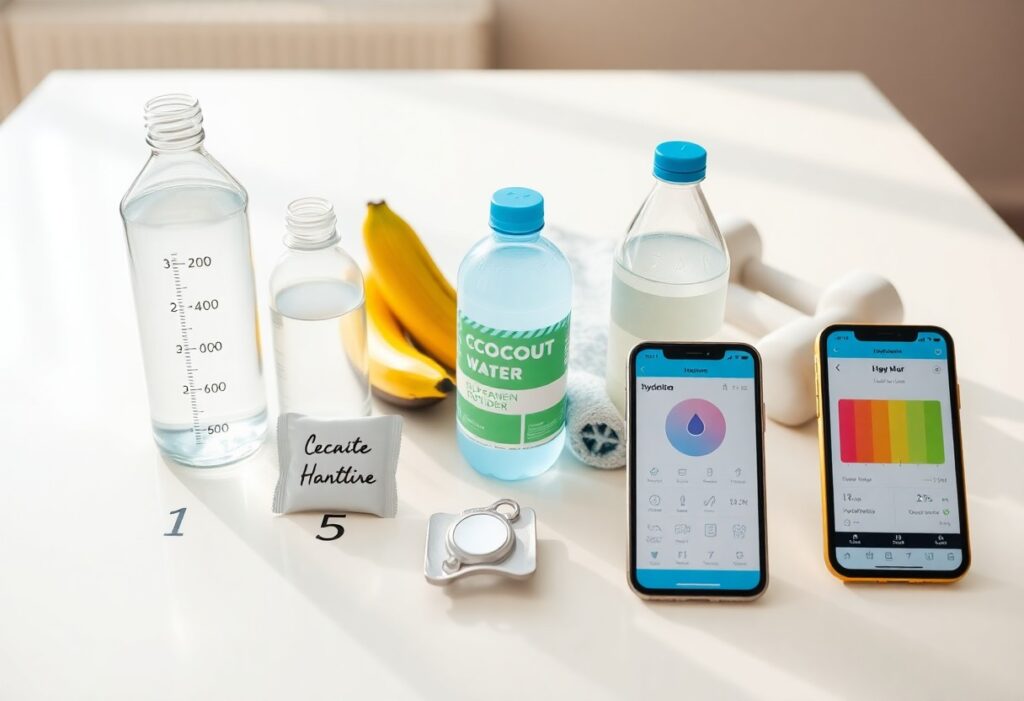

Hydration optimizes cellular function and fuels performance by balancing fluids and electrolytes, and understanding five proven electrolyte principles helps you sustain energy and accelerate recovery. Prioritize sodium and potassium balance, include magnesium for muscle recovery, time intake around exercise, match replacement to sweat loss, and tailor concentration to your needs to maintain performance and shorten downtime.
Electrolyte Fundamentals
Key electrolytes (sodium, potassium, magnesium, calcium) and their roles
Sodium dominates the extracellular space, controlling blood volume and pressure and often being lost at 500-1,500 mg per liter of sweat; potassium is the main intracellular cation, imperative for resting membrane potential and muscle contraction. Magnesium acts as a cofactor for over 300 enzymes and stabilizes ATP, while calcium triggers muscle fiber contraction and signaling. You rely on the balance among these four to maintain nerve firing, cardiac rhythm, and effective muscle recovery.
How electrolytes drive cellular energy and fluid balance
The Na+/K+ ATPase pumps 3 Na+ out and 2 K+ in for every ATP hydrolyzed, maintaining membrane potential and enabling nutrient uptake and action potentials; this pump can consume up to ~40% of a neuron’s resting energy. Osmotic gradients set by electrolyte distributions move water across membranes, so shifts in sodium or potassium instantly alter cell volume, perfusion, and your capacity for sustained work.
In practice, a 2% body-mass fluid loss impairs endurance and cognitive function, and mismatched electrolytes worsen that effect: low sodium causes hyponatremia and swelling, while hypokalemia reduces muscle force. During prolonged exercise you can lose grams of sodium and hundreds of milligrams of potassium per hour, so targeted replacement (electrolyte drinks with 300-700 mg Na+ per liter for long efforts) preserves cellular gradients and speeds recovery.
The Five Proven Principles
You should focus on five practical rules: balance sodium and potassium, prioritize magnesium for recovery, time intake around activity, match beverage osmolarity to plasma (~275-300 mOsm/L), and favor bioavailable whole-food sources. Aim for targeted pre/during/post volumes (e.g., 400-600 mL two hours pre, 150-250 mL every 15-20 minutes during) and replace roughly 1.5 L per kg bodyweight lost after exercise. These specifics turn general hydration advice into actionable plans for performance and faster recovery.
Maintain sodium-potassium balance; prioritize magnesium for recovery
You lose sodium in sweat-typically 40-60 mmol/L, which equals about 920-1,380 mg per liter-so replenishing sodium alongside potassium (dietary targets ~3,400 mg men, ~2,600 mg women) keeps cellular function and nerve conduction optimal. Magnesium supports relaxation, glycogen restoration, and sleep-related recovery; aim to meet daily needs (men 400-420 mg, women 310-320 mg) through foods or a monitored supplement if your training load is high.
Time intake, match osmolarity, and favor bioavailable whole-food sources
You should pre-hydrate, sip during exercise, and rehydrate afterwards with fluids chosen for osmolarity and nutrient content: target isotonic drinks (~275-300 mOsm/L) for sustained efforts, take 150-250 mL every 15-20 minutes when sweating heavily, and use whole foods like a banana (~400 mg potassium) or a cup of yogurt to restore electrolytes and provide real-food bioavailability.
For example, if you sweat 1 L/hour during a two-hour session and your sweat sodium is ~50 mmol/L, you’ll lose roughly 2,300 mg sodium total; pairing an isotonic drink with a salty snack or 300-700 mg extra sodium per liter of fluid can bridge that gap. Whole-food combos-salted potatoes, broth, banana, and yogurt-deliver sodium, potassium, magnesium, and calories for faster glycogen replenishment and reduced cramping risk after prolonged efforts.
Hydration Strategies for Energy and Recovery
You should treat hydration as a timed strategy: preload fluids and electrolytes before activity, replace sweat losses during exercise to sustain power, and prioritize concentrated rehydration afterward to speed glycogen and fluid restoration. Apply objective measures-body-mass change, urine color, and perceived exertion-to tailor volume and sodium needs. For most athletes, combining fluid timing with beverages that supply 30-60 g carbohydrate per hour and 20-50 mmol/L sodium preserves performance and accelerates recovery between sessions.
Pre-, during-, and post-exercise hydration protocols
Pre-exercise hydrate with 5-7 mL/kg body weight about 4 hours before (for a 70 kg athlete that’s 350-490 mL), add 3-5 mL/kg 2 hours prior if you’re not well hydrated. During exercise, aim to match sweat rate-roughly 0.4-1.0 L/hr depending on intensity and climate-or target 30-60 g carbs per hour for long efforts. Post-exercise replace 1.25-1.5 L per kg lost and include 20-50 mmol/L sodium to restore plasma volume and speed glycogen resynthesis.
Formulating effective electrolyte beverages
Design drinks with 6-8% carbohydrate concentration (about 60-80 g per liter) to balance energy and gastric tolerance, include 20-50 mmol/L sodium (≈460-1,150 mg/L) to aid fluid retention, and add 3-5 mmol/L potassium to support cellular recovery. You should choose glucose, maltodextrin or sucrose blends to maximize absorption and vary carbohydrate types for ultra-endurance events to reach 60 g/hr without GI upset. Flavor and temperature also influence voluntary intake.
For a practical DIY example, mix 1 L water with ~60 g maltodextrin or sucrose (6% CHO), about 1.2 g table salt (~470 mg sodium), and a potassium source such as 1/2 a teaspoon potassium salt or a small banana (≈200-400 mg K). Use this for sessions longer than 60-90 minutes; for shorter workouts drop carbs to 20-30 g/L and reduce sodium to 200-300 mg/L. Test during training to dial in tolerance and intake rates.
Nutrition and Supplement Choices
Prioritize whole foods and targeted supplements when training or illness increases losses; match sodium, potassium and magnesium to your sweat and workload. Typical electrolyte servings deliver about 300-500 mg sodium, 200-400 mg potassium and 50-150 mg magnesium, so combine food and drinks around workouts to support energy and recovery and test any strategy during training, not on race day.
Best food sources and practical meal/snack examples
Choose high-potassium foods like a medium banana (~420 mg K) or 1 cup cooked spinach (~840 mg K), magnesium sources such as 1 oz almonds (~80 mg Mg), and salty options like ¼ tsp salt (~575 mg Na). Practical combos include Greek yogurt with banana and almonds, a turkey-and-cheese sandwich with a salty pickle, or a smoothie made with coconut water (~600 mg K per cup), spinach and whey for a recovery snack.
When and how to use supplements safely
Use supplements for efforts over 60-90 minutes, when you sweat heavily (>0.5-1.0 L/hr), or if your diet or illness limits intake. Read labels: many powders provide 300-500 mg sodium per serving, magnesium 50-150 mg, while OTC potassium is often ≤99 mg per tablet. If you take ACE inhibitors, diuretics or have kidney disease, consult a healthcare provider before supplementing.
Start testing doses during training: for heavy sweat losses (>1 L/hr) aim roughly 300-700 mg sodium per hour and 200-400 mg potassium via fluids or tablets, split magnesium (50-150 mg) post-session to aid recovery, and keep total supplemental magnesium ≤350 mg/day. Monitor GI tolerance, sip during long efforts, and prioritize food-based electrolytes for shorter workouts.
Monitoring Hydration and Recovery
Track objective trends, not single readings: weigh yourself before and after sessions, log urine color/USG, and monitor HRV and resting heart rate daily. A 70 kg athlete who loses 1.4 kg (2%) typically shows reduced endurance and higher perceived exertion; losses above 3% carry larger performance and thermoregulatory penalties. Use simple tools (digital scale, urine color chart, a refractometer, HRV app) to build a baseline across heat, altitude, and training phases so you can spot meaningful deviations.
Signs, simple tests, and performance markers to track
Measure pre/post body mass for percent loss, check urine color (1-6 scale) and USG (<1.020 generally well hydrated; >1.025 suggests dehydration), and perform an orthostatic pulse test (rise >15-20 bpm signals volume strain). Track training power, pace, RPE, and time-trial times-drops in power or pace with higher RPE often indicate under-recovery. Log ambient conditions and sweat rate (mL·hr−1) when possible to contextualize results.
Interpreting biomarkers and adjusting plans
Compare values to your baseline and context: serum sodium (normal 135-145 mmol·L−1), plasma osmolality (275-295 mOsm·kg−1), BUN/creatinine ratio (>20 suggests hypovolemia), USG, and HRV changes. If you’re >2% body-mass down or USG high, aim to replace 1.25-1.5 L per kg lost over the next 2-4 hours with fluids containing ~300-600 mg sodium per liter; reduce intensity if HRV drops >10-20% or symptoms persist. Adjust by environment and sweat rate.
For example, if you lose 3% body mass after a hot session, present with USG 1.030, serum sodium 132 mmol·L−1 and HRV down 18%, treat with 1.5-2.0 L of electrolyte solution (≈500 mg Na·L−1) over 2-4 hours, retest weight and urine next morning, and scale back training volume 30-50% until biomarkers normalize. Use serial measures rather than one-off labs to refine your individualized hydration protocol.
Special Populations and Safety Considerations
You should tailor electrolyte strategies to specific risks: sweat rates commonly range 0.5-2.0 L/hr with sweat sodium from ~10-90 mmol/L, older adults often have blunted thirst and reduced renal concentrating ability, children lose fluid faster relative to body mass, and comorbidities or medications can change needs substantially. Aim to match sodium losses with replacement fluids (roughly 10-50 mmol/L sodium in many sports drinks) and check serum Na/K with prolonged exertion, illness, or dose changes.
Athletes, older adults, children, and extreme environments
For athletes you’ll track sweat volume and sport duration-endurance events can produce 1-2 L/hr and substantial Na loss-so use electrolyte drinks with 20-50 mmol/L sodium during long efforts. Older adults require lower-volume, more frequent sips because thirst is muted and renal function declines. For children offer fluids every 15-20 minutes during activity. At high altitude or extreme heat you’ll expect greater diuresis and sweat losses, while cold raises insensible losses and hyponatremia risk.
Interactions with medications and medical conditions
If you take diuretics you’ll lose sodium and potassium faster; thiazides commonly lower potassium and can precipitate hyponatremia, while ACE inhibitors/ARBs can raise serum K above the normal 3.5-5.0 mmol/L range. NSAIDs impair renal perfusion and blunt prostaglandin-mediated sodium handling. With heart failure or CKD you must limit total fluid and potassium intake because impaired excretion can lead to hyperkalemia (>5.0 mmol/L) or fluid overload.
Monitor labs when medications or conditions intersect with increased electrolyte needs: check basic metabolic panel (Na, K, creatinine) at baseline and every 3-6 months or sooner after dose adjustments, illness, or prolonged exercise. Seek urgent care for severe abnormalities (Na <125 mmol/L, K >6.0 mmol/L) or symptoms like muscle weakness, palpitations, confusion. Use beverage sodium content (typical sports drinks 10-50 mmol/L ≈ 230-1,150 mg/L) to match measured losses rather than guessing.
Final Words
On the whole you should prioritize electrolyte balance: match sodium, potassium, magnesium and calcium to activity timing, hydrate steadily, replace losses after exertion, choose bioavailable sources, and monitor your responses so your energy and recovery remain consistent and resilient.