
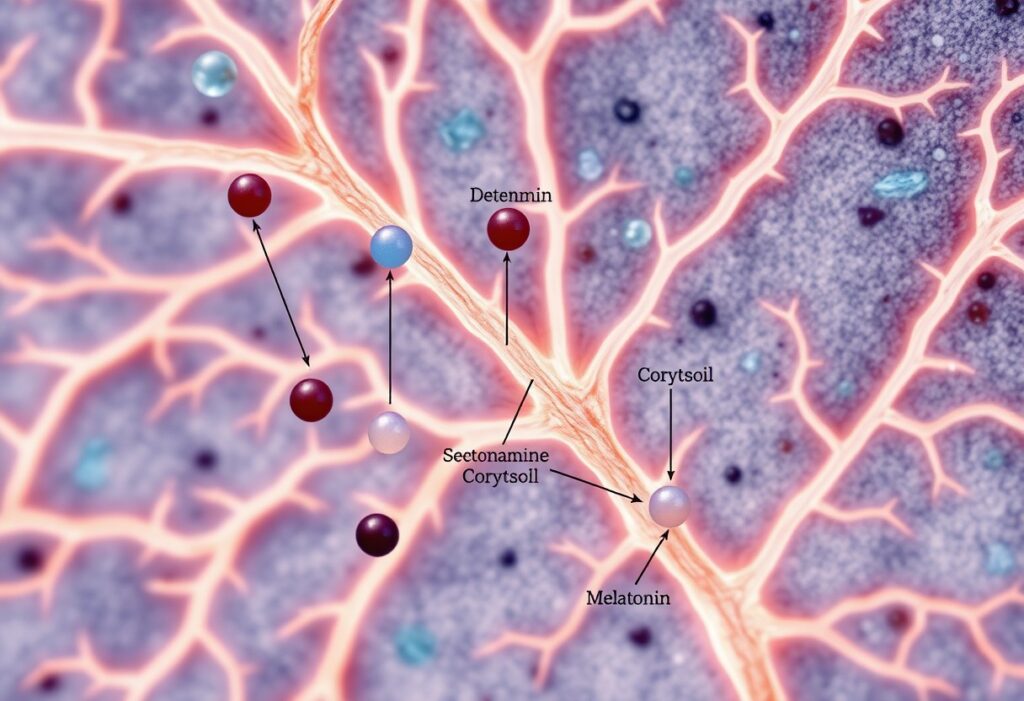

Most people underestimate dendrites; this post demonstrates five proven ways neural pathways influence hormones, shape your mood, and support your healing.
Dendritic Structure and Signaling Mechanisms
Synaptic integration, plasticity, and electrical compartmentalization
You experience dendritic computation as a mix of spatial and temporal summation, NMDA spike generation, and branch-specific electrical isolation; NMDA spikes typically require ~10-50 coactive synapses and produce 100-300 ms plateau depolarizations, while backpropagating action potentials attenuate with distance (amplitude falling from ~50 mV proximally to ~10-20 mV in distal tufts), so synapse location and timing determine whether inputs drive local plasticity or global firing.
Key dendritic mechanisms
| Mechanism | Functional impact (example) |
|---|---|
| Temporal summation | Consecutive EPSPs within tens of ms summate to trigger spikes or LTP |
| Spatial summation | Nearby synapses on a branch synergize, enabling NMDA spikes |
| NMDA/plateau spikes | 10-50 synapses → 100-300 ms local depolarization driving Ca2+ entry |
| Backpropagating APs | Provide coincidence signals; amplitude drops with distance (≈50→10 mV) |
| Spine neck resistance | High neck R (10s-100s MΩ to ~1 GΩ) electrically isolates synapses |
Local protein synthesis, trafficking, and post‑translational regulation
You rely on local translation of dendritic mRNAs-examples include CaMKIIα and Arc-to produce proteins within minutes of synaptic stimulation; studies of hippocampal neuropil detect ~2,500 distinct mRNAs, and blocking translation with anisomycin prevents late-phase LTP, showing that on-site synthesis and rapid trafficking of receptors and scaffolds directly shape lasting plasticity.
You should note specific molecular players: RNA-binding proteins like FMRP and Staufen shuttle transcripts and regulate translation rates, and motor proteins (kinesin/dynein) transport RNP granules at ~0.5-2 μm/s to activated spines. Post-translational modifications provide rapid tuning-GluA1 phosphorylation at S831 increases conductance while S845 controls AMPAR insertion, and ubiquitination drives receptor removal. Live-imaging experiments show translation foci form at stimulated spines within 30-120 seconds, linking local synthesis, targeted trafficking, and phosphorylation/ubiquitination cascades to synapse-specific changes in strength and structural remodeling.

Pathway 1 – Dendrites Regulate Hormonal Axes
Modulation of the HPA axis and stress hormone release
Your dendrites in hypothalamic CRH neurons shape HPA dynamics by controlling local excitability and peptide release; dendritic calcium transients alter CRH pulse frequency, which changes ACTH bursts and downstream cortisol patterns. In rodent experiments, manipulating dendritic excitability shifts stress-evoked corticosterone responses by roughly 20-40%. Since human cortisol typically peaks 20-30 minutes after waking, dendritic modulation directly influences both your acute stress reactivity and the cortisol awakening response.
Hypothalamic and pituitary feedback via dendritic signaling
You get bidirectional control when dendrites release neuropeptides-oxytocin and vasopressin from PVN magnocellular dendrites act paracrinally to tune neighboring CRH cells and pituitary input. Studies in rodents show dendritic oxytocin release can suppress stress-induced ACTH secretion, altering pituitary drive within minutes and changing downstream adrenal output during acute stress or social buffering.
Mechanistically, dendritic peptide release is often calcium-dependent and can occur independently of axonal release, so your hypothalamic circuitry can produce local feedback loops: dendritic oxytocin or vasopressin binds nearby receptors, modifies synaptic inputs, and adjusts CRH neuron firing. Functionally, this enables state-dependent modulation-during lactation or social contact you see stronger dendritic oxytocin signaling and reduced HPA reactivity-pointing to therapeutic targets that selectively alter dendritic signaling to normalize dysregulated stress axes.
Pathway 2 – Dendritic Remodeling and Mood Regulation
You observe that remodeling of dendrites alters connectivity patterns that drive affect: changes in spine density and branching shift excitatory/inhibitory balance, influencing anxiety and depressive behaviors. For example, chronic stress produces roughly 20% retraction of apical dendrites in medial prefrontal cortex neurons in rodent models, correlating with impaired working memory and increased despair-like behavior, while interventions that restore spines-pharmacologic or behavioral-often reverse those mood deficits.
Effects on monoaminergic and glutamatergic circuits
You find monoamines modulate dendritic structure via receptor signaling-5-HT1A and β-adrenergic pathways affect spine turnover-so chronic SSRI treatment can increase cortical spine density over weeks. At the same time, glutamatergic transmission controls fast structural change: excessive glutamate drives spine loss and excitotoxicity, whereas NMDA antagonism (e.g., ketamine) can trigger rapid synaptogenesis and restore lost spines within 24 hours in animal studies.
Stress, resilience, and structural plasticity linked to affect
You note stress produces region-specific remodeling: chronic stress induces ~20% dendritic retraction in mPFC and 10-30% hippocampal spine loss in rodents, but increases dendritic arborization in the amygdala, promoting hypervigilance. Resilient animals and humans maintain or rapidly recover spine density through BDNF- and mTOR-dependent pathways, and that divergence between susceptibility and resilience maps closely to behavioral outcomes like social avoidance or preserved coping.
You can look to the chronic social defeat and restraint-stress models for concrete contrasts: susceptible mice show persistent spine loss and social withdrawal, while resilient mice preserve dendritic complexity and normalize behavior. Manipulations that boost BDNF/mTOR signaling-or interventions like exercise and rapid-acting agents such as ketamine-shift spine dynamics and convert susceptible phenotypes toward resilience, demonstrating a mechanistic link between structural plasticity and affect regulation.
Pathway 3 – Dendrites, Inflammation, and Immune Crosstalk
You see inflammation reshape circuits directly: cytokines and activated microglia modify dendritic spines, alter synaptic strength, and shift neurotransmitter balance. Acute IL‑1β, TNF‑α, and IL‑6 surges change excitability within minutes; chronic elevation drives dendritic retraction and spine loss across prefrontal and hippocampal networks, linking peripheral infection or chronic stress to mood changes, cognitive decline, and slower healing after injury.
Microglia‑dendrite interactions and synaptic pruning
You encounter microglia constantly surveying synapses, tagging weak or unused connections via the complement cascade (C1q→C3) and engulfing them through CR3 receptors. Developmental pruning can eliminate up to half of excess synapses in some circuits; in disease, amyloid‑β upregulates complement tagging so microglia strip synapses early in Alzheimer’s models, producing cognitive deficits before plaque formation.
Cytokine signaling impact on dendritic function and behavior
You experience cytokine effects at multiple scales: TNF‑α drives rapid AMPA receptor trafficking and homeostatic scaling, IL‑1β impairs LTP and reduces spine stability, and IL‑6 promotes transcriptional programs that shrink dendritic arbors. In rodents, chronic stress-induced IL‑6 elevations correlate with ~20-30% loss of apical spine density in medial prefrontal cortex and depression‑like behaviors; blocking IL‑6 signaling preserves dendrites and rescues behavior.
You can trace mechanisms to intracellular pathways: IL‑6 signals via gp130/JAK‑STAT3 to alter cytoskeletal gene expression, TNF‑α activates TNFR pathways to modulate AMPAR/GluA1 trafficking, and IL‑1β engages MAPK/NF‑κB to suppress synaptic plasticity. Peripheral inflammation reaches the brain through leaky regions and vagal signaling, amplifying microglial cytokine release. Translationally, minocycline or anti‑IL‑6 strategies reverse dendritic atrophy in rodents and are being tested as adjuncts for mood and cognitive disorders in humans.
Pathway 4 – Dendrites in Healing, Repair, and Neurotrophic Support
Dendrites drive recovery by remodeling spines, recruiting growth factors, and reallocating synaptic weight after injury; you observe spine formation within minutes to hours and structural stabilization over days to weeks, which determines whether circuits regain function after stroke, TBI, or peripheral nerve damage.
BDNF, growth factors, and activity‑dependent recovery
You can drive dendritic repair by increasing neurotrophin signaling: aerobic exercise acutely raises peripheral BDNF roughly 20-40% in humans, rodent treadmill protocols often double hippocampal BDNF mRNA, and targeted rehabilitation concentrates trophic support to injured cortical maps to promote spine stabilization and synaptogenesis within days.
- BDNF enhances spine maturation and AMPA receptor insertion.
- NGF and NT‑3 encourage dendritic branching in sensory circuits.
- rTMS, paired stimulation, and task-specific training localize trophic release to affected networks.
- Any mismatch of intensity or timing can drive maladaptive sprouting or excitotoxic stress.
Axonal‑dendritic coordination during regeneration and rehabilitation
Your recovery depends on coordinated axon sprouting and dendritic remodeling: peripheral axons regrow at roughly 1 mm/day, while dendritic spine turnover can reshape connectivity within hours, so combining surgical repair or stimulation with timed rehabilitation yields better reinnervation and functional gains within weeks.
When you align axon outgrowth with dendritic receptivity, functional synapses form more reliably: growth cones navigate using cues like BDNF, semaphorins, and netrins while astrocytes and microglia modulate matrix permissiveness; brief electrical stimulation (e.g., 20 Hz for 1 hour) and intensive task‑specific training both accelerate axon regeneration and encourage appropriate dendritic arborization. Studies of constraint‑induced movement therapy and post‑stroke rehab (Nudo et al.) show cortical map reorganization and measurable motor improvement within weeks when training intensity and timing match windows of synaptic plasticity.
Pathway 5 – Translational and Therapeutic Implications
Translationally, you can leverage dendritic plasticity to treat mood, endocrine, and recovery disorders: a single 0.5 mg/kg IV ketamine infusion restores stress‑lost spines in mouse prefrontal cortex within 24 hours and produces rapid antidepressant effects in humans, while chronic SSRIs take 4-8 weeks to increase spine density; estrogen replacement in ovariectomized rodents raises hippocampal spine counts by ~30-50%. Combining molecular and circuit interventions offers faster, more durable clinical gains.
Pharmacological and hormonal interventions targeting dendrites
You can target dendrites pharmacologically: low‑dose ketamine (0.5 mg/kg IV) produces rapid spine formation and mood improvement, whereas SSRIs require weeks to remodel synapses. BDNF/TrkB modulators (e.g., 7,8‑DHF in preclinical work) and lithium via GSK‑3β inhibition promote arborization, and selective estrogen replacement increases hippocampal spine density in animal models by ~30-50%. Translation needs dose, timing, and endocrine-risk balancing for clinical use.
Neuromodulation, behavioral therapies, and future clinical directions
Nonpharmacologic approaches modulate dendrites directly: rTMS shows response rates around 30-50% in treatment‑resistant depression and upregulates BDNF and spine density in rodent PFC; tDCS and DBS shift dendritic excitability and synaptic gain. Behavioral prescriptions-12 weeks of aerobic exercise or structured CBT-raise serum BDNF (~30% acutely) and remodel functional networks. You should expect multimodal protocols combining stimulation, drugs, and behavior to lead next‑generation trials.
Clinical translation already uses actionable parameters tied to dendritic effects: standard rTMS (10 Hz, ~3,000 pulses/session to left DLPFC) stabilizes spines and improves mood in ~30-50% of refractory patients, while tDCS (1-2 mA for ~20 minutes) shifts cortical excitability. Deep brain stimulation of the subcallosal cingulate informs circuit targeting despite variable outcomes. Early trials combining a ketamine infusion with immediate CBT or prescribed exercise (≈150 min/week) show extended benefit, and you can track response with serum BDNF, EEG biomarkers, or serial MRI volumetrics.
Final Words
Upon reflecting on dendrites and the five proven ways neural pathways influence hormones, mood, and healing, you see how structural plasticity, synaptic strength, neurotransmitter balance, inflammatory signaling, and neuromodulator networks shape physiological and emotional outcomes. By understanding how dendritic growth, pruning, and connectivity alter endocrine responses and circuit-level dynamics, you can better appreciate interventions-behavioral, pharmacological, and rehabilitative-that steer recovery and resilience in both brain and body.