
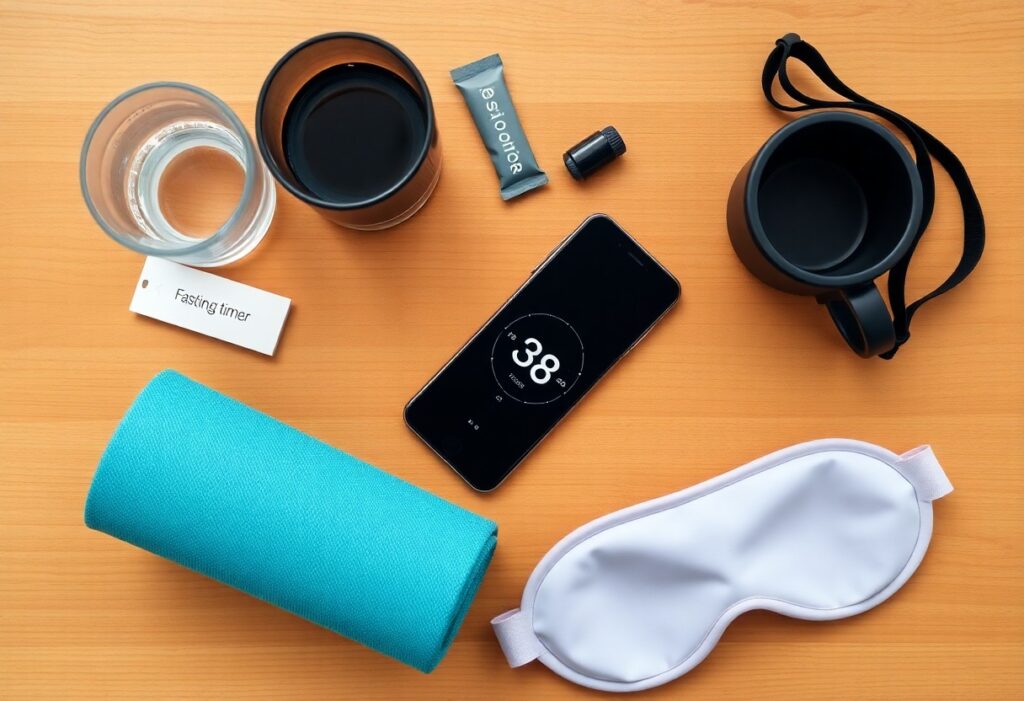

There’s growing evidence that carefully applied fasting can stimulate autophagy while preserving your energy and hormonal balance; you’ll learn five evidence-backed approaches-strategic fast timing, controlled refeeding, sufficient sleep, gentle movement, and targeted nutrients-that help enhance cellular cleanup without causing burnout, plus practical steps to personalize each strategy safely for your lifestyle.
Time‑Restricted Eating: Daily Windows
You confine eating to a predictable daily window-common patterns are 12:12, 14:10, or 16:8-to extend overnight fasting and trigger metabolic shifts. For example, eating 10:00-18:00 gives ~16 hours fasted each day; many interventions using 14-16 hour fasts report improved insulin sensitivity and markers associated with cellular repair, while fitting into normal meal routines.
Why it supports autophagy
When you extend the fasting interval, insulin and mTOR signaling drop and AMPK activity rises, shifting cells from growth to maintenance; animal data show autophagy markers increase after 12-24 hours, and human studies indicate 14-16 hour daily fasts correlate with improved metabolic markers and episodic mTOR downregulation that favors cellular cleanup.
Practical protocols and adherence tips
Begin with a 12:12 window for 1-2 weeks, then add 1-2 hours every 3-7 days until you reach 14:10 or 16:8; choose a window that matches your work and training (e.g., 10:00-18:00 for 16:8), drink water, black coffee or unsweetened tea during fasting, and allocate most protein to meals inside your window to protect lean mass.
- Start gradually: extend fasting by 30-60 minutes every few days to reduce hunger and cortisol spikes.
- Favor earlier windows (eating earlier in the day) to align with circadian rhythms and improve glucose tolerance.
- Place resistance workouts near the start of your eating window so you can consume protein within 1-2 hours post‑exercise.
- Use a simple app or log to track your window and consistency for 2-4 weeks before assessing effects.
- Recognizing social commitments will sometimes require shifting your window or planning a single flexible meal rather than abandoning the pattern.
For more detail, you should match protein and training to the window: aim for roughly 1.6-2.0 g/kg if preserving or building muscle, distribute 20-40 g protein across 2-3 meals, and keep overall calories appropriate to goals; randomized trials of 16:8 for 8-12 weeks often show comparable fat loss to calorie restriction when intake is matched and lean mass is preserved with adequate protein and resistance training.
- If you work nights, anchor the window to your main sleep block so fasting spans your longest sleep period.
- Prioritize sleep and morning light exposure to harmonize appetite and metabolic hormones with your window.
- Track subjective energy and mood for 2-3 weeks; adjust window timing rather than length if you feel degraded performance.
- Plan meals and snacks in advance to avoid late-night high-carb choices that impair fasting benefits.
- Recognizing long-term adherence beats short-lived perfection, allow 1-2 flexible days monthly to maintain sustainability.
Intermittent & Short Prolonged Fasts
Mixing daily 16:8 windows, twice-weekly 5:2 (two days at ~500-600 kcal), and occasional 24-48 hour fasts gives a practical balance for autophagy stimulation without chronic energy depletion. Studies and clinical practice show autophagy markers often rise with fasts beyond 16-24 hours, while more sustained benefits appear after 24-48 hours. You can schedule a 24-36 hour fast weekly or a 48-hour fast every 2-4 weeks depending on tolerance and goals.
Choosing frequency and duration safely
Begin with nightly 12-14 hours, progress to 16:8 once you tolerate it, then add a 24-hour fast no more than once weekly. If doing 5:2, limit calorie-restricted days to 500-600 kcal and keep them non-consecutive. Adjust frequency by sex, age, body fat, activity – women, older adults, and low-BMI individuals should use shorter windows and less frequent prolonged fasts. Consult your clinician if you take insulin, sulfonylureas, or antihypertensives.
Modifications to prevent fatigue and hormonal stress
To prevent fatigue and hormonal strain, shorten fasting windows to 12-14 hours during high stress phases and prioritize a protein-rich refeed (25-40 g) to support metabolism. Add electrolytes (sodium and potassium), avoid intense resistance or HIIT workouts during prolonged fasts, and schedule fasts when sleep and stress are stable. Women often respond better to conservative approaches-try 14:10 before attempting 16:8 or longer fasts.
Concrete adjustments include aiming for 1-2 g sodium and 2-4 g potassium across fasting days, supplementing magnesium 200-400 mg at night, and ensuring 25-40 g protein at your first meal to blunt catabolism. Limit consecutive prolonged fasts to once every 2-4 weeks, favor low-intensity movement like walking, and monitor energy, sleep, libido, menstrual regularity, or HRV. Reduce or stop fasting if you develop insomnia, persistent fatigue, or missed periods.
Ketosis & Macronutrient Timing
How low‑carb/ketosis potentiates autophagy
When you enter nutritional ketosis (beta‑hydroxybutyrate ~0.5-3.0 mmol/L), insulin falls and AMPK/SIRT1 signaling rises, shifting cells toward catabolism and greater autophagic flux. Human and rodent data show increased LC3‑II and reduced p62 after 24-48 hours of fasting or ketogenic feeding. You can accelerate this metabolic switch with strict low‑carb intake or exogenous ketones while monitoring BHB/glucose to target the autophagy‑favoring window.
Protein timing and cycling strategies
You can time protein to avoid persistent mTOR activation and preserve autophagy; keep individual meals below the leucine threshold (~2.5-3 g leucine, roughly 20-30 g complete protein) during intervals you want autophagy. Concentrate protein in a 4-6 hour feeding window (e.g., 16:8 TRF) or use short protein‑restricted phases (48-72 hours at ~0.5-0.8 g/kg) to transiently lower mTOR signaling without causing long‑term muscle loss.
If you prioritize muscle, target 1.2-1.8 g/kg daily during refeeding, split into 20-40 g protein meals inside your feeding window and schedule resistance training at the start so you can ingest 25-35 g high‑leucine protein within 1-2 hours post‑workout. When your goal is enhanced autophagy, delay protein until after the primary autophagy window and apply 48-72 hour low‑protein phases every few weeks, then refeed to restore anabolic signals and preserve lean mass.
Exercise as an Autophagy Catalyst
Exercise amplifies autophagy by activating AMPK and suppressing mTOR; high-intensity intervals and resistance work are especially potent. You can trigger cellular cleanup with 20-40 minutes of HIIT or 30-60 minutes of resistance training 2-4 times weekly. Small human trials and animal studies indicate combining fasting with targeted workouts increases autophagy markers in liver and skeletal muscle more than fasting alone.
Types and timing of effective workouts
Prioritize HIIT (20-30 minutes) and resistance sessions (3 sets of 6-12 reps) to maximally stimulate autophagy signaling; include 20-45 minutes of fasted low‑moderate cardio for metabolic benefit. Train 12-24 hours into a fast when feasible-preliminary human data and multiple animal models show stronger autophagy induction in that window. Avoid prolonged endurance sessions (>90 minutes) during extended fasts to limit excessive catabolism.
- HIIT: 4-8 rounds of 30s work/90s rest, stimulates AMPK rapidly.
- Resistance: compound lifts 2-4x/week to promote muscle autophagy and turnover.
- Fasted morning cardio: 20-45 minutes at 60-70% HRmax for liver autophagy signals.
- Knowing how to periodize intensity-alternate hard days with easy or rest days-will prevent burnout and preserve gains.
| HIIT | 20-30 min; spikes AMPK and autophagy markers; use sprints or rowing intervals. |
| Resistance | 30-60 min; 3 sets of 6-12 reps; preserves muscle while triggering cellular cleanup. |
| Fasted cardio | 20-45 min at moderate intensity; best in morning 12-24h into fast for metabolic signaling. |
| LISS (active recovery) | 30-60 min walking or cycling; supports mitochondrial turnover without heavy catabolism. |
| Mobility/low-load work | 15-30 min; improves circulation and recovery, aids autophagy in connective tissues. |
Recovery strategies to avoid overtraining
Prioritize 7-9 hours of sleep, aim for 1.6-2.2 g/kg protein daily, and include 1-2 full rest days per week; monitor resting heart rate and energy to spot overload. You should hydrate ~30-35 mL/kg body weight and schedule deload weeks every 4-8 weeks to preserve gains while maintaining autophagy benefits.
Track objective metrics-resting HR, HRV, training log, and performance on staple lifts-to detect early fatigue: a sustained resting HR increase of 5-10 bpm or falling HRV over several days signals you need extra recovery. Use practical tools like post‑workout protein (20-40 g within 2 hours), 0.5 g/kg carbs after very long sessions, contrast showers, foam rolling, and mobility work to accelerate recovery. Lastly, periodize training intensity so you alternate high autophagy‑stimulating sessions with lower‑intensity or technique days to sustain progress without burning out.
Recovery, Stress Management & Targeted Supplements
Sleep, cortisol control, and circadian alignment
Aim for 7-9 hours and anchor your rhythm: get 10-30 minutes of bright morning light within 30 minutes of waking to blunt the cortisol awakening response, avoid screens 60-90 minutes before bed, and stop caffeine roughly 6-8 hours before bedtime. Time your last meal 2-3 hours before sleep and keep consistent bed/wake times within a 30-60 minute window to strengthen slow‑wave sleep and support autophagy cycles.
Evidence‑based supplements and safety considerations
Consider magnesium glycinate (200-400 mg at night), low‑dose melatonin (0.3-1 mg) for circadian re‑entrainment, ashwagandha (300-600 mg/day) for stress reduction, and omega‑3 EPA/DHA (1-2 g/day) for inflammation control; these have clinical trials supporting modest benefits. Use supplements during your eating window when possible, and avoid high doses without testing because interactions and liver or bleeding risks vary by compound.
Dose and timing matter: take fat‑soluble nutrients (vitamin D 1,000-4,000 IU) with food, keep magnesium at bedtime to aid sleep, and use melatonin short‑term. Stop or consult if you’re pregnant, on anticoagulants, immunosuppressants, thyroid meds, or have liver disease. Order third‑party tested brands (USP/NSF/ConsumerLab), check baseline labs (vitamin D, CBC, liver enzymes), and recheck after 8-12 weeks when starting higher doses to confirm safety and efficacy.
Monitoring, Contraindications & Practical Plans
Signs, biomarkers, and when to stop
You should watch for dizziness, palpitations, confusion, sweating or fainting; check fingerstick glucose if symptomatic-readings under 70 mg/dL are hypoglycemia and under 54 mg/dL is severe and requires stopping. Track ketones for autophagy goals-nutritional ketosis is typically 0.5-3.0 mmol/L. Monitor blood pressure, electrolytes and thyroid function with repeated fasting; stop and seek medical advice for syncope, arrhythmia, pregnancy, type 1 diabetes, active eating disorder, or if you’re on insulin/sulfonylureas without clinician supervision.
Sample weekly plans and troubleshooting
You can follow a daily 16:8 window (12:00-20:00), add one 24‑hour fast weekly (dinner-to-dinner), or do a 36-48 hour fast every 2-4 weeks; alternate-day modified fasts (500-600 kcal on fast days) suit others. Refeed with 20-40 g protein, vegetables and 20-30 g fiber. During multi‑day fasts supplement with 1-2 g sodium and 200-400 mg magnesium, monitor symptoms closely, and stop if dizziness or blood glucose <54 mg/dL occurs.
When energy, sleep or menstrual cycle symptoms worsen, shorten windows to 12-14 hours for several weeks and boost protein to 25-30% of calories; women often tolerate shorter fasts and may prefer the follicular phase for longer fasts. For T2D or antihypertensives, adjust medications only with your clinician-one reported case had A1c drop from 7.8% to 6.5% after supervised 16:8 plus weekly 24‑hour fasts. Recheck labs and symptoms every 4-8 weeks while actively fasting.
Final Words
With this in mind, adopt fasting strategies that prioritize gradual progression, nutrient-dense meals, consistent sleep, regular movement, and stress regulation so you support autophagy without burning out. Track your responses, hydrate, and tailor fasting windows to your lifestyle and goals; consult a healthcare professional if you have health conditions. By balancing discipline with recovery, you make sustainable gains in cellular health and overall resilience.