
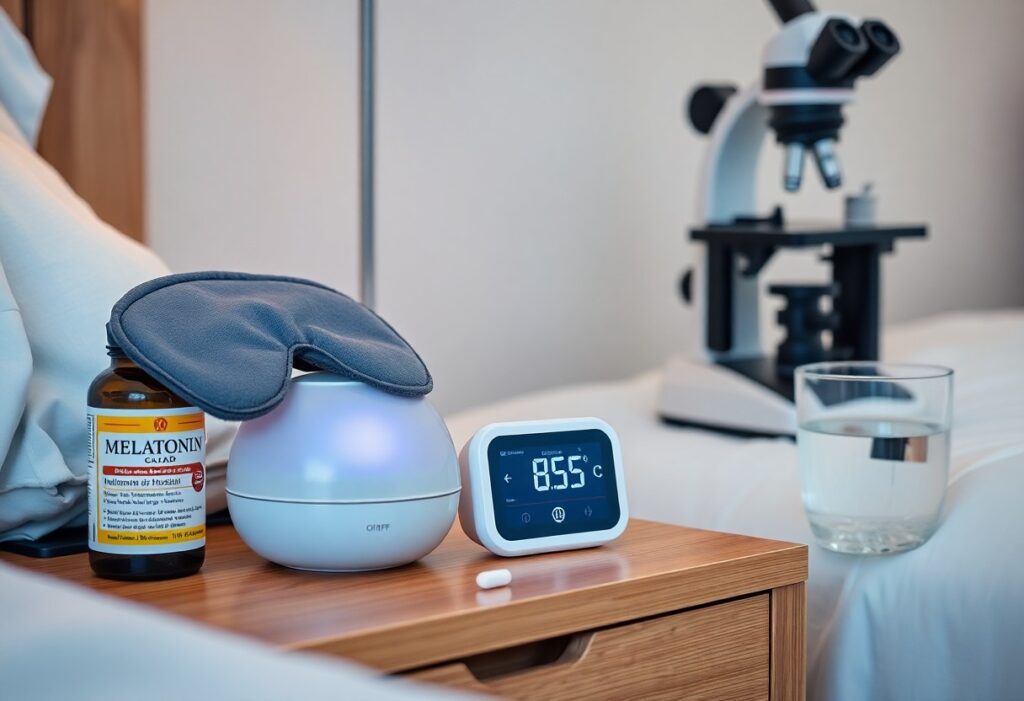

Repair processes in your body are orchestrated by sleep hormones that send five proven signals-melatonin onset, growth hormone pulses, cortisol nadir, autonomic downshift, and slow-wave dominance-that promote healing and cellular repair; understanding how you can strengthen these signals improves recovery, immune function, and tissue regeneration while optimizing sleep timing, light exposure, nutrition, and movement to amplify cellular restoration.
The Five Proven Sleep Signals – overview
You’ll see five tightly timed signals-melatonin, growth hormone/IGF‑1, adenosine, the nocturnal cortisol rhythm, and prolactin-orchestrate repair across the night: melatonin ramps before sleep to gate timing; growth hormone surges in the first 90-120 minutes of deep NREM to drive protein synthesis; adenosine accumulates with wakefulness and dissipates during sleep; cortisol stays low then rises toward morning; prolactin increases to modulate immune and metabolic recovery.
Definitions: melatonin, growth hormone/IGF‑1, adenosine, nocturnal cortisol rhythm, prolactin
Melatonin signals night and synchronizes circadian timing; growth hormone (GH) is released in sleep‑linked pulses that stimulate IGF‑1 for tissue growth and repair; adenosine builds with wake time to promote slow‑wave sleep; the nocturnal cortisol rhythm involves a sleep‑time trough and pre‑waking rise that governs catabolic/anabolic balance; prolactin rises during sleep to support immune regulation and metabolic adaptation.
How these signals coordinate across sleep stages to enable cellular repair
During the first two to three 90‑minute cycles you get dominant slow‑wave sleep when GH pulses, melatonin is high, cortisol is suppressed and adenosine clearance favors glymphatic flow-this combination boosts protein synthesis, DNA repair and metabolite removal; later cycles shift toward REM, when different reparative processes like synaptic downscaling and emotional memory processing occur, so repair is staged across the night.
Mechanistically, adenosine receptor signaling promotes SWS and expands interstitial space for glymphatic clearance while GH/IGF‑1 activates anabolic pathways and autophagy-related genes; concurrently, low nocturnal cortisol removes inhibitory signals on repair and rising prolactin fine‑tunes immune responses-together these timed changes create windows when cellular housekeeping, mitochondrial turnover and DNA damage repair operate at peak efficiency.
Melatonin
You produce melatonin from the pineal gland beginning around dim light melatonin onset (about two hours before your habitual bedtime), with nocturnal peaks typically between 2-4 AM; it functions as a hormonal night signal and a systemic antioxidant that supports sleep-driven cellular repair and recovery.
Circadian timing cue plus antioxidant and mitochondrial protection
As a circadian timing cue, melatonin synchronizes peripheral clocks and promotes nocturnal restorative programs in your tissues; at the cellular level it crosses membranes, concentrates in mitochondria, scavenges reactive oxygen species, preserves electron transport chain efficiency, and helps maintain mitochondrial membrane potential under stress.
Evidence for DNA repair, anti‑inflammatory effects, and enhanced healing
Clinical and preclinical studies indicate that when you have adequate nocturnal melatonin, markers of oxidative DNA damage such as 8‑oxo‑dG decline, proinflammatory cytokines like TNF‑α and IL‑6 are reduced, and wound models-both animal and some human trials-show accelerated closure and improved tissue organization.
Mechanistically, melatonin enhances your cells’ capacity for oxidative base repair by increasing repair activity and lowering oxidized bases, while inhibiting NF‑κB-mediated cytokine release to dampen inflammation; for example, in diabetic rodent models systemic or topical melatonin improved re‑epithelialization, collagen deposition, and tensile strength compared with controls, supporting faster functional recovery.
Growth Hormone & IGF‑1
You get the largest nightly pulses of growth hormone (GH) during the first 90-120 minutes of sleep, and those pulses drive hepatic IGF‑1 production that extends anabolic signaling throughout the day. About 60-70% of daily GH secretion occurs during sleep, so if you curtail deep sleep you blunt a major regenerative signal that supports muscle, bone, and connective tissue maintenance.
Slow‑wave sleep secretion pattern and anabolic repair signaling
During stage N3 slow‑wave sleep GH is released in high‑amplitude bursts tied to delta activity, coordinating the night’s anabolic window. If you fragment or delay SWS-shift work or late nights, for example-GH pulse amplitude falls and the timing of IGF‑1 release shifts, reducing the coordinated signaling that optimizes protein synthesis and extracellular matrix repair during sleep.
Roles in protein synthesis, tissue regeneration, and metabolic recovery
GH and IGF‑1 together increase amino acid uptake, activate satellite cells in muscle, and promote collagen synthesis in tendons and skin, so you repair microdamage faster after training or injury. Athletes who prioritize early sleep get better lean‑mass gains partly because nightly GH/IGF‑1 signaling augments mTOR‑driven protein synthesis and reduces overnight proteolysis.
At the molecular level, GH binding to its receptor activates JAK2/STAT5 to raise IGF‑1, while IGF‑1 stimulates the PI3K/Akt/mTOR pathway in target tissues; this sequence boosts translation initiation, increases ribosomal biogenesis, and suppresses autophagy. Clinically, GH deficiency correlates with reduced wound healing and lower lean mass, and restoring GH/IGF‑1 improves metabolic recovery, lipolysis overnight, and functional tissue repair in deficient patients.
Adenosine
As wake time accrues, adenosine rises from ATP breakdown (ATP → ADP → AMP → adenosine via 5′-nucleotidase), signaling sleep pressure that directly links cellular energy turnover to restorative sleep. You experience this as mounting sleepiness; at the molecular level adenosine engages A1 and A2A receptors, slows neuronal firing, and gates processes that prioritize repair and metabolic replenishment while you sleep.
Sleep‑pressure signal tied to cellular energy status and mitochondrial restoration
Adenosine reports ATP demand and interacts with AMPK pathways so your cells detect low energy and shift toward restoration. In rodents, increased adenosine during prolonged wake reduces neuronal firing and lowers reactive oxygen species production during subsequent sleep, enabling mitophagy and repair; this downshift gives mitochondria a window for quality control and replenishment of respiratory chain components.
Contribution to synaptic homeostasis and neuroprotective repair
Adenosine promotes synaptic downscaling by suppressing excitatory transmission-rodent electrophysiology shows ~20-30% net synaptic weakening across sleep-so your circuits shed excess potentiation and reduce excitotoxic risk. Blocking adenosine signaling with caffeine or antagonists blunts this downscaling and can impair sleep-dependent memory consolidation and clearance of metabolic byproducts.
Mechanistically, adenosine acting at A1 receptors inhibits presynaptic Ca2+ channels to cut glutamate release and activates postsynaptic GIRK channels to hyperpolarize neurons, reducing NMDA-dependent LTP induction; in hippocampal slice studies A1/A2A activation reliably lowers LTP magnitude, so you get both synaptic pruning and protection from overexcitation during the sleep window.
Cortisol & the HPA Axis
Your HPA axis paces cortisol in a circadian and pulsatile pattern that gates metabolic and immune programs during sleep and wake. Cortisol has a plasma half-life of ~60-90 minutes and binds glucocorticoid receptors across tissues to modulate glucose, inflammation, and cellular stress responses. Pulses continue overnight but reach a nadir in deep sleep and a rapid morning rise that helps terminate sleep-associated repair and prepare your metabolism for activity.
Nocturnal nadir and morning surge: timing for inflammation control and metabolic resetting
The cortisol nadir typically occurs between ~2-4 AM, supporting deep slow-wave sleep and growth hormone peaks in the first 90 minutes of sleep; the cortisol awakening response (CAR) then rises sharply 30-45 minutes after waking. That timing suppresses overnight inflammation (IL-6, TNF signaling) and resets hepatic glucose output so your first meals are handled efficiently. When your schedule shifts, this sequence misaligns and you get higher nocturnal inflammation and impaired fasting glucose control.
Impact of chronic nocturnal elevation on repair, immune function, and aging
Chronic elevation of nighttime cortisol blunts slow-wave sleep and growth hormone pulses, impairs fibroblast-driven wound repair, and shifts immune profiles toward reduced T-cell proliferation and altered macrophage function. You may see higher circulating IL-6 and CRP, slower vaccine antibody responses, and observational links to accelerated biological aging markers such as shortened telomeres and increased oxidative stress.
Mechanistically, nighttime cortisol excess increases hepatic gluconeogenesis and insulin antagonism, reduces IGF-1 signaling important for tissue repair, and prolongs exposure to glucocorticoid-driven transcription that impairs DNA repair pathways. In stressed caregiver cohorts, elevated evening cortisol predicts poorer influenza vaccine responses and delayed wound closure, illustrating how sustained nocturnal cortisol can translate into measurable deficits in immune protection and tissue recovery.
Prolactin & Immune Modulators
During sleep your pituitary releases prolactin in a nocturnal surge that can rise two- to threefold above daytime levels, and that surge directly shapes immune tone. You get enhanced lymphocyte proliferation, increased macrophage activity, and upregulation of prolactin receptors on T and B cells when prolactin is high; conversely, sleep loss blunts this surge and reduces those reparative immune responses.
Sleep‑associated immune modulation and effects on wound healing
When you sleep well, prolactin signaling promotes keratinocyte and fibroblast activity, boosting collagen synthesis and re-epithelialization; animal models show faster wound closure with intact nocturnal prolactin. If your sleep is restricted, wound closure slows and inflammatory cell clearance is delayed, which contributes to larger scar formation and longer recovery after procedures or injuries.
Interactions with cytokines (IL‑6, TNF) and implications for chronic inflammation
Prolactin and pro-inflammatory cytokines interact bidirectionally: IL‑6 can stimulate prolactin release, while chronic elevations of IL‑6 and TNF impair slow‑wave sleep and perturb prolactin rhythms. That dysregulation creates a feed‑forward loop in obesity, metabolic syndrome, and autoimmune conditions where sustained IL‑6/TNF keeps you in a pro-inflammatory state and undermines nightly repair.
Mechanistically, prolactin signals through the PRLR-JAK/STAT5 pathway on immune cells, enhancing Th1-type responses and promoting IL‑2 and IFN‑γ production, while IL‑6 activates STAT3 and TNF sustains NF‑κB-driven inflammation. In practice, this means persistent IL‑6/TNF elevation shifts signaling balance away from reparative STAT5 activity, so restoring sleep and nocturnal prolactin rhythms can help break the inflammatory cycle and improve markers of healing in clinical and preclinical studies.
Summing up
Taking this into account, optimizing melatonin, growth hormone, cortisol rhythm, adenosine buildup, and orexin balance enhances your sleep-driven healing and cellular repair; you can strengthen recovery by prioritizing dark, regular sleep schedules, deep slow-wave sleep, and managing stress, light exposure, and nutrition to align these signals and support tissue restoration, immune function, and metabolic resilience.