

Many everyday habits silently blunt your nighttime repair hormones, undermining recovery and long-term health. In this post you’ll learn nine hidden lifestyle factors-from evening light exposure and late caffeine to irregular meal timing and chronic stress-that disrupt melatonin, growth hormone, and cellular repair processes, and practical adjustments you can make to restore robust night-time repair signaling.
Nighttime repair hormones – how they work
During sleep, timed hormone pulses coordinate repair: growth hormone surges during slow-wave sleep (about 50-70% of daily secretion) to drive IGF‑1-mediated protein synthesis; melatonin peaks around 2-4 AM, scavenging free radicals and aligning clock genes; prolactin rises roughly 2‑fold to modulate immune and thermoregulatory responses. If you shift sleep timing or expose yourself to light at night, those nocturnal pulses blunt and the downstream repair programs you rely on lose efficiency.
Key hormones: growth hormone, melatonin, prolactin
Growth hormone is released in large nocturnal pulses that power muscle repair, lipolysis and hepatic IGF‑1 production; roughly half or more of daily GH comes at night. Melatonin peaks in the early morning hours and acts as an antioxidant and circadian synchronizer; using screens before bed can suppress melatonin by up to ~50%, which impairs antioxidant defenses. Prolactin increases during sleep (about 2-3× daytime levels) and supports immune regulation that helps you recover overnight.
Downstream repair pathways: protein synthesis, autophagy, DNA repair
These hormones route signals into discrete pathways: GH/IGF‑1 activates PI3K-AKT-mTOR to boost ribosomal activity and translation, melatonin and fasting favor AMPK activation and autophagy/mitophagy to clear damaged organelles, and clock-controlled repair factors increase nucleotide excision and base‑excision repair during sleep. When you eat late or stay exposed to light, mTOR stays high, autophagy is blunted and DNA repair capacity drops.
Mechanistically, GH signals via JAK2/STAT5 to elevate IGF‑1, which phosphorylates AKT and mTOR, enhancing S6K and 4E‑BP1 activity to raise protein synthesis; melatonin and AMPK activate ULK1 to initiate LC3‑mediated autophagy and mitophagy that reduce ROS; sleep upregulates NER components like XPA and BER enzymes, lowering markers such as 8‑oxo‑dG-disrupt your sleep pattern and you allow misfolded proteins, dysfunctional mitochondria and unrepaired DNA to accumulate.
Light, circadian timing and screens
Evening blue light and melatonin suppression
You get the most melatonin suppression from short-wavelength blue light (~460 nm), common in LEDs and device screens; evening exposure can delay melatonin onset by about 1-3 hours, reducing slow-wave sleep and repair windows. Typical tablets produce 30-100 lux at the eye-enough to shift your clock-so night modes or low-brightness reduce but don’t eliminate the effect; blue-blocking glasses or stopping screens 60-90 minutes before bed give the biggest benefit for nightly repair signaling.
Irregular schedules, shift work and clock misalignment
When your sleep-wake cycle drifts from natural light cues, central and peripheral clocks desynchronize, fragmenting sleep and blunting nocturnal hormone peaks; night-shift schedules are linked to higher rates of metabolic syndrome, type 2 diabetes and some cancers (IARC Group 2A), so chronic misalignment directly undermines the hormonal milieu that drives tissue repair overnight.
More detail: controlled forced-desynchrony and simulated shift-work studies show circadian misalignment can reduce insulin sensitivity by roughly 20-30%, elevate inflammatory markers (IL‑6, CRP) and raise nocturnal blood pressure, all impairing recovery. Practical mitigations that preserve repair signals include fixed anchor sleep of ≥6-7 hours, forward-rotating shift schedules, bright light (10,000 lux) timed to re-entrain morning phase, strategic daytime meals to shift peripheral clocks, low-dose melatonin (0.5-1 mg) for phase shifts, and blue-blocking eyewear or blackout on the commute home to prevent morning light from undoing adaptation.
Sleep quantity and architecture
When you shorten sleep or fragment its architecture, you shave off the early-night slow-wave sleep (SWS) window where most repair hormones surge. Aim for 7-9 hours: SWS and the largest nocturnal growth-hormone pulses occur mainly in the first 2-3 hours of sleep, so chronic sleep <6 hours impairs glymphatic clearance, protein synthesis and autophagy, raising inflammatory markers and slowing tissue recovery.
Short sleep and reduced slow-wave sleep
Cutting your sleep from 8 to 6 hours compresses the SWS-rich early night and blunts growth-hormone-dependent repair. Because GH secretion is concentrated in the first third of sleep, those lost hours reduce anabolic signaling that supports muscle repair, collagen formation and immune restoration, producing measurable drops in recovery and performance.
Fragmented sleep, sleep apnea and loss of restorative cycles
When your sleep is fragmented by awakenings or obstructive sleep apnea (AHI: mild 5-15, moderate 15-30, severe >30), dozens to hundreds of micro-arousals can interrupt SWS and REM, elevating sympathetic tone and inflammatory markers like IL‑6 and CRP. That disruption prevents sustained repair cycles and increases cardiometabolic and cognitive risk.
Treatment and behavioral changes can restore those repair signals: using CPAP consistently (>4 hours/night) often increases SWS and lowers inflammatory markers, while modest weight loss (5-10% body weight) commonly reduces AHI and improves sleep architecture. Clinical studies show CPAP adherence reduces daytime sleepiness and improves blood pressure and insulin sensitivity, demonstrating you can reverse much of the damage by fixing fragmentation and apnea.
Nutrition and meal timing
Timing and composition of your meals shape nocturnal repair signals: growth hormone pulses during deep sleep (usually the first 2-4 hours) and are sensitive to insulin. Finishing meals 2-3 hours before bed and keeping evening carbs low preserves fasting cues like autophagy and lipid mobilization. Prioritize protein and fiber at dinner and avoid simple sugars to minimize insulin spikes that compete with the repair-promoting hormonal milieu.
Late-night eating, high sugar and insulin interference
Eating within two hours of bedtime, especially high-sugar snacks or alcohol, elevates nocturnal insulin and suppresses lipolysis and autophagy. Shift workers and people who snack late show higher postprandial glucose and impaired overnight GH signaling. Swap a 50-60 g dessert for 10-20 g of nuts or casein-rich yogurt to blunt insulin peaks while still satisfying hunger.
Fasting windows and nutrient signals that support repair
Time-restricted eating of 12-16 hours enhances ketone production, raises NAD+/AMPK signaling, and promotes autophagy compared with ad libitum eating. Many clinical trials use a 16:8 schedule (16 hours fast/8 hours eating) and report improved insulin sensitivity and sleep consolidation. Start with 12 hours overnight if you have metabolic concerns, then progress toward 14-16 hours to amplify repair signals.
Practical implementation: aim to finish dinner by 7pm and eat breakfast at 9am for a 14-hour fast, or shift to 6pm/10am for 16 hours. Include 20-30 g of protein at dinner to sustain overnight amino acid availability while keeping simple carbs low to avoid insulin spikes. If you’re on medications for diabetes consult your clinician before extending fasts; otherwise many people see measurable gains in fasting glucose and sleep quality within 2-8 weeks of consistent time-restricted eating.
Stress, stimulants and substances
Chronic stress and elevated nocturnal cortisol
You experience a chronic stress response when daily pressures keep evening cortisol elevated, which flattens the normal circadian dip and interferes with the large growth-hormone pulses that occur within the first 90-120 minutes of sleep. Studies of caregivers and night-shift workers show sustained evening cortisol and fragmented deep sleep, linking that pattern to reduced tissue repair, impaired glycemic control, and slower muscle recovery after exercise.
Caffeine, alcohol, nicotine and disrupted hormone patterns
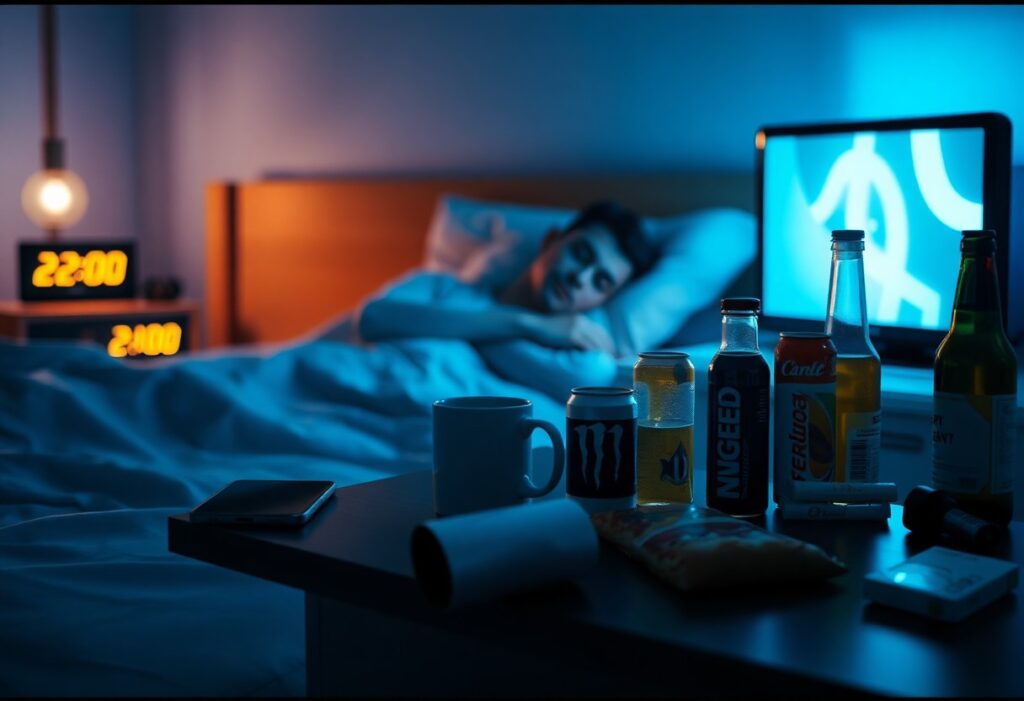
You should know caffeine (half-life ~5-6 hours) taken late delays melatonin onset-200 mg three hours before bedtime can postpone dim-light melatonin by roughly 40 minutes-while alcohol before bed fragments REM and can suppress nocturnal GH by large amounts. Nicotine stimulates sympathetic tone, raises heart rate, shortens slow-wave sleep, and its ~2-hour half-life still disrupts repair signaling when used in the evening.
In practice, a single evening alcoholic binge can reduce slow-wave and REM consolidation and cut nighttime GH secretion substantially; two cups of coffee (≈200-300 mg caffeine) within 3-6 hours of bedtime will blunt melatonin and delay sleep onset, and even nicotine patches raise nocturnal arousal. If you track sleep stages with a wearable, you’ll often see lower deep-sleep percentage and higher fragmentation on nights with late caffeine, alcohol, or nicotine exposure, directly impairing nightly repair processes.
Medications, chronic conditions and physical factors
You may be taking drugs or living with conditions that silently interfere with nocturnal repair: chronic corticosteroids, beta-blockers, some antidepressants, uncontrolled diabetes and untreated sleep apnea all shift hormones, raise nighttime cortisol or fragment slow-wave sleep. Persistent pain, restless legs or bedroom heat/light also keep you in sympathetic arousal. This reduces overnight growth-hormone pulses and slows tissue and cellular repair.
- Prescription drugs that alter melatonin, cortisol or inflammation
- Metabolic and respiratory disorders that raise nocturnal stress hormones
- Physical symptoms and environment that fragment deep sleep
Common drugs and health conditions that blunt repair signals
You can experience reduced repair when using systemic corticosteroids (eg, prednisone ≥5 mg/day), non-selective beta-blockers that lower melatonin, SSRIs that alter REM and growth-hormone timing, or chronic NSAIDs that impair muscle adaptation; conditions like type 2 diabetes (HbA1c >7%), obstructive sleep apnea and chronic kidney disease elevate nocturnal cortisol and oxidative stress, diminishing overnight restoration.
Common drugs and conditions – effects on repair
| Medication / Condition | Effect on repair |
|---|---|
| Corticosteroids | Suppress inflammation resolution, blunt GH-related repair |
| Non-selective beta-blockers | Reduce melatonin secretion, alter nocturnal HRV |
| SSRIs | Shift REM and growth-hormone timing, fragment sleep architecture |
| Chronic NSAIDs | May impair muscle adaptation and recovery |
| Type 2 diabetes (HbA1c >7%) | Elevated glucose and oxidative stress reduce cellular repair |
| Obstructive sleep apnea | Repeated arousals, higher nocturnal cortisol, less slow-wave sleep |
Exercise timing, bedroom environment and temperature effects
You should avoid very intense exercise within 1-2 hours of bedtime because core temperature can stay elevated 60-120 minutes, delaying melatonin and blunting GH pulses; keep bedroom temperature near 16-19°C to maximize slow-wave sleep, reduce light below ~30 lux and block blue light to preserve melatonin onset, and control noise to prevent arousals that interrupt repair.
Exercise & environment – impact on repair
| Factor | How it affects repair |
|---|---|
| Late-night high-intensity exercise | Raises core temp 0.5-1.0°C for up to 2 hours, delays sleep onset and GH peaks |
| Room temperature >24°C (75°F) | Reduces slow-wave sleep duration and quality |
| Bright/blue light (>30 lux) | Suppresses melatonin, shifts sleep timing |
| Noise and interruptions | Increase micro-arousals, fragment restorative stages |
You can shift timing and the environment to restore repair: finish vigorous training >3 hours before bed or favor morning sessions, use cooling (cold shower, fan) after evening workouts, set bedroom 16-19°C, install blackout curtains and dim lights to <10 lux, and consider white-noise or earplugs to reduce awakenings.
Practical adjustments – expected benefits
| Action | Expected benefit |
|---|---|
| Finish intense exercise ≥3 hours pre-bed | Normalizes core temp and GH timing |
| Bedroom 16-19°C | Increases slow-wave sleep and repair |
| Dim lights / block blue light | Preserves melatonin onset and sleep depth |
| White-noise or earplugs | Reduces arousals, consolidates restorative sleep |
Conclusion
The nine hidden lifestyle factors that block your nighttime repair signals can be reversed by targeted changes: prioritize a consistent sleep schedule, reduce evening light and stimulants, manage stress, align exercise and meal timing, moderate alcohol, and optimize temperature. By addressing these behaviors you restore hormonal repair rhythms, improve your recovery, and support long-term health.