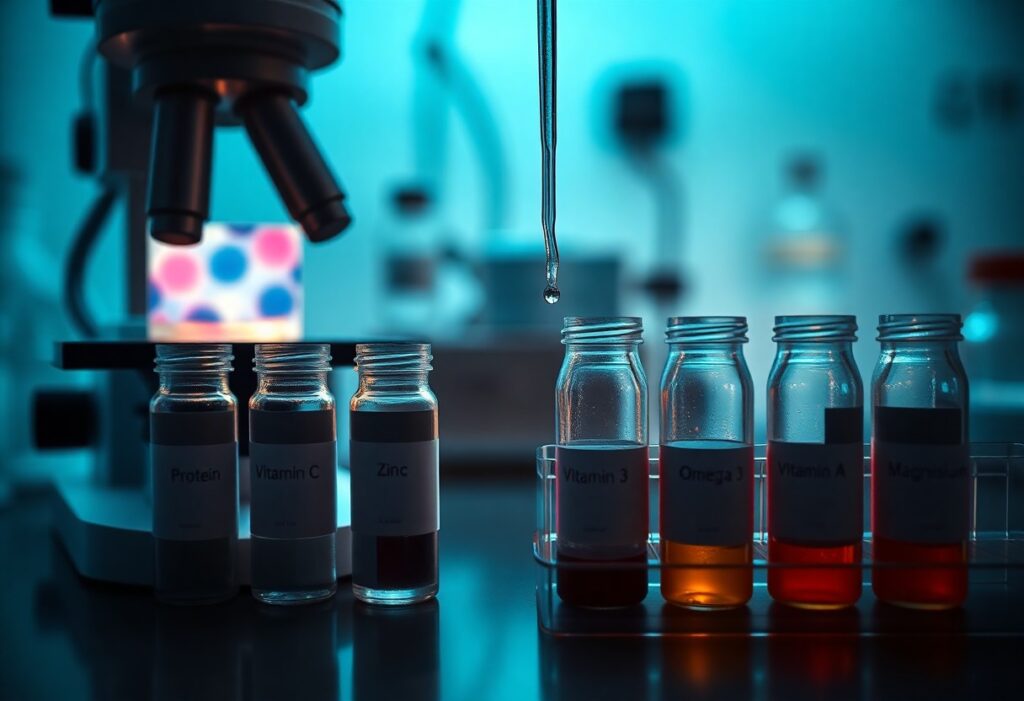

There’s a precise set of nutrients that drive tissue repair and cellular renewal; understanding how protein (amino acids), vitamin C, zinc, omega‑3 fatty acids, vitamin A and B‑complex support collagen synthesis, immune response and cellular energy lets you actively optimize recovery and long‑term tissue health. This post explains the mechanisms behind each nutrient and practical ways you can incorporate them into your diet and routine.

Protein & Essential Amino Acids
Protein and necessary amino acids supply the raw materials for rebuilding damaged tissue and supporting cellular renewal; you rely on both the total protein intake and the specific amino acid profile to drive repair pathways. Leucine acts as an anabolic trigger (about 2-3 g per meal), while glycine and proline feed collagen formation; inadequate intake slows repair, so target higher-than-RDA intakes during recovery to fuel synthesis and cell proliferation.
Role in tissue synthesis, collagen formation and cell proliferation
You require branched-chain amino acids-especially leucine-to activate mTOR and stimulate muscle protein synthesis and cell proliferation; leucine thresholds of ~2-3 g per meal maximize that response. For collagen, fibroblasts need glycine, proline and hydroxyproline plus vitamin C-dependent hydroxylation to stabilize the triple helix, so supplying those specific amino acids directly supports extracellular matrix deposition and tensile strength of repaired tissue.
Dietary sources, dosing and timing for repair
You should aim for 1.2-2.0 g/kg/day of protein during active repair (versus the 0.8 g/kg RDA); distribute 20-40 g high-quality protein every 3-4 hours with ~2-3 g leucine per feeding. Prioritize whey, eggs, lean meat, fish, soy and dairy for complete amino acid profiles, and add 5 g collagen peptides plus 50-100 mg vitamin C to support connective tissue remodeling shown in clinical trials.
For practical application, a 70 kg person targeting 1.6 g/kg/day would consume ~112 g protein: for example, 30 g at breakfast (1 scrambled egg + 150 g Greek yogurt), 30 g post-activity whey shake (provides ~2.5 g leucine per 25 g protein), 30 g at dinner (120 g chicken breast), plus 10-20 g collagen peptide with vitamin C in the morning to supply glycine/proline for tendon and ligament repair.
Vitamin C
You depend on vitamin C for rapid tissue repair, antioxidant recycling, and immune cell function; adults need about 75 mg (women) to 90 mg (men) daily, with smokers requiring an extra ~35 mg. Deficiency leads to impaired collagen cross-linking and slower wound closure. Clinical contexts-post-surgery or heavy oxidative stress-often justify dietary emphasis or supplemental dosing to support healing pathways.
Collagen synthesis, antioxidant protection and immune support
You need vitamin C as a cofactor for prolyl and lysyl hydroxylases that stabilize collagen fibrils; without it, collagen lacks hydroxylation and tensile strength. It also regenerates vitamin E and scavenges free radicals, lowering oxidative damage to repairing tissues. In immune terms, vitamin C enhances neutrophil chemotaxis and phagocytosis, which speeds debris clearance and reduces infection risk in wounds.
Food sources, supplementation and practical considerations
Whole foods supply abundant vitamin C: one medium orange ≈70 mg, one red bell pepper ≈95 mg, kiwi ≈64 mg, a cup of strawberries ≈50 mg, and a cup of broccoli ≈89 mg. Aim for 200-300 mg/day from foods when healing; supplements of 500-1,000 mg/day are common but upper limit is 2,000 mg/day to avoid GI upset. Smokers should add about 35 mg daily.
Practical steps: prioritize raw or lightly steamed produce to preserve vitamin C, store fruits short-term and avoid prolonged reheating. Split supplemental doses (e.g., 250 mg twice daily) to improve absorption and lower GI effects, or choose liposomal formulations for higher plasma levels. If you have kidney stone history, hemochromatosis, or are on chemotherapy, consult your clinician before high-dose vitamin C.
Zinc
Enzymatic roles in wound healing, DNA repair and immune function
Acting as a cofactor for over 300 enzymes, zinc stabilizes DNA polymerases and zinc-finger repair proteins that you rely on for accurate DNA repair and cell replication. It also regulates matrix metalloproteinases for extracellular matrix remodeling and supports thymic hormones and T-cell maturation, so your wound closure and innate immune responses are faster and more coordinated when zinc is adequate.
Sources, deficiency signs and interactions with other minerals
Oysters contain about 74 mg zinc per 3‑oz serving, while 3 oz beef provides ~5 mg and an ounce of pumpkin seeds ~2-3 mg; for your needs the RDA is 11 mg for men and 8 mg for women, with a 40 mg upper limit. Zinc deficiency causes delayed wound healing, hair loss, impaired taste and recurrent infections, and absorption is reduced by phytates; excessive zinc intake can induce copper deficiency via metallothionein sequestration.
If you supplement, choose bioavailable forms like zinc picolinate, gluconate or acetate at 15-30 mg/day for short courses; avoid chronic doses above 40 mg/day without monitoring copper or taking supplemental copper (1-2 mg). Food strategies such as soaking, sprouting or fermenting grains and legumes lower phytates and boost zinc absorption, and note that plasma zinc is a late marker-clinical signs and dietary assessment are more informative for your status.
Omega-3 Fatty Acids
EPA and DHA integrate into cell membranes, modulate inflammatory mediators and support repair in muscle, brain and vascular tissue; when you supply adequate omega-3s, tissue resilience and recovery timelines shorten, inflammation markers like CRP and IL-6 fall in randomized trials, and pro‑resolution mediators such as resolvins accelerate the switch from inflammation to repair.
Membrane integrity, inflammation resolution and signalling
By displacing arachidonic acid in phospholipids, you shift eicosanoid profiles toward less inflammatory prostaglandins and leukotrienes and enable resolvin/protectin synthesis that terminates inflammation and promotes phagocytosis. Aim for an omega‑3 index above ~8% to support membrane resilience; higher indexes have been associated with improved wound healing and lower systemic inflammatory markers in clinical studies.
EPA/DHA sources, therapeutic dosing and safety
You obtain EPA/DHA from fatty fish (salmon, mackerel, sardines – roughly 1-2 g combined EPA+DHA per 100 g cooked serving), concentrated fish‑oil supplements, or algal oil if you avoid seafood. For general maintenance 250-500 mg/day combined is common; therapeutic ranges run 1-4 g/day depending on indication. REDUCE‑IT used 4 g/day icosapent ethyl (EPA) to reduce cardiovascular events. Monitor bleeding risk and drug interactions, especially with anticoagulants; consult a clinician before >3 g/day from supplements.
When choosing supplements, check EPA/DHA per capsule, prefer third‑party testing (USP, IFOS) and low peroxide values to avoid oxidized oil. You may prefer higher‑EPA ratios for inflammatory conditions and higher‑DHA formulations for neural repair; split doses with meals to improve absorption. Expect mild GI symptoms or “fishy” reflux; prescription products can differ in LDL effects and require lipid monitoring during high‑dose therapy.
Vitamin A
Retinoids drive cellular renewal by binding RAR/RXR nuclear receptors to modulate gene transcription that governs keratinocyte proliferation, differentiation and extracellular matrix remodeling; you’ll see this clinically where topical retinoids accelerate epidermal turnover and oral deficiency delays wound closure and causes squamous metaplasia, so maintaining adequate retinoid signaling supports timely tissue repair and barrier restoration.
Epithelial differentiation, mucosal repair and immune modulation
Retinoic acid promotes epithelial cell lineage commitment and goblet-cell recovery in mucosa, enhances secretory IgA production and shapes T-cell homing; deficiency increases infection risk and delays mucosal healing, whereas therapeutic vitamin A given in measles (WHO doses 100,000-200,000 IU by age) demonstrably reduces morbidity and mortality by restoring mucosal integrity and immune responses.
Dietary sources, supplementation cautions and safe upper limits
You obtain preformed vitamin A (retinol/retinyl esters) from liver, cod liver oil, dairy and eggs, and provitamin A carotenoids (beta‑carotene) from carrots, sweet potato and dark leafy greens; recommended intakes are ~900 µg RAE/day for men and 700 µg RAE/day for women, 1 µg RAE = 1 µg retinol = 12 µg beta‑carotene, and the tolerable upper limit for preformed vitamin A is ~3,000 µg (10,000 IU) daily.
Exercise caution with supplements: avoid high-dose preformed vitamin A in pregnancy because doses above the ~3,000 µg (10,000 IU) UL increase teratogenic risk, chronic excess causes hepatotoxicity, hair loss and bone pain, and you should not combine isotretinoin therapy with vitamin A supplements; additionally, large trials showed beta‑carotene supplements increased lung cancer risk in smokers, so rely on food sources unless a clinician advises otherwise.
Vitamin D
Your body uses vitamin D as a signaling molecule that modulates gene transcription via the vitamin D receptor (VDR) expressed in epithelial cells, immune cells, and fibroblasts, directly influencing differentiation, matrix remodeling, and inflammation resolution. Clinical data link low 25‑OH vitamin D with delayed wound closure and impaired bone healing, so maintaining adequate levels supports coordinated cellular responses during tissue repair.
Regulation of cell proliferation, immune response and tissue healing
Via VDR activation, vitamin D slows excessive fibroblast proliferation and TGF‑β signaling while promoting antimicrobial peptides like cathelicidin, shifting macrophages toward pro‑repair phenotypes and reducing IL‑6/TNF‑α release. If you have chronic wounds or recurrent infections, correcting deficiency can lower inflammatory tone, improve keratinocyte migration, and support balanced collagen deposition for stronger, less fibrotic repair.
Testing, sources and supplementation guidance
Measure serum 25‑hydroxyvitamin D (25(OH)D); deficiency is <20 ng/mL, insufficiency 20-30, and a common target is 30-50 ng/mL (75-125 nmol/L). Sunlight (10-30 minutes several times weekly depending on skin), fatty fish (100 g wild salmon ≈600-1000 IU), fortified milk (~100 IU/cup) and supplements are practical. Typical maintenance dosing is 800-2,000 IU/day; many need 2,000-4,000 IU to reach targets, with higher doses for obesity or malabsorption under monitoring.
For repletion, clinicians often use 50,000 IU weekly for 6-8 weeks then recheck 25(OH)D; alternatively 5,000 IU/day can be effective with testing after 8-12 weeks. You should monitor serum calcium when using high doses, consider vitamin K2 co‑supplementation for vascular calcium regulation, and adjust dose based on follow‑up levels, body weight, medications, and clinical response.
To wrap up
Summing up, supporting cellular repair with targeted nutrients-vitamin C, vitamin D, vitamin A, vitamin E, zinc, and omega-3 fatty acids-helps your tissue recovery, reduces inflammation, and promotes cellular renewal; by prioritizing a nutrient-dense diet, appropriate supplementation when needed, and consulting your healthcare provider, you optimize your body’s repair mechanisms and preserve long-term cellular health.