
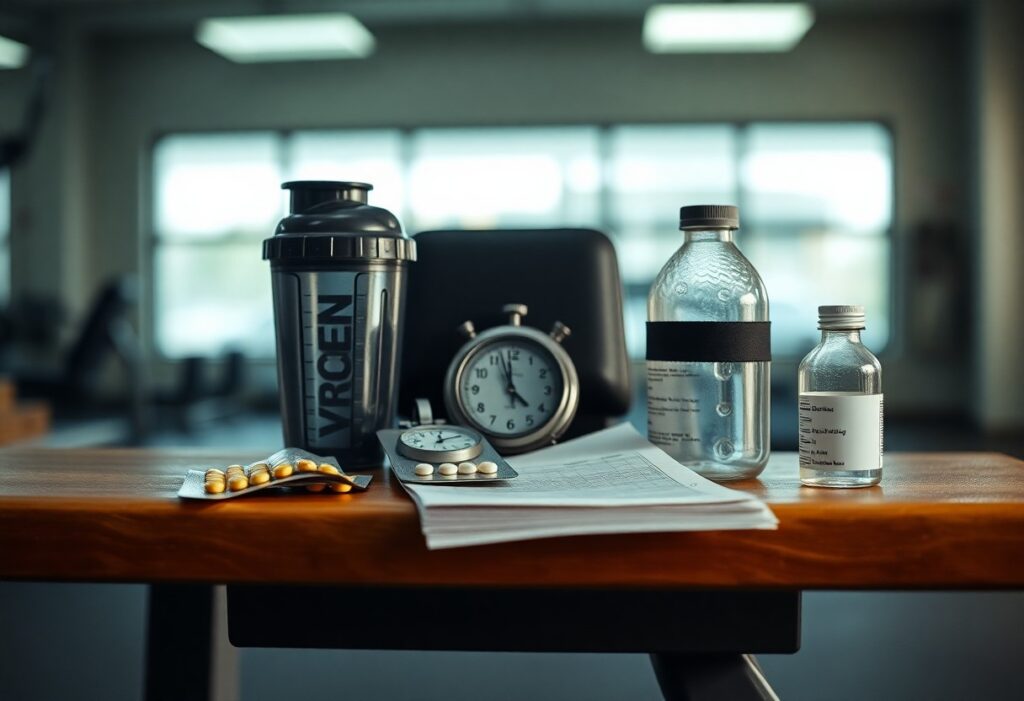

Recovery is the signal your body sends when training outpaces adaptation; persistent fatigue, disrupted sleep, elevated resting heart rate, prolonged soreness, mood changes, reduced libido and stalled gains all show your workouts may be harming recovery and hormones – this post breaks down seven shocking signs and fixes.
Key Takeaways:
- Chronic fatigue and falling performance despite consistent training – workouts feel harder and gains stall.
- Elevated resting heart rate and disrupted sleep patterns, indicating autonomic stress and poor recovery.
- Mood changes such as irritability, anxiety, low motivation, or depressive symptoms linked to stress hormones.
- Hormonal imbalances: reduced testosterone or libido in men, irregular or missed periods in women, and altered cortisol rhythms.
- Frequent illness, slower healing, and prolonged muscle soreness from a compromised immune response.
- Persistent muscle soreness, plateaus, or loss of strength and decreased training capacity.
- Appetite and body-composition shifts – unexplained weight loss or gain and changes in hunger or energy levels.
Understanding Overtraining
When cumulative training stress outpaces your ability to recover for weeks or months, you enter a state where hormones, sleep, and autonomic function become dysregulated. Athletes who ramp volume or intensity rapidly-say a 20-40% increase without planned deloads-often report stalled gains, persistent fatigue, and higher resting heart rate, signaling that the balance between stress and adaptation has been lost.
Definition and Causes
Overtraining happens when training load (volume, intensity, frequency) chronically exceeds recovery capacity. Common drivers include sudden load spikes (>10% weekly), training 6+ days a week without structured rest, sleeping under ~7 hours nightly, sustained caloric deficits (>300-500 kcal/day), psychological stress, illness, and poor periodization or inadequate monitoring of fatigue markers.
Effects on Physical Performance
You’ll notice declines in objective performance: reduced strength and power, slower sprint or endurance times, and diminished VO2 responses. Practical signs include your workouts feeling harder at the same pace, jumps in resting heart rate by ~5+ bpm, and a rise in perceived exertion-often before visible changes in body composition appear.
Mechanistically, neuromuscular drive drops, glycogen resynthesis slows, and hormonal shifts (lower testosterone, higher cortisol) impair recovery, so sessions that once required 48 hours may need a week or more; athletes in intensified phases commonly report 3-10% measurable losses in power or endurance within a few weeks unless load is reduced and recovery prioritized.
Recognizing the Signs of Overtraining
Subtle, measurable shifts often tip you off: resting heart rate creeping up 5-10 bpm, sleep that fragments, appetite changes, and performance that stalls or declines despite harder sessions. You may break the common 10% weekly progression rule and see soreness, frequent colds, or prolonged DOMS-these clustered signs separate a bad week from systemic overload.
Increased Fatigue
You feel persistently drained even after 7-9 hours of sleep and naps or caffeine no longer restore performance. Power and strength tests can drop 5-15% during sustained overload, and athletes who increase weekly load by more than 10% often report daytime sleepiness and reduced training quality lasting weeks.
Mood Changes
Irritability, low motivation, anxiety, and flattened affect commonly emerge; social withdrawal and decreased libido may follow. Hormonal shifts-higher cortisol and lower testosterone-frequently accompany these symptoms, amplifying sleep disruption and appetite changes, so persistent mood swings should be viewed as actionable performance signals.
Track mood objectively by rating energy, motivation, and stress daily on a 1-10 scale and flag drops of 2+ points sustained for 5-7 days. Correlate those dips with spikes in training load using a log or brief tools like POMS. If mood doesn’t improve after a 20-50% deload and sleep optimization, escalate to medical or mental-health evaluation.
Hormonal Imbalance and Its Impact
When recovery falters, hormonal balance shifts and you pay the price: elevated catabolic signals, blunted anabolism, poorer sleep and immune hits. For example, intense or excessive training can raise cortisol by 50-200% acutely and, with chronic overload, depress morning testosterone by 10-30%, leaving your adaptations stalled and fatigue persistent. Tracking these trends alongside metrics like resting HR and performance tests reveals when hormones are driving decline rather than gains.
Cortisol Levels
During hard sessions cortisol spikes to mobilize energy, but if you train without adequate recovery resting cortisol can stay high and the diurnal rhythm flattens. That state promotes muscle protein breakdown, impairs glycogen resynthesis, and fragments sleep; studies report resting cortisol increases of roughly 10-30% in overreached athletes. Monitoring morning cortisol or sleep quality helps you spot sustained elevations before they wreck progress.
Testosterone and Recovery
Excessive volume or inadequate recovery suppresses testosterone production, cutting anabolic drive and slowing muscle repair – men can see 10-30% drops with prolonged overload. You’ll notice reduced strength gains, lower libido and motivation, and slower recovery between sessions, all of which correlate with poorer training adaptations and higher injury risk.
Monitoring trends matters more than single readings: check morning total and free testosterone and the testosterone-to-cortisol (T/C) ratio weekly. A T/C decline greater than ~30% from baseline or consistent testosterone drops across 2-4 weeks often precede performance loss; in endurance cohorts, 15-25% falls in testosterone coincided with measurable power declines over 4-8 weeks, signaling the need to reduce load and prioritize sleep and calories.
Recovery Strategies to Combat Overtraining
Prioritize planned deloads every 3-6 weeks: cut volume 40-60% while keeping intensity moderate to maintain neural drive. Schedule 1-3 active recovery days weekly-light aerobic work, mobility, or contrast baths-to lower inflammation without losing fitness. Track objective markers like resting heart rate (a 5-10 bpm rise signals strain) and sleep efficiency; adjust calories and training load if RHR or fatigue persist for more than 7-10 days.
Active Recovery Techniques
Include 20-40 minutes of low-intensity cardio (walking, easy cycling) 2-3 times weekly to boost blood flow and lactate clearance. Add 10-15 minutes of targeted mobility and foam rolling post-session to restore range of motion and reduce DOMS. Use contrast showers (1-2 minutes hot, 30-60 seconds cold, repeat 3-5 times) after heavy phases to encourage circulation and sympathetic reset.
Nutrition and Hydration
Hit protein targets of 1.6-2.2 g/kg daily and distribute 20-40 g protein doses across meals to support muscle repair; aim for 5-7 g/kg carbs on moderate training days, increasing toward 7-10 g/kg during intense blocks. Supplement with 3-5 g creatine daily and 1-2 g combined EPA/DHA to lower exercise-induced inflammation and support recovery.
Adjust total calories up 200-500 kcal/day when you’re chronically fatigued to restore energy availability; small athletes may need smaller increases. Drink roughly 30-35 ml/kg bodyweight of fluid per day, monitor urine color, and add electrolytes during heavy sweat sessions (a few hundred mg sodium per liter). Many athletes report reduced soreness and lower resting heart rate after optimizing protein, carbs, hydration, and adding creatine consistently for 4-6 weeks.
Prevention of Overtraining
Prioritize planned recovery: schedule 1-2 full rest days per week, a deload week every 4-8 weeks, and cap weekly training volume increases to 5-10% to protect your hormones and performance. Monitor objective markers like resting heart rate, HRV, sleep quality and bodyweight, fuel with 1.6-2.2 g/kg protein and adequate calories, and aim for 7-9 hours of sleep so your nervous system and anabolic hormones can recover between hard blocks.
Listening to Your Body
Notice persistent pain or soreness lasting beyond 48-72 hours, a resting heart rate up by ≥5 bpm, HRV drops of ~10-20%, worsening mood or insomnia – these signal you should reduce intensity. When you feel this, drop load or volume, replace a session with active recovery (light cycling, mobility), and prioritize carbs/protein post-workout; short-term reductions (one week) often restore performance and normalize cortisol-testosterone balance.
Structuring Effective Workout Plans
Use periodization: organize 3-5 week mesocycles with progressive overload then a deload, keep strength work 3-5 sessions/week and conditioning 2-4 sessions/week, and limit weekly volume jumps to 5-10%. Vary intensity across sessions (one heavy, one moderate, one velocity-focused) and track RPE or reps-in-reserve so you can auto-regulate before hormonal strain appears.
For example, run a 4-week cycle: week 1 (70% intensity), week 2 (80%), week 3 (90% peak), week 4 deload with 40-60% reduced volume. A sample week: Mon heavy lower (3-5 sets × 3-6 reps), Wed upper hypertrophy (3-4 sets × 8-12), Fri speed/technique (6-8 sets × 2-3 reps), Sat low-intensity 30-45 min cardio. Track RHR, HRV, sleep and RPE to adjust volume before you cross into overtraining territory.
Summing up
The persistent fatigue, sleep disruption, mood swings, stalled progress, elevated resting heart rate, recurrent injuries, and reduced libido are clear signs that your workouts are harming recovery and hormonal balance; you should reduce volume and intensity, optimize sleep and nutrition, manage stress, and seek professional guidance if symptoms persist to protect performance and health.
FAQ
Q: What is overtraining and how can it hurt recovery and hormones?
A: Overtraining occurs when training stress exceeds the body’s ability to recover. Physiologically it drives prolonged activation of the HPA axis, raising cortisol and lowering anabolic hormones like testosterone, IGF-1 and growth hormone. That hormonal shift promotes a catabolic state, slows muscle repair, impairs sleep and immune function, and reduces performance despite continued effort.
Q: Why do I feel constant fatigue even with regular sleep?
A: Persistent fatigue from overtraining stems from chronic systemic stress: elevated cortisol disrupts energy metabolism and mitochondrial function while low anabolic hormones reduce recovery capacity. Sleep quantity can be fine but sleep architecture is often disturbed, limiting restorative deep sleep and growth hormone release. Address by reducing training volume/intensity, scheduling deloads, increasing calorie and carb intake around workouts, and tracking resting heart rate and perceived exertion.
Q: How does overtraining disrupt sleep and make hormonal imbalance worse?
A: Excessive training raises sympathetic tone and cortisol, causing hyperarousal and fragmented or delayed sleep onset. Poor sleep reduces nocturnal growth hormone and testosterone pulses, further impairing tissue repair and recovery. The cycle perpetuates: worse sleep → worse hormonal restoration → slower recovery. Corrective steps include lowering evening intensity, prioritizing consistent sleep timing, and incorporating active recovery and stress-management practices.
Q: My resting heart rate is higher than normal – is that a sign of overtraining?
A: A sustained elevation in resting heart rate or lack of nocturnal heart rate variability indicates autonomic imbalance from chronic stress or incomplete recovery. It often precedes performance decrements and illness. Monitor trends rather than single readings; a rising baseline over days or weeks warrants reduced volume, additional rest, and re-evaluation of sleep, hydration and nutrition.
Q: Why am I catching colds or getting infections more often after ramping up training?
A: Prolonged high-intensity training raises cortisol and suppresses immune cell function and mucosal immunity, increasing susceptibility to upper respiratory and other infections. Energy deficits and insufficient carbohydrate intake around sessions also impair immune defenses. Mitigate by tapering load, ensuring adequate calories (especially carbs), optimizing vitamin D and sleep, and planning recovery periods during heavy training blocks.
Q: Can overtraining cause mood changes, irritability or depression?
A: Yes. Chronic training stress alters neurotransmitter balance and lowers anabolic hormones, producing anxiety, irritability, reduced motivation and depressive symptoms. Psychological stress and lack of recovery compound these effects. Management includes immediate workload reduction, structured rest and recovery, nutritional support, psychosocial strategies (counseling, stress-reduction techniques), and endocrine evaluation if symptoms persist.
Q: Why has my libido dropped or my menstrual cycle changed since I increased training?
A: Reduced libido and menstrual irregularities are common signs of low energy availability and hypothalamic suppression. The body reduces GnRH secretion to conserve energy, lowering LH/FSH and downstream sex hormones (estrogen, progesterone, testosterone). This can cause amenorrhea, oligomenorrhea or low libido and jeopardize bone and metabolic health. Treatment requires increasing energy intake, lowering training volume, restoring body fat if too low, and seeking medical assessment for hormonal testing and bone density if symptoms continue.